Is Jordan Good for Children? A Parent’s Planning Guide to Comfort, Adventure & Realistic Expectations
Is Jordan good for children? A realistic family guide covering safety, comfort, costs and what to expect when travelling Jordan with kids — with real advice and practical tips.
ASIAJORDANRESOURCES
2/26/202613 min read
If you’re wondering is Jordan good for children or looking for honest family travel advice about visiting Jordan with kids, this guide is for parents who want a realistic view — not just the highlights.
Quick answer: is Jordan suitable for children?
Yes — Jordan can be an incredible family destination, especially for children, but it’s not a “turn up and relax” kind of trip. The difference between a smooth, memorable experience and a stressful one comes down to planning, pacing and expectations.
We visited Jordan when Joshua was 7, and it turned out to be a great age. He was old enough to manage early starts and longer days, but still young enough to experience places like Petra and Wadi Rum as a real adventure rather than just sightseeing. What made the trip work wasn’t luck — it was understanding what Jordan is actually like for families and planning around that.
Jordan is a destination that rewards structure. Distances between the main sights are manageable, but you do need to move around, which is why we chose to self‑drive as a family road trip. Travelling between Petra, Wadi Rum, the Dead Sea and Aqaba gave us flexibility to control our pace, build in downtime, and adjust plans when needed — all of which make a huge difference when travelling with children.
In this guide, I’ll walk through what it’s really like travelling Jordan with kids — including safety, comfort, logistics, and the pros and cons families don’t always hear about. The aim is to help you decide not just if you should go, but how to plan a Jordan trip that actually works for your family.
Just a quick note: some links in this guide are affiliate links. This doesn’t affect the price you pay, and we only recommend hotels, tours and planning tools we’ve personally used or would confidently choose again — so you can plan with confidence rather than guesswork.

Should Families Consider a Trip to Jordan?
100% yes! For families who enjoy combining culture, landscapes and moderate adventure, Jordan is an excellent choice.
In one trip, you can experience:
Roman ruins in Jerash
Crusader castles like Ajloun and Shobak
Biblical landmarks such as Mount Nebo
Floating in the Dead Sea
Desert exploration in Wadi Rum
Beach downtime in Aqaba
A New Wonder of the World at Petra
What we loved about Jordan as a family was the variety. You can balance intense sightseeing days with dead sea floats, pool days and genuine down time, which helps children stay engaged across the whole trip.
We chose to self‑drive from Amman, completing a circular route through Petra, Wadi Rum, the Dead Sea and Aqaba. Driving was far easier than expected — and having control over start times and breaks made a huge difference with Joshua.
We compared options through Trip.com to find a good deal — and you don’t need anything fancy. A small, basic car is absolutely fine for a Jordan road trip and makes the whole experience simple and cost‑effective.
One other thing that really helped with navigating the roads was reliable access to google maps, by using an eSIM. Having Google Maps working as soon as we landed made navigating between Petra, Wadi Rum and the Dead Sea completely stress‑free, especially when plans changed or we needed to find stops quickly.
If you’re trying to visualise how this works day-by-day, see 9‑Day Jordan Family Road Trip Itinerary, which shows exactly how to pace the route.
What Parents Should Realistically Expect
Jordan isn’t difficult — but it is active, and that’s the big shift for families.
For us, the difference became obvious very quickly. Days weren’t just “turn up and look around” — they had a rhythm. Early starts, long mornings out, then a need to slow things down before everyone got tired. Places like Petra especially aren’t short visits; they’re full days on your feet, often in the heat, with very little shade once you’re out exploring.
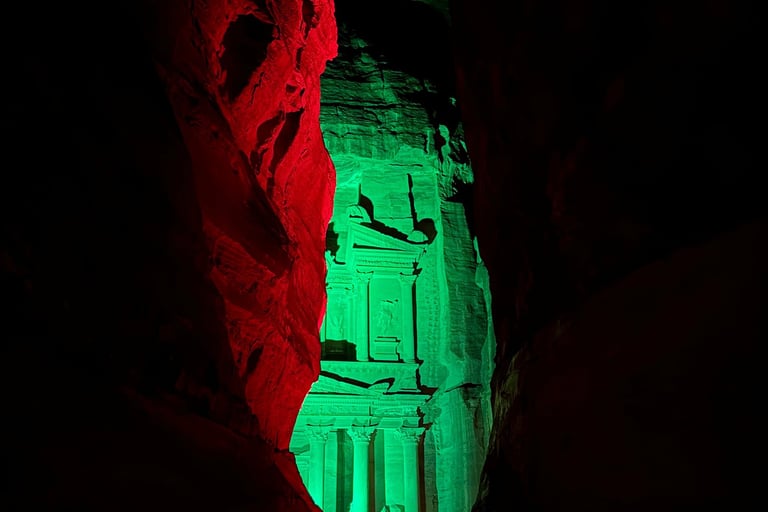
At 7, Joshua managed it really well — but only because of how we structured the day. Starting at 6am meant we avoided the worst of the heat, and going back to the hotel for a break before Petra by Night made a huge difference. Without that, I think it would have tipped from enjoyable into exhausting quite quickly.
That’s really what defines Jordan with kids. It’s not the terrain, or even the distances — it’s how you pace it. Get that right, and it feels like a brilliant, active adventure. Get it wrong, and it can feel like too much, especially for children.


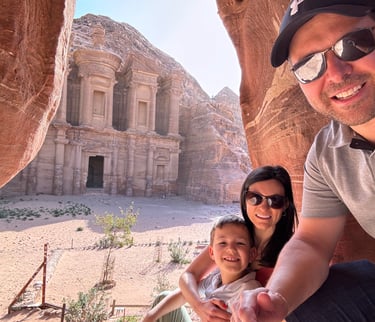
What It’s Actually Like Travelling Jordan With Kids
This is where Jordan really stands out — it feels like an experience, not just a trip.
Petra: Challenging but Unforgettable
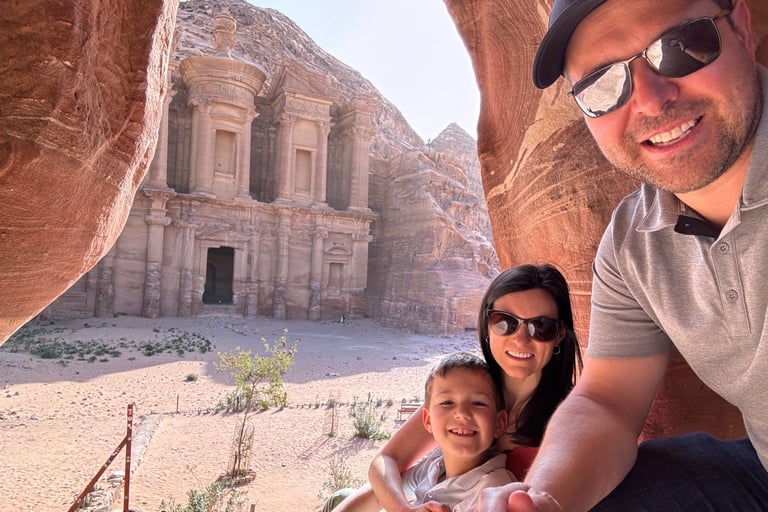
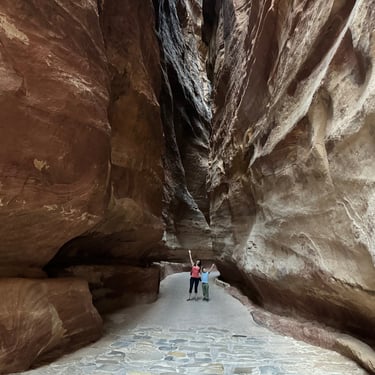
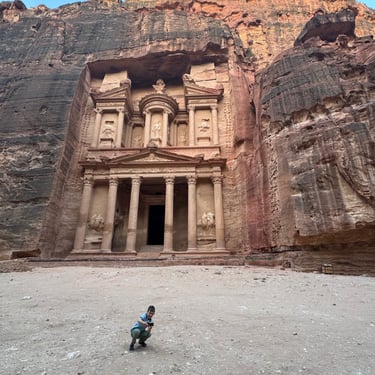
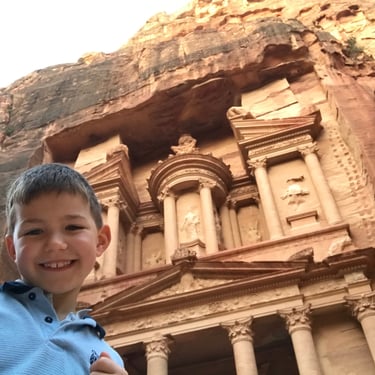
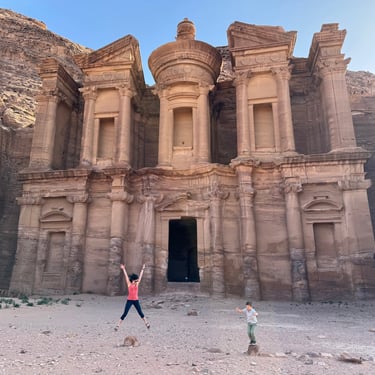
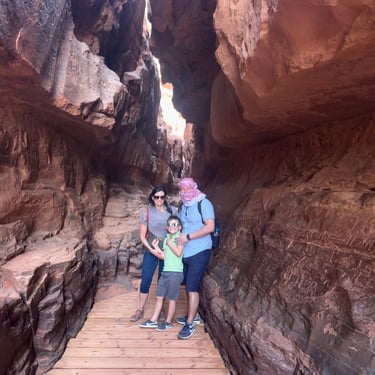
Petra was the highlight. For Joshua, it felt like an expedition rather than sightseeing — walking through the Siq, discovering the Treasury, and climbing to the Monastery gave the day a real sense of purpose.
Activity level: moderate to high
Walking distance: 6–13 miles possible
Key challenge: heat, not terrain
If you’re planning Petra, read our Petra With Kids Guide — it’s where pace and planning matter most.
Dead Sea: Interesting but Short-Lived
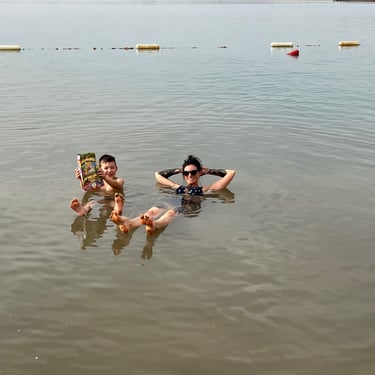
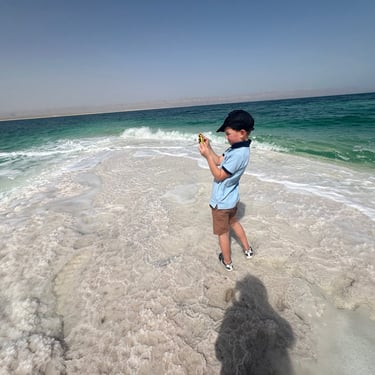
The Dead Sea is unique, but not always comfortable — especially for children.
Joshua enjoyed the experience of floating but as he has eczema, and the salt water stung almost immediately. Even for adults, it’s not something you stay in for long.
Staying at a resort like the Hilton Dead Sea Resort meant we has access to all the dead sea facilities right on our door step and did not need to pay extra to visit one of the dead sea beaches.
Wadi Rum: A Unique Desert Experience
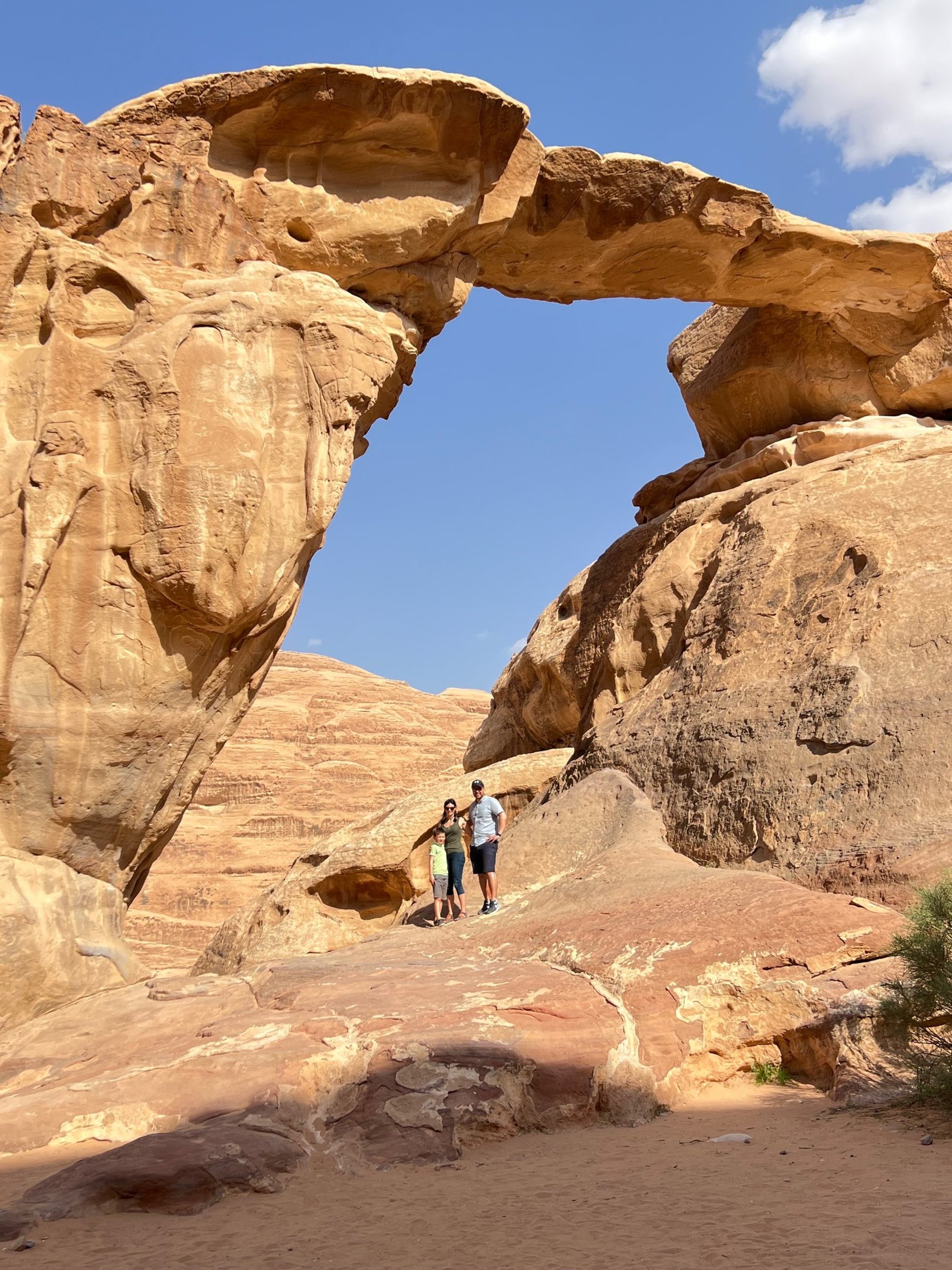
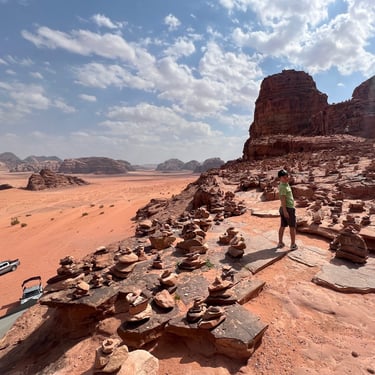
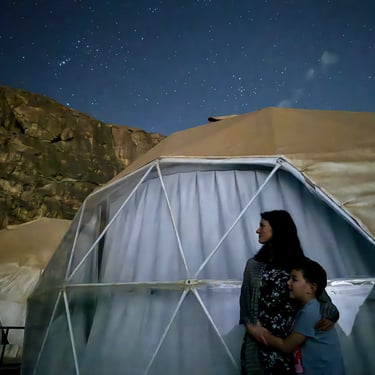
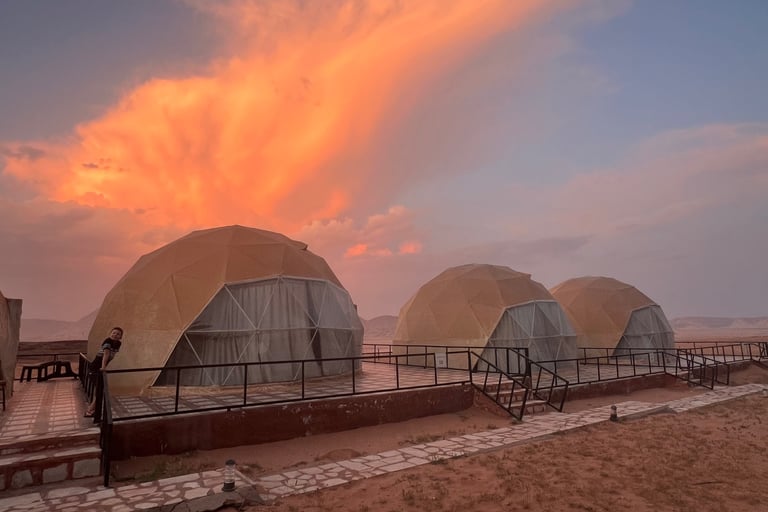
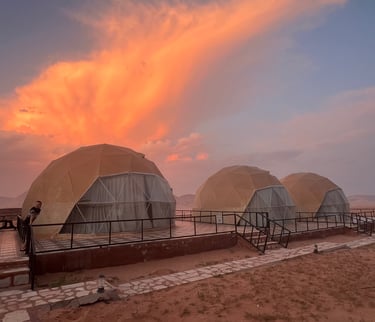
Wadi Rum was pure adventure — and the part Joshua still talks about. Jeep tours, climbing dunes and sleeping in the desert created a completely different feeling from the rest of the trip. If you’re visiting Wadi Rum with kids, a jeep tour is the best way to experience it.
The trade-off is comfort — camps are simple, and facilities vary. But that didn’t matter nearly as much as we expected. What stuck with us wasn’t the room — it was sitting under a completely dark sky, spotting stars together.
Wadi Rum is definitely somewhere to be prepared for, see our full guide here: Wadi Rum With Kids
Amman, Jerash, Ajloun & Shobak: Easy to Explore At Your Own Pace
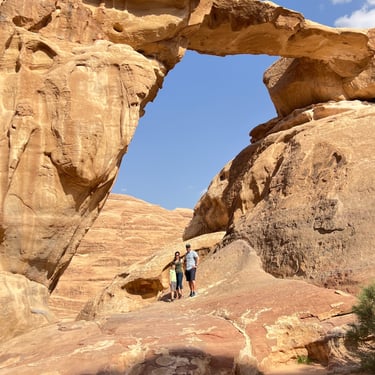
These stops were some of the easiest parts of the trip with Joshua. Compared to Petra, they felt far more relaxed — less walking pressure, fewer crowds, and more freedom to explore.
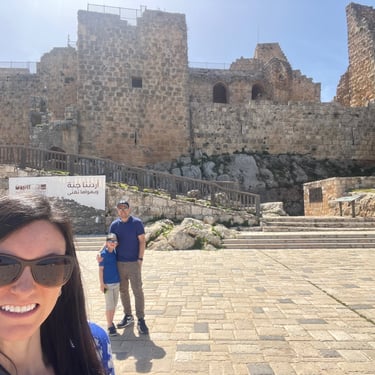
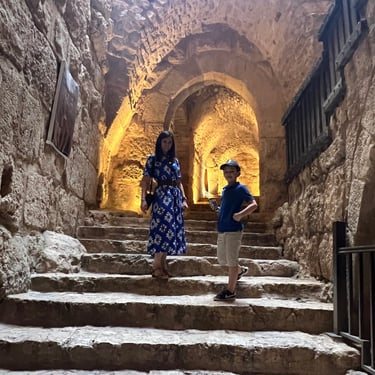
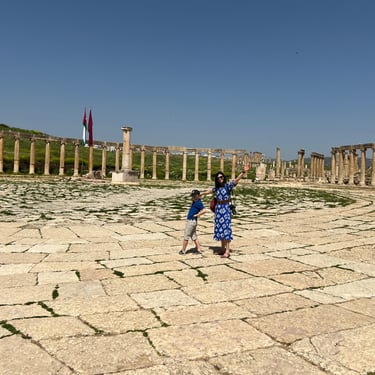
Jerash works well because kids can move around freely — climbing steps, wandering through ruins and exploring open spaces rather than following a set route. The castles at Ajloun and Shobak felt more like real exploration, with towers, tunnels and plenty to climb, which kept Joshua engaged without it feeling like a long sightseeing day.
Aqaba: A Chance to Slow Down
After Petra and Wadi Rum, Aqaba felt like a reset.
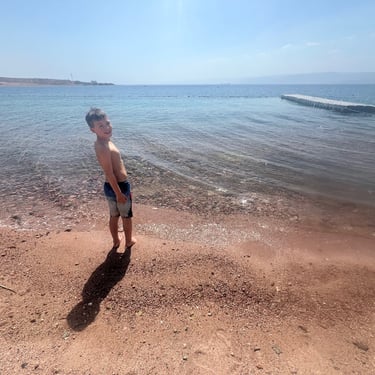
Jordan as a whole leans towards movement — early starts, long days and constantly seeing something new. Aqaba was the point where we could stop, slow down and just enjoy being on holiday for a couple of days.
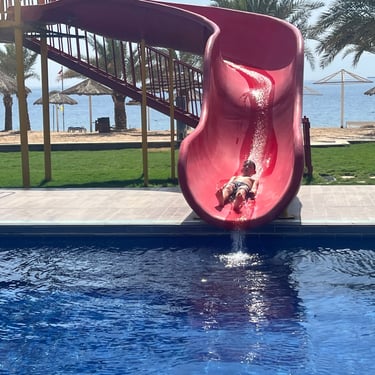
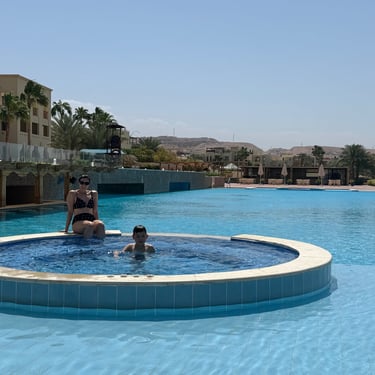
For Joshua, this was as important as any of the major sights. Time in the pool, easy meals and a more relaxed routine meant he had the energy for everything else we wanted to do on the trip.
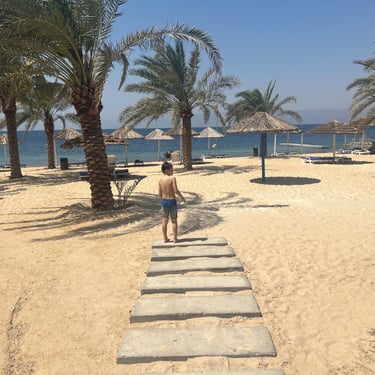
You don’t need to overplan Aqaba. That’s kind of the point. Whether you stay by the pool, head to the beach or try some snorkelling in the Red Sea, it’s there to balance the itinerary.
Looking back, this stop made the whole trip feel easier — it gave us space to recover before heading home, rather than finishing the trip exhausted.
If you’re planning a stop in Aqaba, we stayed at the Grand Tala Bay Resort — the beachfront location, multiple pools and easy, relaxed setup made it the perfect place to switch off after Petra and Wadi Rum.
What Our Child Actually Took From the Trip
Before we went, I thought Jordan would be “educational” in a fairly traditional way — history, culture, things to point out along the way. What surprised me was how much of it came naturally without forcing anything.
Joshua didn’t engage with it as “learning” at all. He experienced it physically. Walking through Roman streets in Jerash, climbing through fortress ruins, and seeing entire buildings carved into rock at Petra made everything feel real in a way no book or museum ever has. It wasn’t sitting and listening — it was exploring, climbing, asking questions as we went.
And that’s really what makes Jordan different with kids. It’s not passive. They’re inside the experience the whole time.
The Reality: Balancing Comfort and Adventure
Jordan leans much more towards adventure than comfort — and that’s something I think families need to be honest about before booking.
There were early starts, long days and moments where the heat or walking pushed things a bit. Petra in particular felt like a full day out, not a casual morning activity. And Wadi Rum, while incredible, is still a desert — simple camps, basic facilities, and a very different pace of life.
But what made it work was how we balanced that. We didn’t try to push through everything. We planned recovery time into the trip — pool afternoons, slower days at the Dead Sea, and a proper break back at the hotel before Petra by Night.
That balance is what stopped it from tipping into “too much”.
Looking back, the trip felt comfortable not because the destination is easy, but because:
we chose hotels where we could properly switch off
we planned downtime, not just activities
we started early and avoided the worst of the heat
Without that, I think it would have felt very different — especially with a child.
What Surprised Us Most as Parents
A few things genuinely caught us off guard.
The first was how capable Joshua was. A motivated 7‑year‑old will go much further than you expect, especially when there’s a clear goal involved (like reaching the Monastery or exploring ruins).
The second was how easy the logistics felt. Driving was straightforward, far less stressful than many European trips we’ve done, and having our own car gave us flexibility that really mattered day to day.
We were also surprised by how uncrowded a lot of the major sites felt. Compared to places like Italy or Paris, there was far less pressure, which made it easier to move at our own pace.
And finally — how important rest actually was. The afternoons where we stopped, went back to the hotel, or just slowed things down were what made the rest of the trip work.
We also had moments where expectations didn’t quite match reality. The Dead Sea is a good example — it’s iconic, but not somewhere you linger, especially if your child has sensitive skin. Knowing that in advance would have helped us frame it differently.
How Much Does a Family Trip to Jordan Actually Cost?
Jordan often has a reputation for being cheaper than other long‑haul destinations, but in reality, a family trip to Jordan from the UK sits somewhere in the middle. Day‑to‑day costs can be reasonable, but once you factor in flights, hotels, entry fees and travel between destinations, the overall cost becomes clearer.
For us, the biggest expenses were:
flights from the UK
accommodation (especially at the Dead Sea and Petra)
the Jordan Pass and site entry fees
car hire and fuel
Where Jordan feels good value is once you’re there. Food, driving and general day‑to‑day spending were all fairly manageable, and because the country is compact, you’re not constantly adding on internal flights or long transfers.
One thing that did stand out is how much your comfort choices affect the total cost. For example, choosing a hotel with a pool at Petra or direct access to the Dead Sea made the trip significantly easier with Joshua — but those decisions do increase the budget.
For us, it was worth it. After long sightseeing days, having somewhere comfortable to reset made a noticeable difference to how the whole trip felt.
If you’re planning your own trip, read our full cost breakdown here — we share exactly what we spent as a family and where you can save or upgrade depending on your priorities.
Final Verdict: Is Jordan Good for Children?
Yes — but not in the way people often expect.
Jordan isn’t an easy, passive family holiday. It asks more of you — early starts, long days and a bit of planning. But that’s also what makes it so memorable.
For us, travelling with Joshua at 7, it felt like the sweet spot. Petra pushed him physically, Wadi Rum completely captivated him, and the mix of adventure and downtime kept the whole trip balanced. There were moments that were harder than expected (the heat, the walking, the Dead Sea), but there were far more moments that felt genuinely special.
What stood out most wasn’t just what we saw — it was how he experienced it. Climbing to the Monastery, running across desert sand, sitting under a sky full of stars — those are the moments that stayed with him.
If your family is looking for something immersive, a bit different, and genuinely engaging, Jordan delivers. You just need to approach it with the right expectations.
Get the pacing right, and it’s not just a holiday — it’s one of those trips you’ll still be talking about years later.
FAQ's - Is Jordan Good for Kids?
Is Jordan safe to travel with kids?
Yes — Jordan is generally considered a safe destination for families. We felt comfortable travelling with our son throughout the country, including driving between cities. The key considerations are practical rather than safety-related, such as heat, long sightseeing days and planning your route properly.
What is the best age to take children to Jordan?
Jordan works best for school‑aged children (around 6+), who can manage walking, early starts and more active days. At this age, places like Petra and Wadi Rum feel like an adventure rather than just sightseeing.
For toddlers, Jordan is more challenging. Many of the key sites involve long walking distances, uneven terrain and steps, and they’re not well suited to strollers or buggies. It’s still possible, but it requires much more planning and flexibility, so most families find the experience easier — and more enjoyable — once children are a bit older.
Is Jordan too hot or difficult for kids?
Jordan can be hot, especially from late morning onwards, but how manageable it feels really depends on the time of year.
We travelled during the Easter holidays, which worked really well — temperatures were warm but comfortable, and much more manageable for a full day out with kids.
The trip becomes difficult when you combine heat with poor timing. Starting early, taking breaks and avoiding midday sightseeing makes a huge difference. In the right season with the right pacing, Jordan doesn’t feel overwhelming — but in peak summer, it would be significantly harder with children.
What is the best way to travel around Jordan with kids?
For most families, self‑driving is the easiest and most flexible option. It allows you to control your pace, stop when needed and build in rest time — which makes a huge difference when travelling with children.
Jordan’s road network between key sites like Petra, Wadi Rum and the Dead Sea is straightforward, so driving feels much more manageable than many people expect.
The alternative is to use organised tours or private drivers, which work well if you don’t want to drive, but they reduce flexibility — especially with kids who may need breaks or changes to the plan. Public transport options like buses are limited and not really designed around sightseeing routes, and there are no practical train options between the main attractions.
In our experience, having our own car made the biggest difference. It gave us the freedom to stop when Joshua needed a break, adjust timings, and keep the trip feeling calm rather than rushed.
You can see how this works in our Jordan family itinerary.
How active is a Jordan family holiday?
Jordan is an active destination rather than a relaxing one. Expect long walking days at places like Petra and outdoor experiences like Wadi Rum. Balancing these with downtime (and pool time) is what makes the trip manageable.
Which parts of Jordan are best for kids?
The highlights for families tend to be:
Petra (for the adventure and sense of discovery)
Wadi Rum (for jeep tours and desert camping)
Aqaba (for downtime and beach time)
How much does a family trip to Jordan cost?
Jordan offers good value day‑to‑day, but overall costs depend on flights, hotels and travel style.
Based on 10 days in Jordan over the Easter holidays travelling from the UK, a rough budget is around £1000 per person. High-comfort stays and entry fees (like Petra) add up quickly, but everything is adaptable to any budget. For real numbers, see our full cost breakdown.
Is Petra too challenging for children?
Petra can be physically demanding due to the walking distances and heat, but most children can manage it with the right pacing.
For a detailed breakdown, see Petra with Kids.
Is Wadi Rum worth visiting with kids?
Yes — Wadi Rum is often one of the most memorable parts of a Jordan trip for families. Jeep tours, desert camps and the open landscape make it feel like a real adventure rather than traditional sightseeing.
Wadi Rum with Kids explains why the desert is often a standout experience.
Should families visit Jordan or choose an easier destination?
Jordan is not the easiest family holiday, but it is one of the most rewarding if you plan it well. If you’re looking for something more immersive and adventurous — rather than a resort-style break — it’s absolutely worth considering.
plan your TRIP TO jordan
If you’re planning your family trip to Jordan, these guides will help you pull everything together:






About Plan Family Escapes
We’re a UK-based family sharing real, experience-led travel guides based on trips we’ve taken with our school-age son Joshua across destinations like Lapland, Turkey and India.
Everything we share is based on what we’ve personally experienced — with honest advice on what actually works when travelling with kids, focusing on making family travel easier, more comfortable and genuinely enjoyable.