Self-Catered vs Catered Accommodation in Ruka (Lapland): What’s Actually Better for Families?
Trying to decide Self-Catered vs Catered Accommodation in Ruka Lapland? Here’s what we learned as a family, how much food really costs, and how to keep your trip affordable without sacrificing the experience.
RUKAFINLANDEUROPESKIRESOURCES
1/15/20266 min read
One of the biggest decisions when planning a Lapland trip is self‑catered vs catered accommodation in Ruka — especially if you’re travelling with kids.
This guide is for UK families trying to work out:
is self‑catering or catered better for families skiing Lapland?
what type of Ruka Lapland family accommodation actually works day to day
and how to balance cost, convenience and flexibility
Quick Answer: Is Self‑Catered or Catered in Ruka Better for Families?
For most families, self‑catered tends to work better in Ruka.
It gives you more flexibility around mealtimes, helps keep costs down, and makes evenings much easier after long days in the cold — particularly with kids. Catering can work if you want everything organised, but for us, self‑catering made the whole trip feel more relaxed.
We stayed in Ruka Chalets, and it was one of the reasons the trip felt manageable — especially with a school‑aged child, tired afternoons, and unpredictable weather. Read our Ruka Chalets Review here.
This was the decision we spent the most time on before booking. Seeing what was included in each option made it much easier to understand what would actually work for us as a family. → See what’s included in the trip we booked
Where relevant, we’ve included the exact accommodation and options we used or considered. Some links are affiliate links, which means we may earn a small commission at no extra cost to you — we only recommend options that genuinely worked well for our family.

What Self‑Catered Actually Looks Like in Ruka
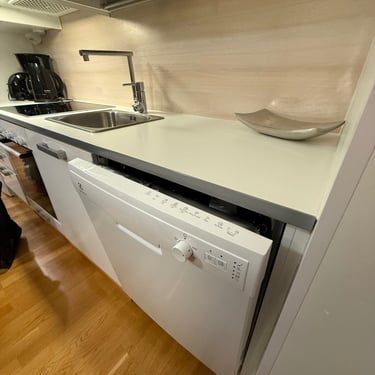
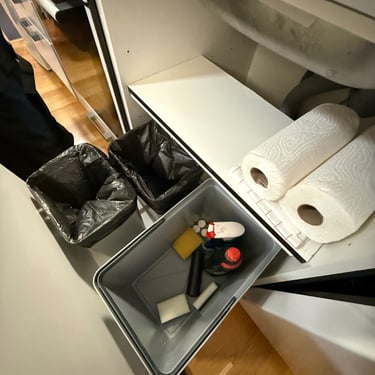
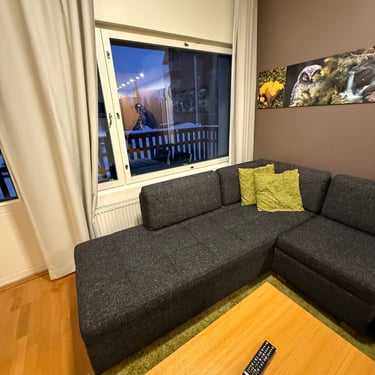
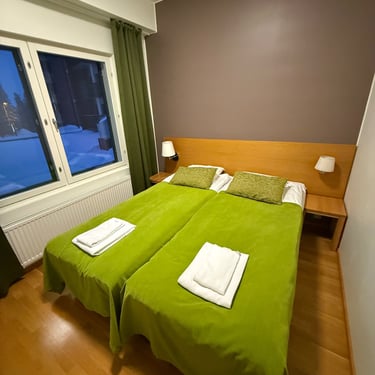
Most family accommodation in Ruka is in apartments or chalets that come with:
A proper kitchen
Dishwasher
Fridge/freezer
Dining area
Plenty of space to dry ski gear
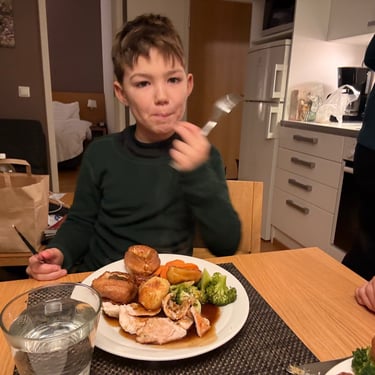
We stayed in Ruka chalets, and it worked brilliantly for our routine.
Our typical day looked like:
Breakfast in the chalet
Out for skiing or activities (like snowmobiling or reindeer rides)
Back to the chalet for lunch or an early dinner
Out again for evening activities if planned
This rhythm worked really well, especially because Lapland days can be long, cold and tiring for kids.
The Reality of Eating Out in Ruka
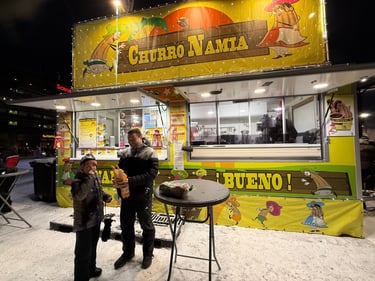
Let me be honest: eating out in Lapland is not cheap. However, there are lots of options available that can help navigate costs. Read more about dining options in Ruka on their local website.
From what we saw in Ruka village:
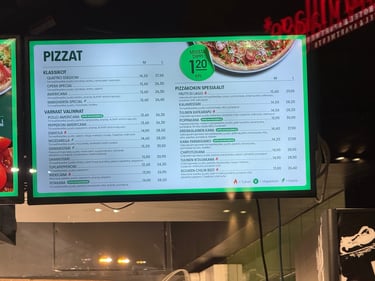
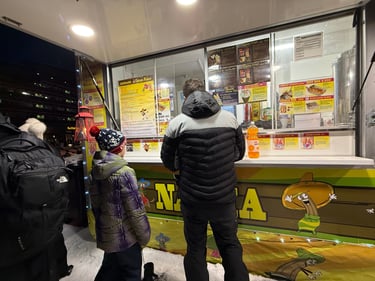
A basic pizza, kebab or burger meal is usually around €15–€25 per person
A sit-down restaurant meal is more like €20–€35 per person
A quick lunch on the slopes will often still cost €15+ per person
Drinks are expensive — especially beer €13 – Ouch!
For comparison, a single lunch on the slopes for a family of three can easily be €45–€60. Do that every day for a week and suddenly you’re spending the price of another excursion just on lunches.
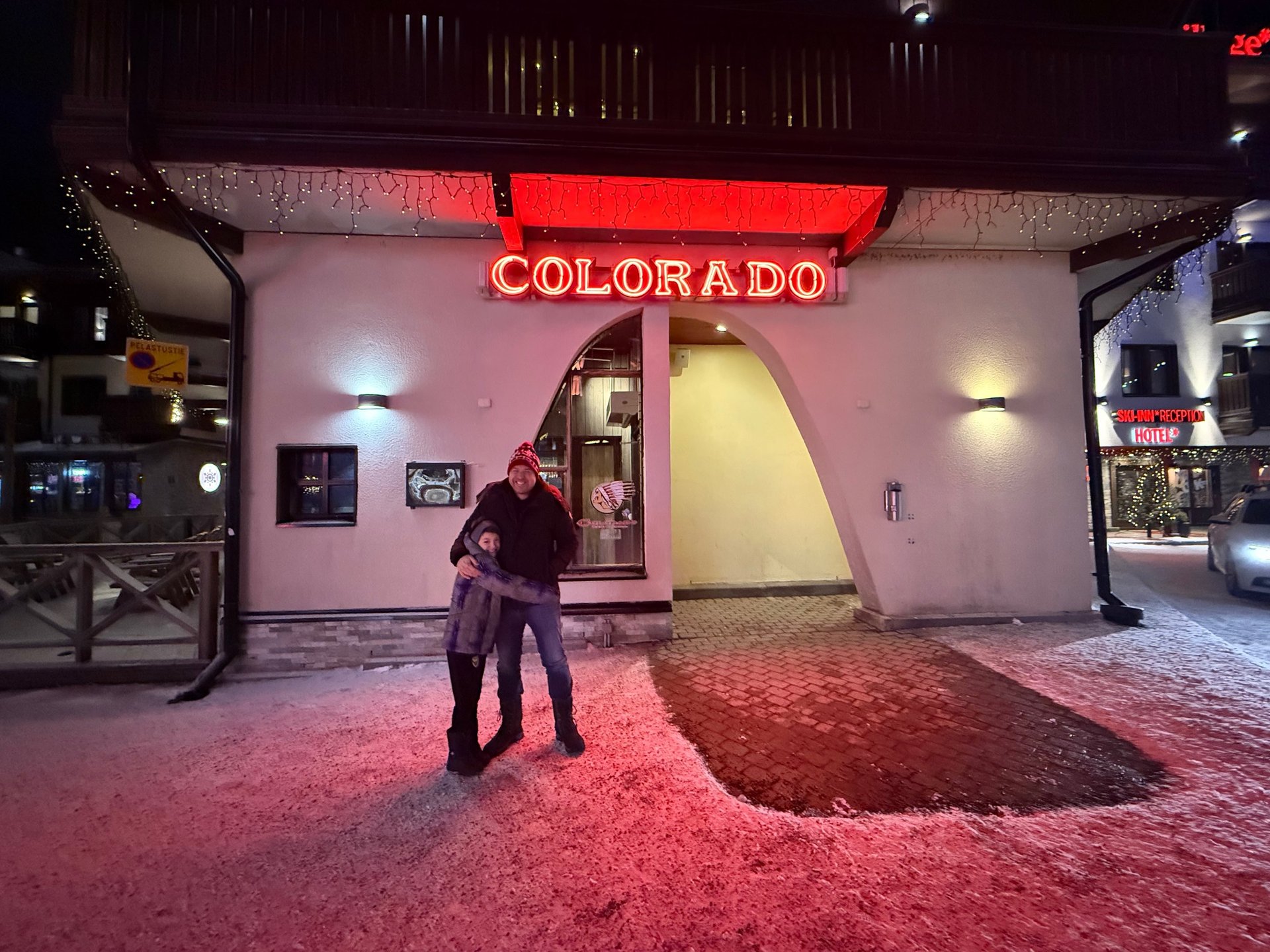
We ate out a couple of times, including Colorado Bar, which is very family friendly and offered bar snack baskets which were absolutely massive and at €16 each were good value.
Why Self-Catering Worked So Well for Us
The biggest advantage wasn’t just cost — it was flexibility.
Because we’d already packed smart see What to Pack for Lapland in December (Family Packing List)), we were able to:
Eat when we wanted
Avoid rushing to restaurants with tired kids
Come back to the chalet to warm up
Have proper downtime between activities
And importantly… we weren’t paying €20+ per person just to refuel.
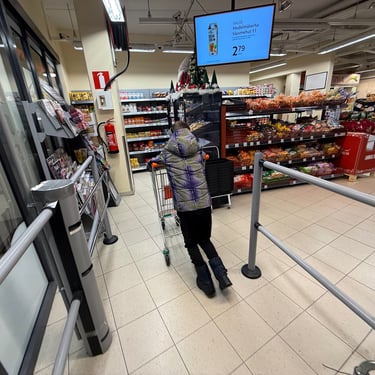
We did supermarket shops when we arrived and topped up once during the week. The supermarket prices aren’t cheap (it’s Lapland after all), but still much cheaper than eating out every meal.
For us, having everything else already organised meant this decision became much simpler — we could focus on what would make day-to-day life easiest rather than worrying about the rest of the trip. → View the package we used

But What About Half Board?
When we were researching, adding half board was around £260 per person extra. For a family of three, that’s £780 added to the holiday.
Now, if you really don’t want to cook at all, I can see why people choose it. But for us, that money paid for:
Multiple excursions
All our food for the week
Drinks, snacks, treats
And still left change
You can read the full breakdown in How Much Does a Lapland Trip Cost for a Family?
A Realistic Food Cost Comparison
Just to put it into perspective: If you eat out once per day as a family of three:
€60–€90 per day
Over 6 days: €360–€540
And that’s without drinks or snacks
Versus:
Supermarket shop for breakfasts, lunches and some dinners
Plus 2–3 meals out
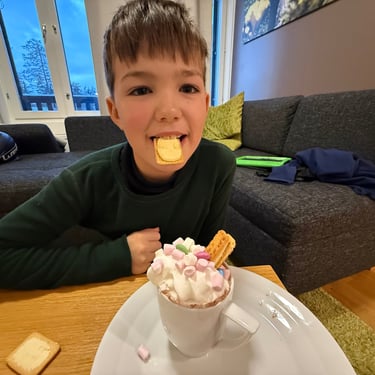
Plus hot chocolates and treats
That’s basically exactly what we did — and we kept our entire food and extras spend to around £300 for the whole week.
Where People Do Still Eat Out in Ruka
Ruka village does have:
Pizza places
Kebab shop
Burger restaurants
Cafés
A few nicer sit-down restaurants such as the steakhouse
Slope cafés for hot drinks and snacks
Subway – yes they had an actual subway!
They’re great for:
A treat meal
A lazy evening
Or when you’re out late doing activities (like Santa visits or Northern Lights trips)
But I’d personally treat eating out as part of the experience, not the default.
Why This Matters Even More With Kids
If you’re travelling with children (especially younger ones):
They get tired fast
They don’t always want “proper” restaurant meals
They often just want simple food and to get back to the chalet
Being able to walk back, take boots off, put something easy in the oven and relax was honestly one of the best parts of our setup.
So… Which Should You Choose?
Self-Catered is best if:
You want to keep costs under control
You like flexibility
You don’t mind simple cooking
You’re travelling with kids
You want quieter evenings and downtime
Catered might suit you if:
You really don’t want to cook at all
You’re happy to pay a premium for convenience
You want zero planning around meals
If you are wondering what opportunities there are to save on costs on a trip to Lapland, check out Lapland on a Budget: Where You Can Save and Where You Can’t
Our Honest Take
For a family Lapland trip, self-catering is one of the easiest ways to save serious money without losing any of the magic. You can still eat out. You can still have treats. You just don’t have to pay restaurant prices three times a day, every day. And when Lapland trips already cost what they do, saving £700–£800 on food makes a huge difference to what else you can afford to do.
There’s no single “right” choice — it depends on how you want your trip to feel. For us, having most of the key elements organised upfront made it much easier to choose what worked best for our family.
FAQ: Self‑Catered vs Catered in Ruka (Lapland)
Is it better to stay self‑catered or catered in Ruka with kids?
From our experience, self‑catered is usually the better option for families in Ruka.
It gives you:
more flexibility around mealtimes (especially after long ski days)
lower overall costs compared to half-board
easier evenings when kids are tired
Catered can work well if you want everything organised, but for most families, self‑catering makes the trip feel more relaxed and manageable day to day. Read our Ruka Chalets Review self catered accommodation review here.
When does catered accommodation make more sense in Ruka?
Catered works best if you:
don’t want to think about food at all
prefer set routines
are travelling without young kids or with very predictable schedules
For us, with a school‑aged child, the fixed timings felt less practical than having the option to eat when it suited us.
For a view on how ski days are structured in Ruka, see: Our Family Ski Day in Ruka: What to Expect
Is self‑catering in Lapland difficult with kids?
Not at all — this is something we were concerned about, but it was actually one of the easiest parts of the trip.
Supermarkets are:
well stocked
easy to access
and quick to navigate
Simple meals, snacks, and breakfasts made mornings and evenings much smoother.
Does self‑catering actually save money in Ruka?
Yes — significantly.
Eating out or booking catering every day adds up quickly, especially on a ski holiday. Self‑catering lets you:
control daily costs
mix eating in and out
avoid paying for meals you don’t fully use
For us, it was one of the key ways we kept the overall cost of the trip under control.
See How Much Does a Lapland Family Holiday Really Cost? for a full budget breakdown.
planning lapland with kids?
Start here — these guides answer the key questions we had before booking
About Plan Family Escapes
We’re a UK-based family sharing real, experience-led travel guides based on trips we’ve taken with our school-age son Joshua across destinations like Lapland, Turkey and India.
Everything we share is based on what we’ve personally experienced — with honest advice on what actually works when travelling with kids, focusing on making family travel easier, more comfortable and genuinely enjoyable.