Driving in Costa Rica with Kids: Tips, Roads & Our Honest Experience
Driving in Costa Rica with kids? Read our honest experience, road conditions, navigation tips, car hire advice and what families should expect on the roads.
COSTA RICARESOURCES
7/28/20269 min read
Planning to drive in Costa Rica with kids and wondering whether it's actually a good idea?
Before our trip, I'd read plenty online about rough roads, mountain driving, potholes, rainy season downpours and whether you needed a 4x4. After travelling around Costa Rica with our 7-year-old son Joshua, I can honestly say the reality was far less intimidating than we expected.
Quick Answer: Should You Drive in Costa Rica with Kids?
For us, yes — absolutely.
Driving felt surprisingly straightforward, particularly around towns and cities where the roads and driving style were fairly similar to what we're used to in the UK. Things became bumpier and a little more rural as we approached La Fortuna, which is why I'd recommend a reasonably sized SUV or truck, especially during rainy August season.
We never found driving scary, would happily do it again, and felt having our own vehicle gave us far more flexibility than relying on tours or shuttle transfers. We used a hire car for our time in La Fortuna before returning it and switching to transfers for the beach, which ended up being the perfect balance.
This guide is for families who want to know:
Whether driving in Costa Rica with kids is safe
What the roads are actually like
Whether you need a 4x4 or SUV
What driving to La Fortuna feels like in reality
Whether self-driving or transfers are the better option for your trip
Some of the links in this guide are affiliate links, which means we may earn a small commission if you book through them, at no extra cost to you. We only recommend products and services we'd genuinely use again as a family.
Why We Decided to Hire a Car in Costa Rica
The biggest reason was flexibility.
We knew La Fortuna would be the adventure part of our trip, with waterfalls, hanging bridges, hot springs and wildlife experiences spread across the area. Having our own car meant we could explore on our own schedule rather than waiting for shuttle buses or joining large tour groups.
Travelling with Joshua also influenced our thinking. We liked being able to leave when we wanted, carry extra snacks and spare clothes, and adjust plans if the weather changed.
For us, a hire car made Costa Rica feel more adventurous rather than more stressful.
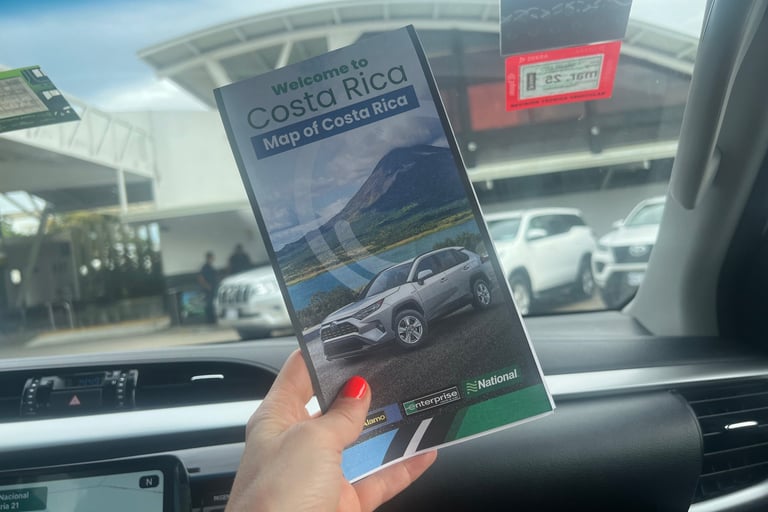
Picking Up Our Hire Car at the Airport
This was one of the parts of the trip I was most nervous about beforehand. In reality, it was incredibly straightforward.
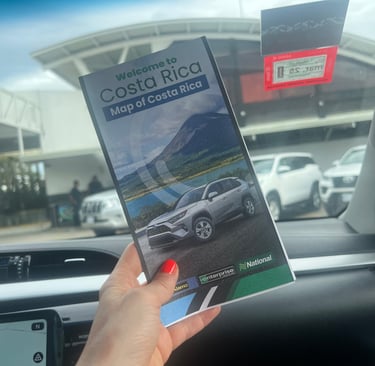
The collection process was very similar to what we've experienced in the UK and the USA. The paperwork was simple, the staff spoke good English and we were on the road surprisingly quickly.
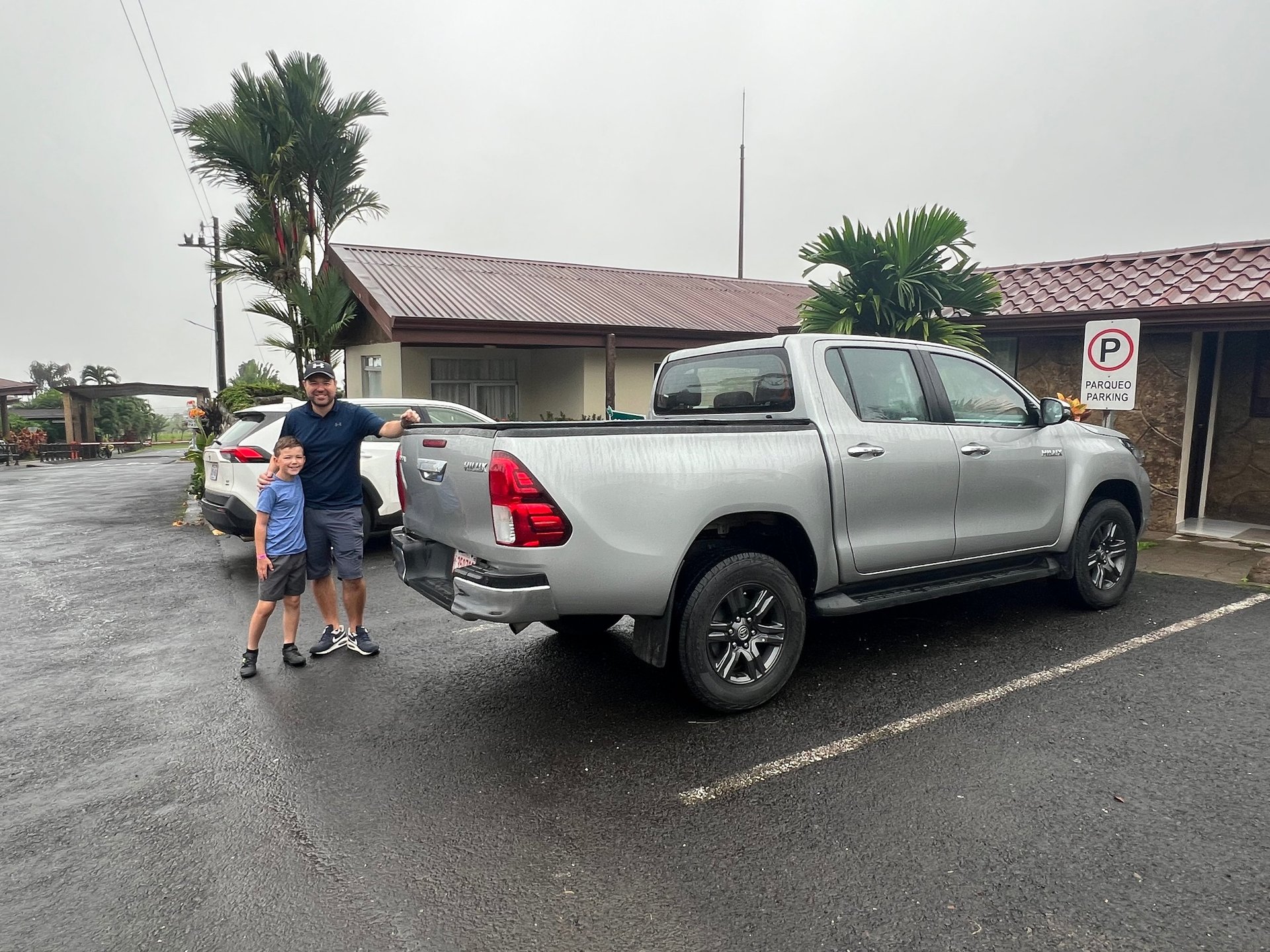
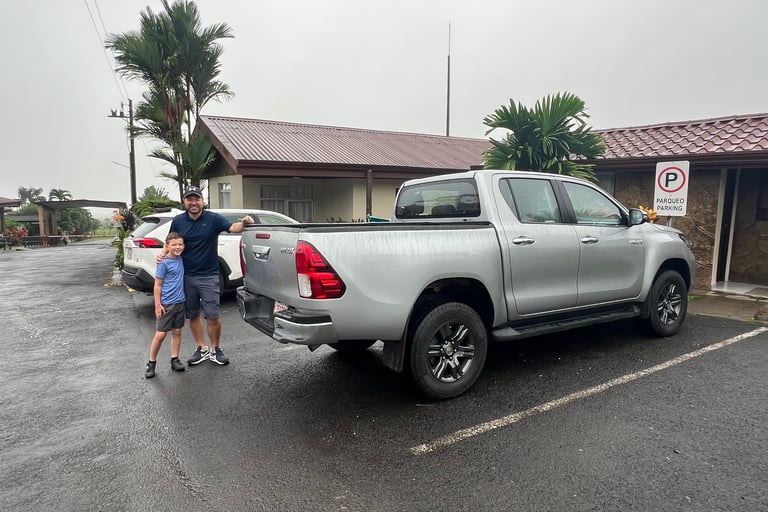
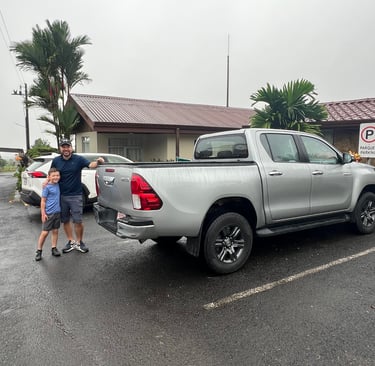
One thing that did make me laugh was that my husband told us we were getting an SUV and then appeared with what looked more like a truck. In hindsight, I was actually glad he did. If you're researching prices, we found Trip.com useful for comparing different suppliers and vehicle types before booking.
For UK visitors, you can legally drive in Costa Rica using a valid UK driving licence for a tourist visit, although it's always sensible to check the latest official entry and driving requirements before travelling.
For car seats, we always travel with our own Trunkie Booster back pack. We've found this gives us more confidence that Joshua is using a seat he's comfortable with, and it avoids extra hire charges.


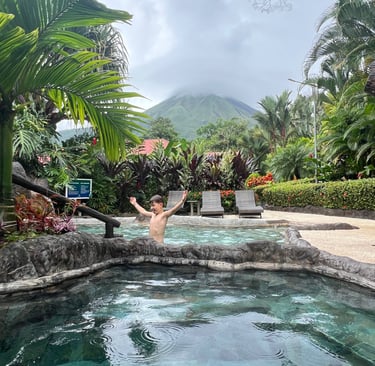
What Are the Roads Like in Costa Rica?
Overall, the roads were much better than we'd expected.
Around towns and cities, driving felt fairly normal. Traffic could be busy at times, but drivers generally seemed calm and predictable, and it never felt chaotic or intimidating. Compared to some destinations we've driven in, it felt surprisingly organised.
As you head towards places like La Fortuna, the roads become more rural. This is where we noticed:
Narrower roads
More bends and winding sections
Occasional potholes
Slower average speeds
Nothing felt dangerous, but travel times were often longer than we expected because many roads are single carriageways with limited overtaking opportunities.
The biggest challenge was actually the weather rather than the roads themselves. During heavy rainy season downpours, visibility can reduce quickly, which is another reason I'd recommend avoiding night driving where possible.
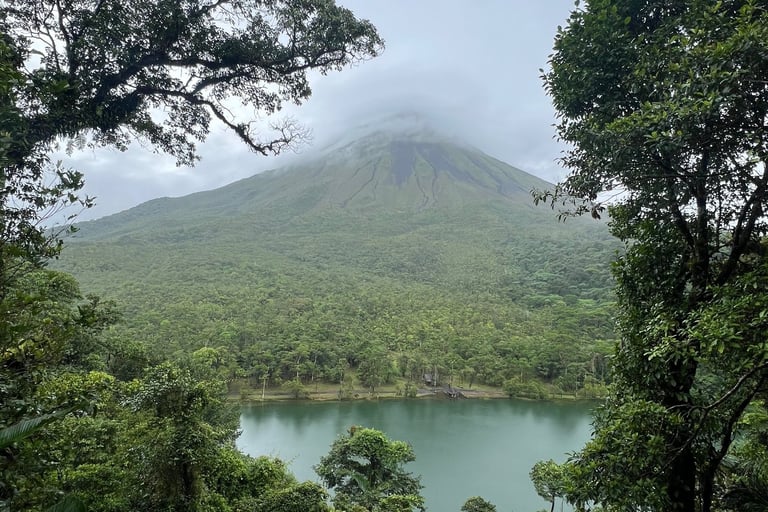
For us, the roads felt more like part of the adventure than an obstacle. In fact, some of the drives towards La Fortuna offered some of our first views of Costa Rica's rainforest, mountains and volcanoes.
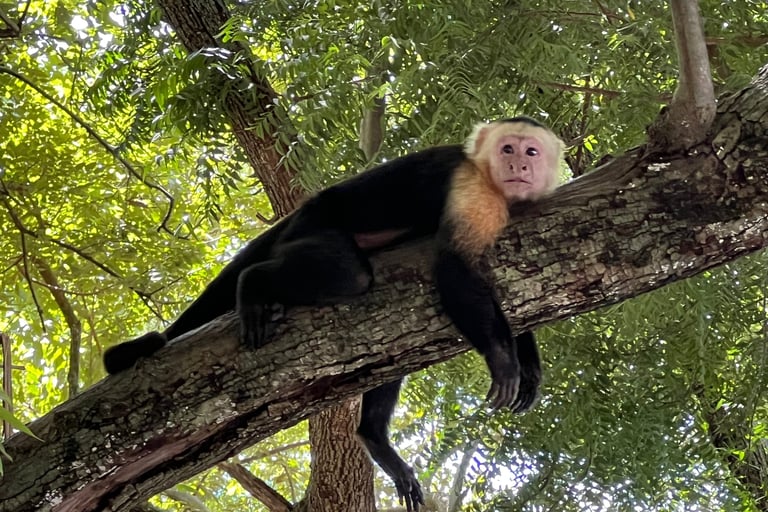
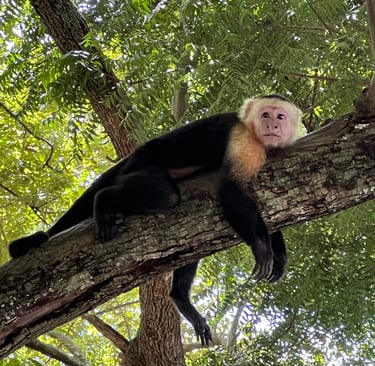
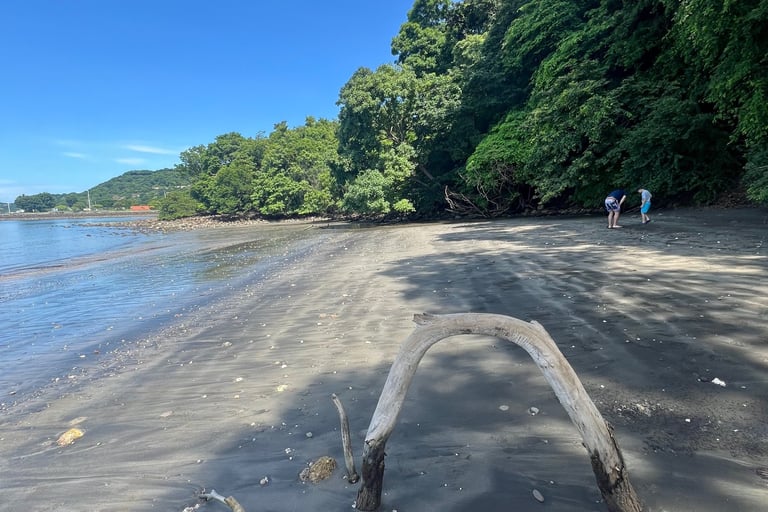
Driving to La Fortuna: Our Experience
The drive to La Fortuna took us around three hours and was much easier than we'd expected. We used an Airalo eSIM throughout our trip, which meant Google Maps worked perfectly from the moment we landed. If you're planning to drive, I'd highly recommend sorting mobile data before you travel — you can compare eSIM options here.
We collected our hire car at the airport and drove straight to our hotel without making any major stops. Although it was Joshua's first day in Costa Rica, he was far too excited to sleep and spent most of the journey looking out of the window as the scenery changed from towns and countryside to rainforest-covered hills and volcano views.
One thing that helped was arriving during daylight hours. We were travelling as part of a wider USA trip, so we were already adjusted to the time zone and didn't have to deal with jet lag. Had we landed after an overnight flight from the UK, I think the drive would have felt more tiring.
For us, the journey never felt stressful. Traffic was manageable, navigation was straightforward using Google Maps, and by the time we arrived in La Fortuna it genuinely felt like the start of the adventure rather than just a transfer between destinations.
If you're planning a similar route, How to Plan a Costa Rica Family Trip: Our La Fortuna & Beach Route explains why we chose La Fortuna as our first stop and how it fitted into our wider family itinerary.
Do You Need a 4x4 in Costa Rica?
This is one of the most common questions families ask when planning a Costa Rica trip.
My honest answer is: you probably don't need a dedicated 4x4, but I would recommend a larger vehicle, especially if you're visiting during rainy season.
Most of the main roads we used were absolutely fine, but once we got closer to La Fortuna, conditions became a little rougher. We encountered occasional potholes, uneven surfaces and roads that were less well maintained than we'd expect in the UK.
We actually ended up with a truck rather than the SUV we thought we'd booked, and in hindsight I was very glad we did. The extra ground clearance felt reassuring during heavy downpours and on some of the bumpier roads around La Fortuna.
If you're travelling during the rainy season or planning to explore beyond the main tourist routes, I'd prioritise vehicle size and comfort over choosing the cheapest option available.
Before booking, compare different vehicle categories as well as prices. We used Trip.com to compare suppliers, SUVs and larger vehicles, which made it easy to see whether upgrading was worth the extra cost for our dates. If you're planning to hire a car, it's worth checking the different vehicle options available rather than automatically selecting the cheapest model.
What Are the Roads Like in Costa Rica?
Overall, the roads were much easier to drive than we expected, although conditions varied depending on where we were.
Around towns and cities, driving felt fairly normal. Traffic could be busy at times, but drivers generally seemed calm and predictable, and it never felt chaotic or intimidating. Compared to some destinations we've driven in, it felt surprisingly organised.
The biggest difference came once we left the main roads and headed towards La Fortuna. Roads became narrower, more winding and occasionally a little bumpier, particularly in rural areas. Nothing felt dangerous, but journeys were slower than we'd typically expect in the UK and this is where having a larger vehicle became useful.
Many roads are single carriageway routes, so overtaking opportunities can be limited and travel times are often longer than the distance suggests. My advice would be to allow extra time, particularly during rainy season, and enjoy the scenery rather than trying to rush from place to place.
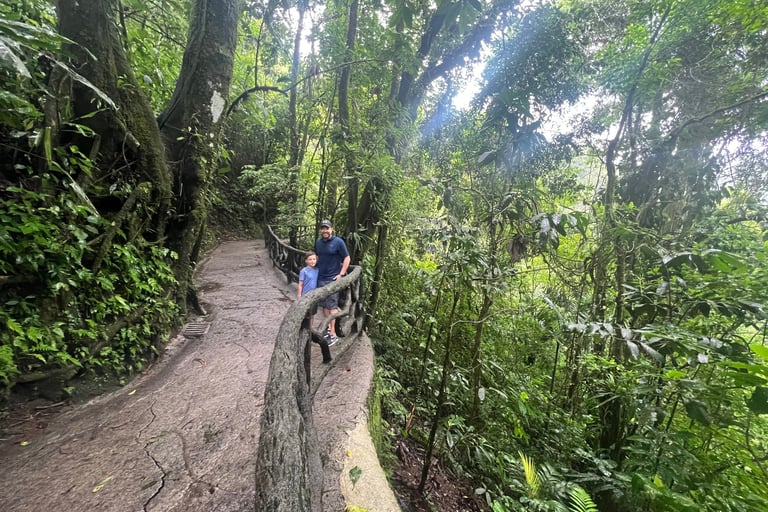
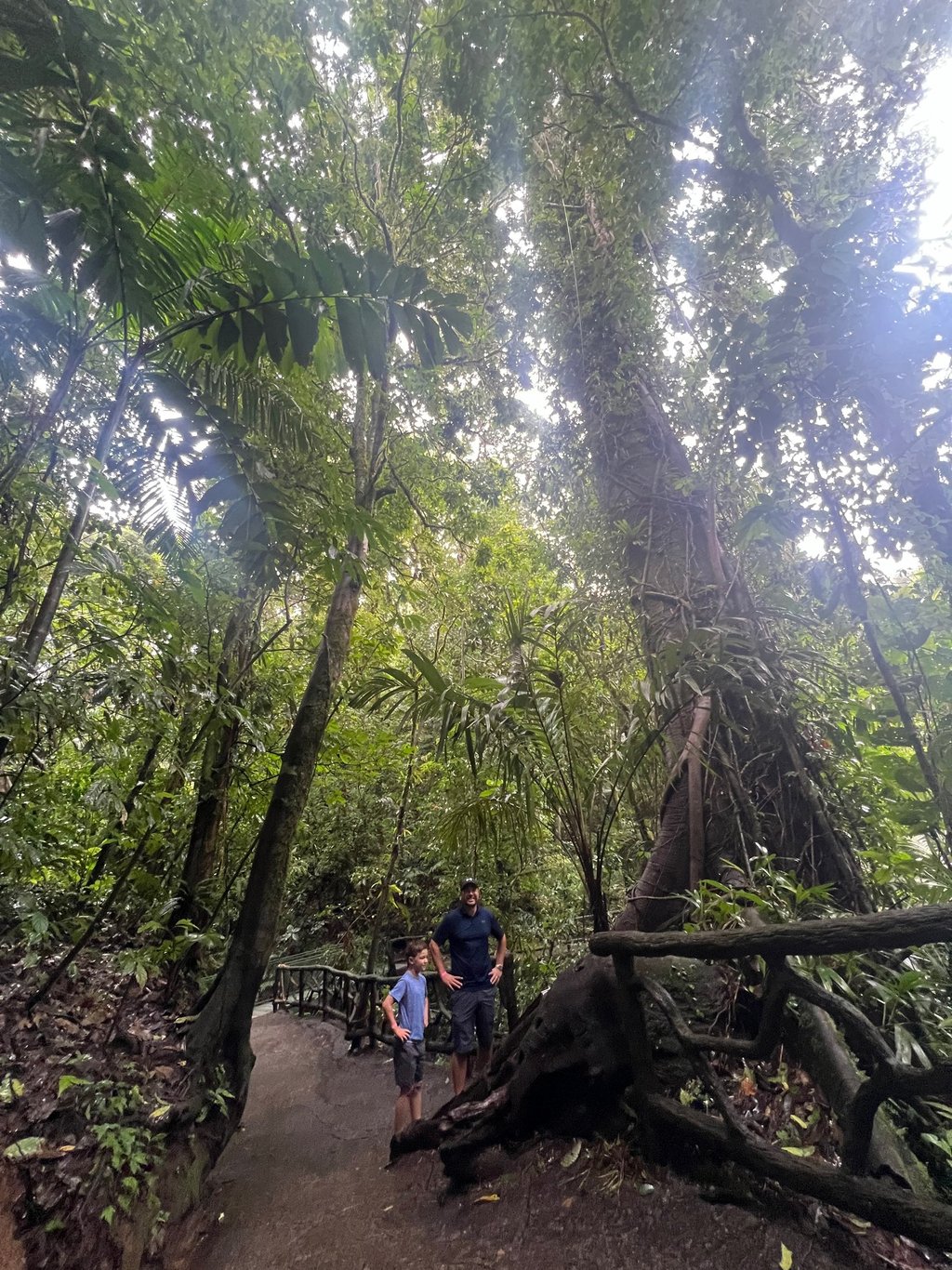
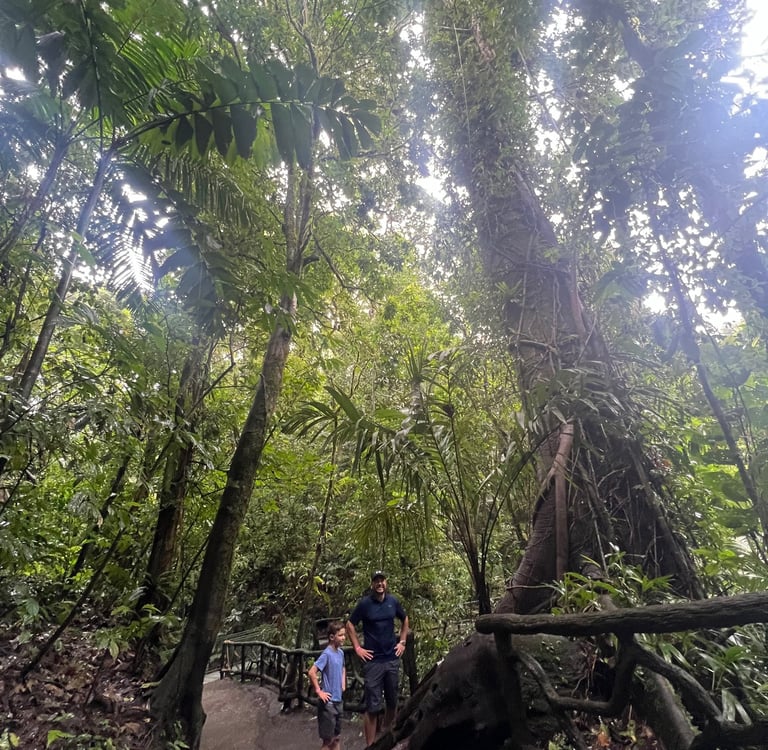
For us, the roads felt more like part of the adventure than an obstacle. The volcano views, rainforest scenery and changing landscapes made even relatively short drives feel like part of the Costa Rica experience.
Would We Drive in Costa Rica Again with Kids?
Absolutely.
If your itinerary includes La Fortuna, I'd recommend hiring a car.
It gave us freedom, flexibility and made it much easier to explore at our own pace. We could arrive at attractions before the crowds, adjust plans around the weather and avoid spending our holiday waiting for transport.
That said, I don't think you need a car for your entire trip. Our approach of using a hire car in La Fortuna and then switching to transfers for the beach worked brilliantly.
For most families, that's exactly the balance I'd recommend.
FAQs: Driving in Costa Rica
Is it worth hiring a car in Costa Rica with kids?
For us, absolutely. Having a hire car made it much easier to explore La Fortuna at our own pace, visit attractions early and adjust plans around the weather and Joshua's energy levels. We used a car for the La Fortuna part of our trip before switching to transfers for the beach.
If you're planning a similar route, see How to Plan a Costa Rica Family Trip: Our La Fortuna & Beach Route.
Do you need a 4x4 to drive in Costa Rica?
Not necessarily, but I would recommend a reasonably sized SUV or larger vehicle, especially during rainy season. Most main roads were perfectly manageable, but some rural roads around La Fortuna were bumpier and rougher than we'd expected. We ended up with a truck and were glad of the extra ground clearance during heavy rain.
Planning to drive in Costa Rica? Compare car hire prices, vehicle types and suppliers here to find the right option for your family using Trip.com
Is driving in Costa Rica safe for families?
We found driving in Costa Rica much less intimidating than we'd expected. Drivers generally felt calm, roads around towns were straightforward and we never felt unsafe. The biggest challenge was heavy rain reducing visibility during downpours, which is why I'd recommend avoiding night driving where possible.
Should I drive or use transfers in Costa Rica?
It depends on your itinerary. For destinations such as La Fortuna, we'd choose a hire car again because it gives much more flexibility than relying on transfers or organised tours. For beach resorts, however, we didn't feel a car was necessary.
This approach worked particularly well on our 10-Day Costa Rica Family Itinerary: Jungle, Volcanoes & Beaches.
What attractions are easiest to visit with a hire car in La Fortuna?
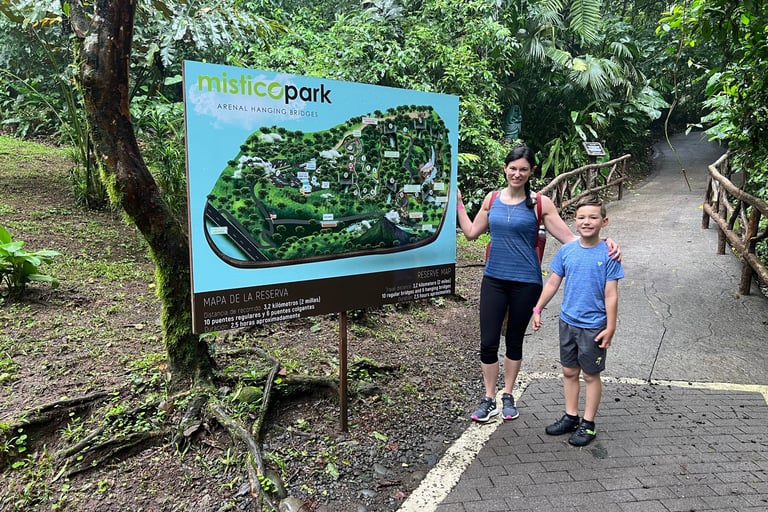
Having a car made it easy to visit some of La Fortuna's most popular family attractions, including Mistico Hanging Bridges, Zip lining, La Fortuna Waterfall and the area's hot springs. It also allowed us to arrive early before the crowds. You can read more about these experiences in: Best Things to Do in La Fortuna with Kids: 12 Family-Friendly Attractions
plan your TRIP TO costa rica
If you’re planning your family trip to La Fortuna, these guides will help you pull everything together:





About Plan Family Escapes
We’re a UK-based family sharing real, experience-led travel guides based on trips we’ve taken with our school-age son Joshua across destinations like Lapland, Turkey and India.
Everything we share is based on what we’ve personally experienced — with honest advice on what actually works when travelling with kids, focusing on making family travel easier, more comfortable and genuinely enjoyable.