Train vs Car for Families in India: Best Way to Do the Golden Triangle
Train vs Car for Families in India across the Golden Triangle? Compare costs, comfort, travel time and booking tips to choose the best option for families with kids
INDIAASIARESOURCES
4/3/20269 min read
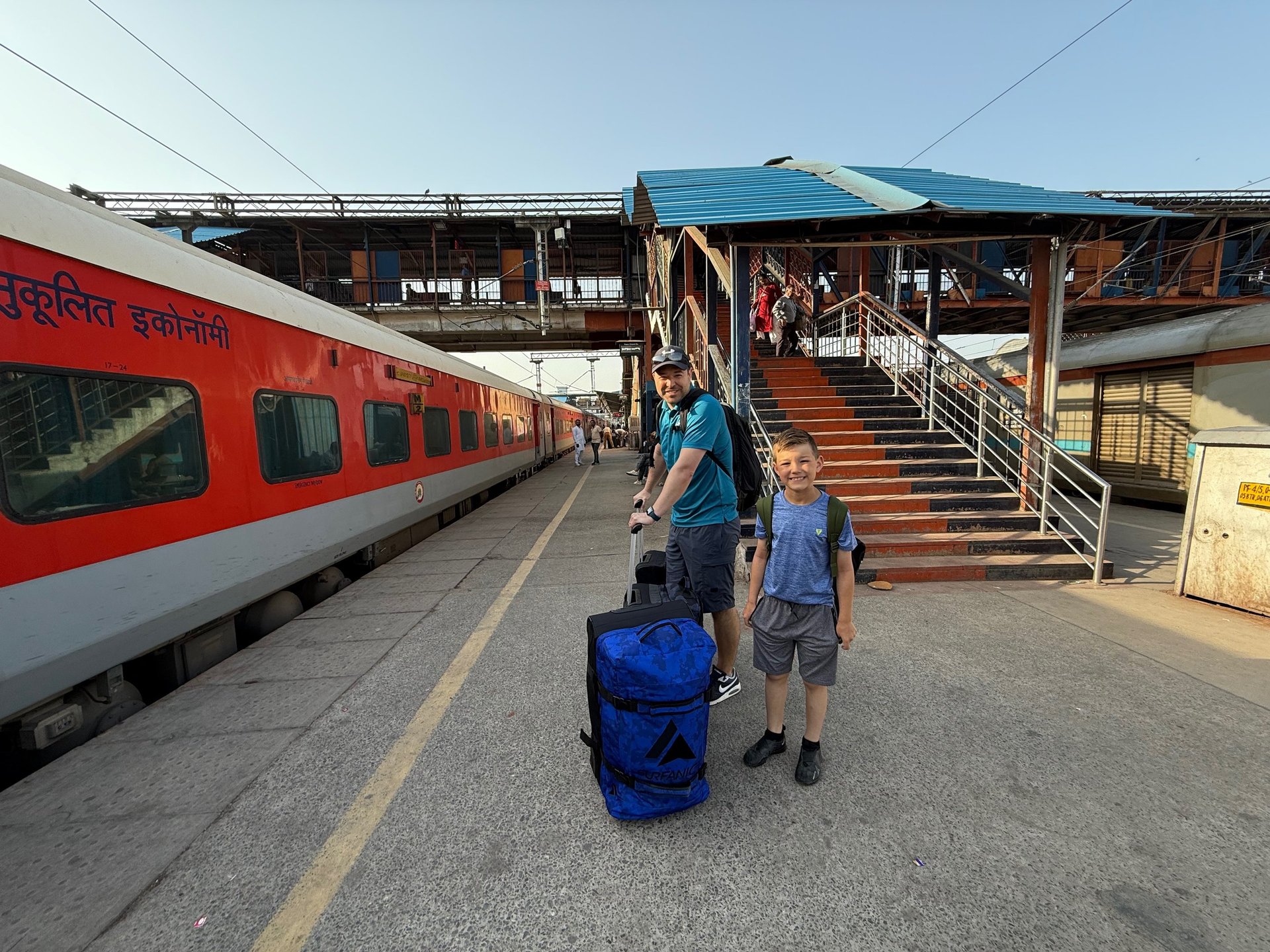
When planning the classic Delhi → Agra → Jaipur route, one of the first big decisions is how to actually get around.
If you’re wondering train vs car for the Golden Triangle India with kids — which is better, this guide is for families trying to balance comfort, safety and practicality.
This is one of the biggest questions when planning how to travel the Golden Triangle in India as a family, because both options work — but the experience is very different, especially with children.
Quick Answer: Train or Car for the Golden Triangle?
From our experience, the best option for most families is usually a mix of both.
Trains work well for Delhi ↔ Agra and Jaipur ↔ Delhi — faster, comfortable, and less tiring
A private car works best for Agra → Jaipur if you want flexibility and stops along the way
That combination gave us the best balance of ease, flexibility and low stress with a school‑age child.
We tested both on our own trip with Joshua, and the choice of transport had a bigger impact on the overall experience than we expected — particularly on energy levels, stress, and how manageable travel days felt.
This guide is for families looking for practical advice on:
private driver vs train for Golden Triangle family travel
the best way to travel Delhi Agra Jaipur with kids
what the main Golden Triangle transport options for families actually feel like in real life
and how to choose what works best for your itinerary
Some of the links in this guide are affiliate links, which means we may earn a small commission if you book through them — at no extra cost to you. We only include options we’ve personally used or would confidently recommend for family travel.
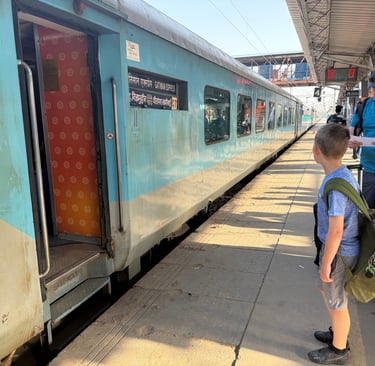
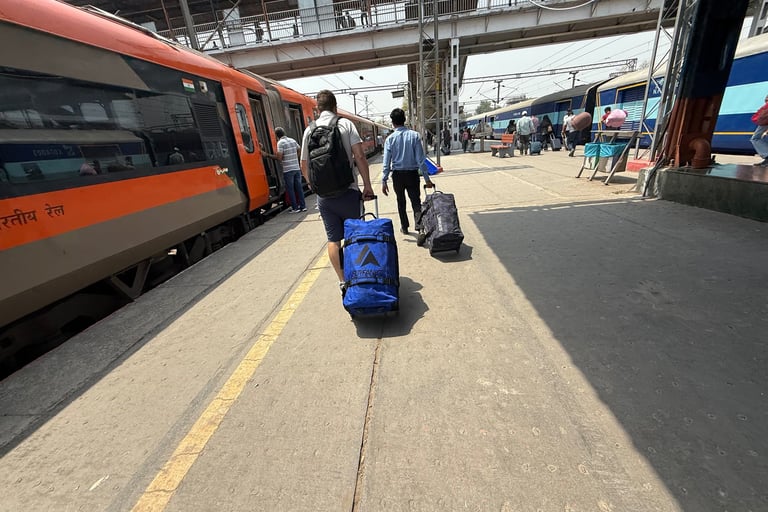
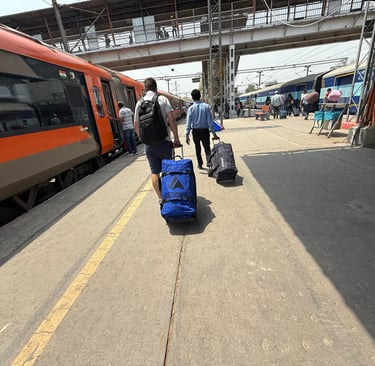
Train Travel in India
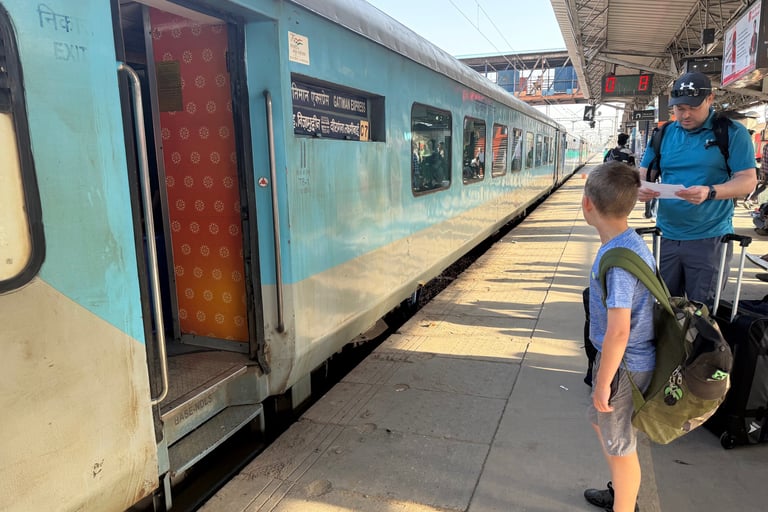
India has one of the largest rail networks in the world, and many of the main tourist routes are well connected. For Golden Triangle travel, trains between major cities are generally modern, air-conditioned and surprisingly comfortable.
Popular routes include:
Delhi → Agra
Jaipur → Delhi
These routes are often served by fast trains such as the Gatiman Express, which is one of India’s quickest trains.
Why Trains Work Well for Families
Faster Travel
For example:
Delhi → Agra train: around 2 hours
Delhi → Agra by car: around 4–5 hours
Avoiding highway traffic makes a noticeable difference.
Predictable Journey Times
Indian highways can be busy and unpredictable. Trains generally run on scheduled times, which makes planning the day easier.
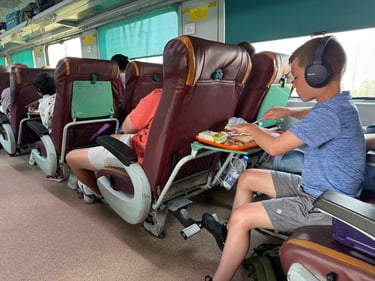
Comfortable Seating
First-class train cabins typically include:
air-conditioning
allocated seats
tables
onboard food service
toilets
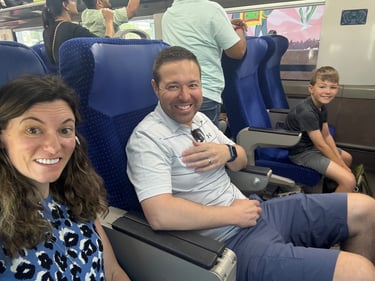
Children can also stand up, move slightly or look out the window, which is often easier than sitting in a car for several hours.
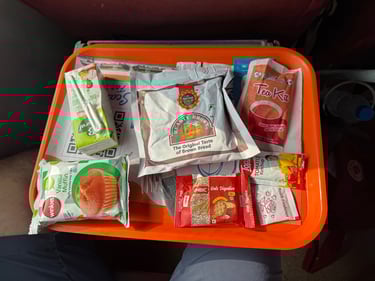
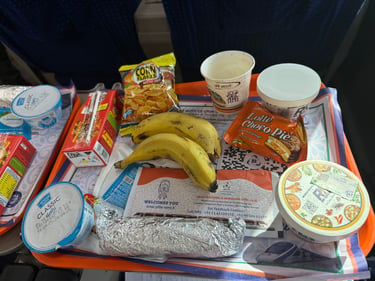
Food Served on Board
On most premium trains, food is included in the ticket price. Meals are served directly to your seat and typically include tea or coffee, snacks and a hot meal. While the food is simple, it removes the need to pack meals or search for restaurants during the journey.
Understanding Train Classes in India
India’s rail system has several classes, but most international travellers use the air-conditioned options. Common classes you’ll see when booking Golden Triangle routes include:
Executive Chair Car (EC) – This is the most comfortable daytime option on trains like the Gatiman Express. Seating is similar to UK standard class but with more service included. Seats recline, there’s air conditioning, and food and drinks are served at your seat. On our journey they even offered newspapers and a rose, which was a nice unexpected touch.
AC Chair Car (CC) – A slightly cheaper option with a denser seating layout. It still includes air conditioning and is perfectly comfortable for shorter journeys, but seats are smaller and the overall experience is simpler.
First Class AC (1A) – Private cabin compartments mainly used on overnight trains and generally not needed for Golden Triangle daytime routes.
We found travelling during the day, Executive Chair Car offers the best balance of comfort and value.
How Train Tickets Work
Train tickets in India are not flexible like many European rail systems.
Tickets are:
booked for a specific train
at a specific time
assigned to named passengers
When booking, you will typically need:
passport details
full names matching your passport
nationality
Your ticket is therefore linked directly to your identity, and you may be asked to show your passport when boarding. This is one reason many travellers prefer to have their hotel, driver or tour company book tickets on their behalf, as the system can feel complicated the first time.
Booking Trains Yourself
If you choose to book independently, common options include:
travel booking platforms such as 12Go.com
India Railways website (IRCTC)
Tickets can sell out on popular routes, especially during holiday periods, so booking several weeks in advance is recommended.
Choosing the Right Train Station in Delhi
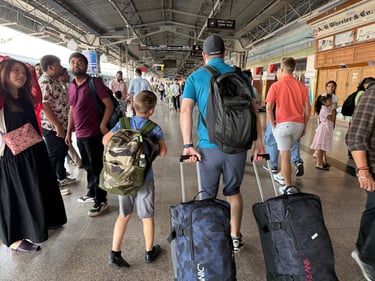
Another detail that surprises many travellers is that Delhi has multiple major railway stations.
Depending on your train, you might depart from or arrive at:
Hazrat Nizamuddin (NZM)
New Delhi Railway Station (NDLS)
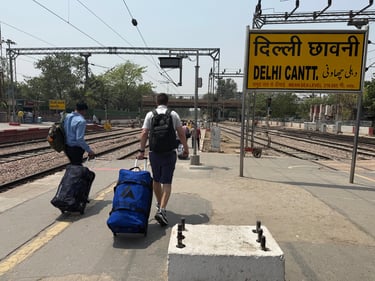
Delhi Cantt
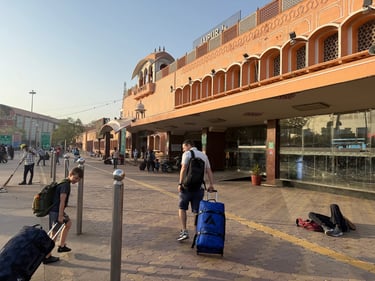
When planning your journey, check which station your train uses and choose the most convenient one relative to your hotel. For example, some trains to Agra depart from Hazrat Nizamuddin, which may be closer to certain hotels than New Delhi Station. This can make a noticeable difference when navigating morning traffic.
From Delhi to Agra we went out of Hazrat Nizamuddin Station, but when returning to Delhi we came into Delhi Cantt. This worked well for our hotels and timing of our itinerary.
What We Chose
For our Golden Triangle trip we used a mix of both transport types:
Delhi → Agra: train
Agra → Jaipur: private car with sightseeing stops
Jaipur → Delhi: train
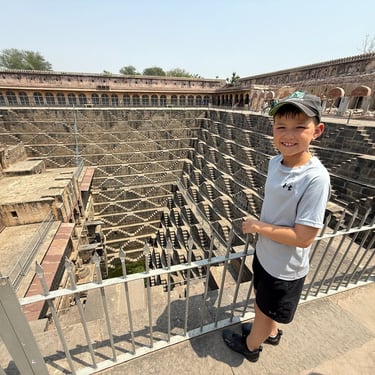
This approach gave us the speed and comfort of trains, while still allowing flexibility to stop at places like Fatehpur Sikri and Chand Baori on the drive to Jaipur.

When Private Cars Make More Sense
Private drivers are very common in India and are widely used for Golden Triangle travel.
The biggest advantage is flexibility.
You control:
departure times
stop locations
pace of travel
This can be particularly useful for the Agra → Jaipur leg of the trip.
Turning a Travel Day into a Sightseeing Day
The drive between Agra and Jaipur is about 240 km and usually takes around 4–5 hours.
However, travelling by car allows you to stop at sites that trains cannot reach easily, including:
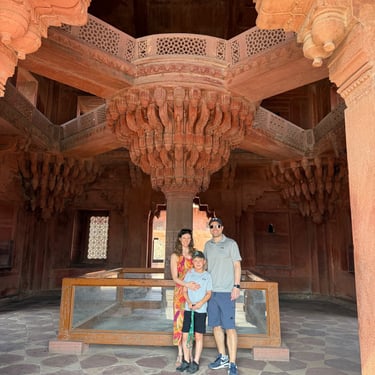
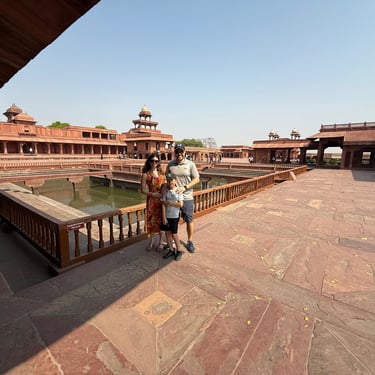
Fatehpur Sikri – a deserted Mughal capital built by Emperor Akbar
Chand Baori – one of the most impressive stepwells in India
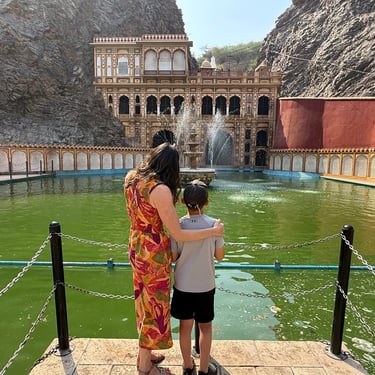
Galta Ji – a temple complex in the hills outside Jaipur
Breaking up the journey like this makes the day far more interesting than a single continuous transfer.
Downsides of Driving
Private cars are comfortable, but there are a few considerations.
Longer Travel Times
Road travel in India can take longer than expected due to:
traffic congestion
road conditions
city entry delays
A journey listed as four hours can easily stretch to five.
Less Movement for Children
Unlike trains, children are confined to their seat the entire time. For longer drives this can become tiring.
Traffic Can Be Intense
Indian driving styles can feel chaotic to visitors. While experienced drivers handle this well, the environment can be overstimulating for some travellers.
Booking Private Drivers
Private drivers can be arranged through:
hotels
tour companies
platforms such as GetYourGuide or Viator
Daily rates are generally reasonable and often include fuel and waiting time.
Our Family Experience
For our Golden Triangle trip we deliberately used a mix of train and car travel.
Delhi → Agra: train
Agra → Jaipur: private car with sightseeing stops
Jaipur → Delhi: train
This combination worked well. The train journeys were fast and comfortable, while the car journey allowed us to visit Fatehpur Sikri and Chand Baori, which we would otherwise have missed.
For a more detailed overview of our planning approach, see: How to Plan a Golden Triangle Family Trip: Flights, Visas, Trains, Hotels & Budget
What is the Difference in Cost between Car and Train?
One of the reasons trains are popular on the Golden Triangle route is the price difference compared with hiring a private driver.
Approximate costs (per journey):
Train (Executive Chair Car)
Around ₹1,500–₹2,500 per person (£15–£25)
Children may receive reduced fares depending on age
Private Car with Driver
Around ₹6,000–₹10,000 per vehicle (£60–£100) depending on distance, car type and waiting time
For a family of three, the price difference can actually be fairly small. Trains may cost around £45–£70 total, while a private car might be £70–£100 for the whole vehicle. Because of this, the decision often comes down to convenience and travel style rather than price alone.
For a more detailed look at costs across a family Golden Triangle trip, see: How Much a 10-Day Golden Triangle Family Trip Costs
Can I book my own transport in India or do I need an organised tour?
Yes — you can absolutely book your own transport in India, including trains and private drivers, and many families do.
From our experience, self‑planning works well if you’re comfortable organising tickets, timings and transfers yourself.
However, some families prefer fully organised or private tours for simplicity — especially on a first visit or with younger children.
If that feels like a better fit, it’s worth exploring options on TourRadar.
If you’re deciding between the two, our guide on Self-Guided vs Private Tours in India: Which Works Better with Kids? breaks down what works best depending on your travel style and how much support you want.
Which Option Is Best for Families Train or Car?
For most Golden Triangle itineraries, trains are the easiest option for the main city routes, especially when travelling with children.
That said, a private car becomes invaluable if you want flexibility or plan to stop along the way.
In reality, a mix of both works best — using trains for longer connections and a car for the Agra → Jaipur stretch gives the ideal balance of comfort, efficiency and flexibility for families.
FAQs: Train vs Car for the Golden Triangle (Families)
Is it better to take a train or hire a private driver in India with kids?
From our experience, a mix of both works best for families.
Trains are faster and less tiring for longer routes like Delhi ↔ Agra
A private driver gives flexibility for routes like Agra → Jaipur
This combination gives the best balance of comfort, ease, and flexibility for family travel.
What is the easiest way to travel the Golden Triangle with kids?
The easiest option for most families is:
train for major city connections
car for sightseeing routes
This avoids long hours in traffic while still allowing you to stop at places like Fatehpur Sikri or Chand Baori, which would otherwise be missed.
Are trains in India comfortable for families?
Yes — particularly in Executive Chair Car or AC Chair Car.
From our experience, trains were:
air-conditioned and well organised
easy to manage with children
more relaxing than sitting in a car for several hours
include a meal
They also allow kids to move slightly and break up the journey, which makes a big difference on travel days.
When is it better to use a private driver instead of the train?
A private car is the better choice when:
you want to stop at sights along the way
you prefer flexible departure times
or you’re travelling shorter, sightseeing-focused routes
We found this especially useful between Agra and Jaipur, turning a travel day into part of the experience.
Is it safe to travel by train in India with kids?
Yes, especially on the main Golden Triangle routes.
We found daytime trains to be:
busy but well organised
safe and straightforward to navigate
If you’re thinking about wider safety and what to expect travelling in India with children, our guide on Is India Safe to Travel With Kids? helps set expectations.
How far in advance should you book trains in India?
For popular routes like Delhi → Agra, it’s best to book several weeks in advance, especially during busy travel periods.
Many families choose to book through platforms or as part of a wider itinerary, which can make things simpler if you’re unfamiliar with the system.
What’s the biggest mistake families make with Golden Triangle transport?
Trying to do everything with one method.
From our experience:
trains alone limit flexibility
cars alone can feel long and tiring
The trips that work best combine both — something we also learned through other planning decisions in Family Holiday Mistakes to Avoid: Credit Card Scams, Food Bugs, Hotel Charges & Cancelled Flights.
How does this choice affect the overall trip experience?
More than you might expect.
The right transport mix:
reduces travel fatigue
keeps days flowing smoothly
and makes the trip feel far more manageable with kids
It’s one of those planning decisions — like where to stay or how to book tours — for a deeper look at planning, see: How to Plan a Golden Triangle Family Trip: Flights, Visas, Trains, Hotels & Budget
plan your TRIP TO india with kids
If you’re planning your family trip to India, these guides will help you pull everything together:


About Plan Family Escapes
We’re a UK-based family sharing real, experience-led travel guides based on trips we’ve taken with our school-age son Joshua across destinations like Lapland, Turkey and India.
Everything we share is based on what we’ve personally experienced — with honest advice on what actually works when travelling with kids, focusing on making family travel easier, more comfortable and genuinely enjoyable.