A Practical 10–14 Day Family Golden Triangle Itinerary (Delhi → Agra → Jaipur)
Planning a family trip to India? Here’s our real 10–14 day Golden Triangle itinerary covering Delhi, Agra and Jaipur, with kid-friendly hotels, train travel tips, sightseeing highlights and practical advice for a smooth, memorable family holiday.
INDIAASIAITINERARY
4/10/202612 min read
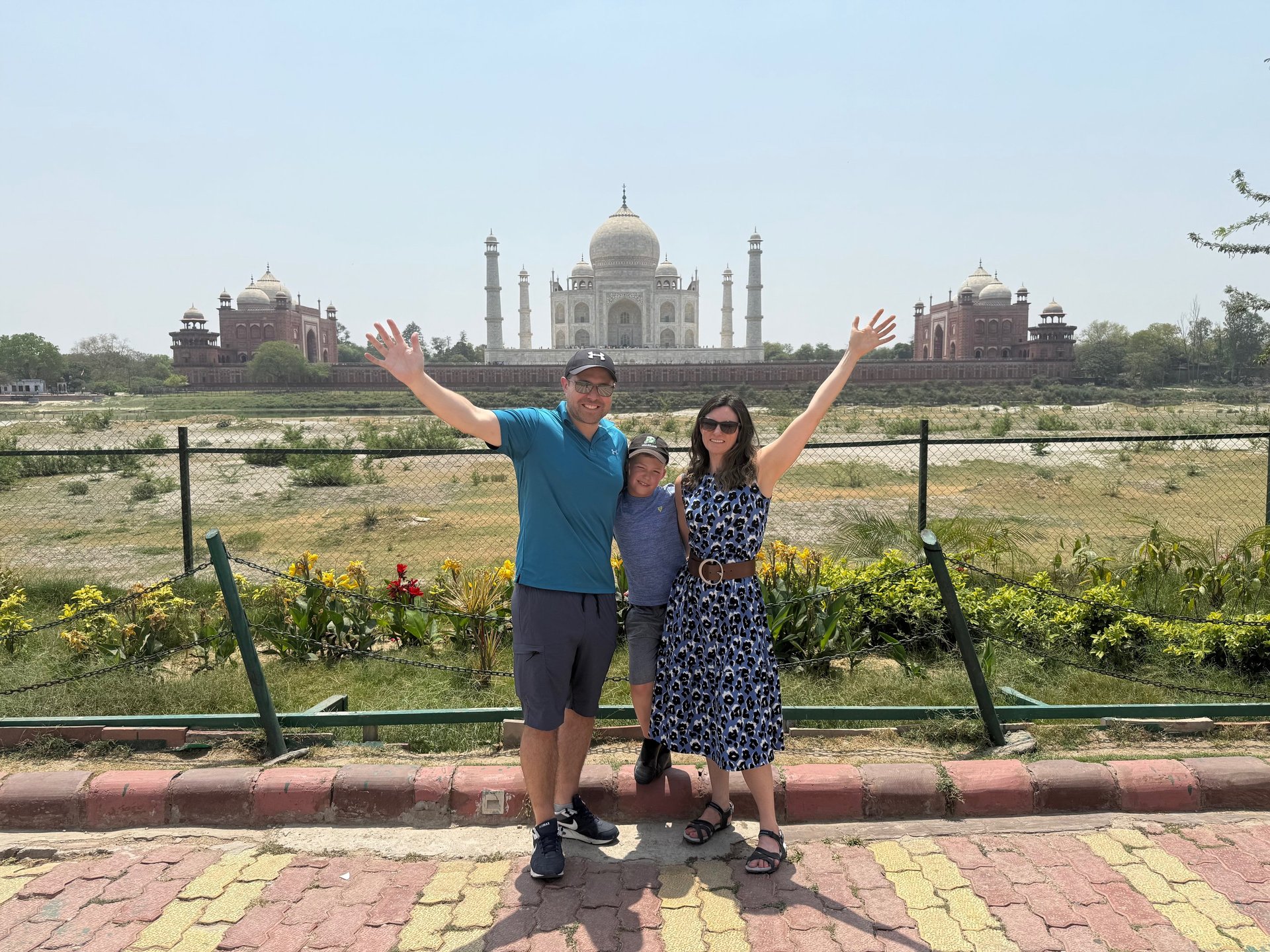
If you’re looking for a 10 day Golden Triangle India itinerary with kids (or even stretching to two weeks), this guide is for families who want a realistic, step‑by‑step plan — not an overpacked schedule that’s hard to manage with children.
Whether you’re planning your first trip or trying to work out what to do each day in Delhi, Agra and Jaipur with kids, this is a practical Golden Triangle itinerary for families based on what actually worked for us travelling with Joshua.
Quick answer: what’s the best Golden Triangle itinerary for families?
A 10–14 day Golden Triangle India itinerary is the sweet spot. It gives you enough time to explore Delhi, visit the Taj Mahal in Agra, experience Jaipur’s forts, and still build in downtime — which is what makes the trip manageable with kids.
Quick View - Golden Triangle Family Itinerary (10–14 Days)
Days 1–2: Delhi
Acclimatise, explore key sights with a guide (Qutub Minar, India Gate, Old Delhi), keep the pace lightDays 3–5: Agra
Travel by train or driver, visit the Taj Mahal (sunrise), Agra Fort, and build in a pool/rest dayDays 6–8: Jaipur
Travel from Agra (with optional stops like Fatehpur Sikri), explore Amber Fort, City Palace, and enjoy resort downtimeDays 9–10: Delhi (Aerocity)
Return for a relaxed final stay near the airport, last shopping or easy sightseeingDay 11: Fly home
Optional Adjustments (to stretch to 12–14 days)
Add an extra pool/rest day in Jaipur
Add a slower start in Delhi to adjust to the time difference
Include a flexible buffer day for travel delays or downtime
Most tours rush the Golden Triangle in just 3 days — we actually did that ourselves back in 2014 as a couple. This time, travelling with Joshua, we knew we wanted something completely different: a slower pace, better hotels with pools, and time to actually enjoy each place. After all, when you’re flying 10 hours from the UK, it doesn’t make sense to rush it.
The biggest mistake families make is trying to cram everything in. What worked for us was keeping a realistic pace, mixing key sights with proper downtime (especially pool time), and structuring travel days so they didn’t feel overwhelming. That shift is what turns a Golden Triangle India itinerary with children from exhausting into genuinely enjoyable.
Below is our family Golden Triangle route (Delhi → Agra → Jaipur) laid out day by day, so you can see exactly how to space things out — and where flexibility matters. If you’re in the planning stage, head to How to Plan a Golden Triangle Family Trip: Flights, Visas, Trains, Hotels & Budget, where we walk through exactly how we planned the trip and include the booking tools and links we used.
Just a quick note: you’ll see some links throughout this guide to hotels, transport options and tours we used. These are affiliate links, which means we may earn a small commission at no extra cost to you. We only recommend options we’ve personally used or would confidently choose again for a family trip.
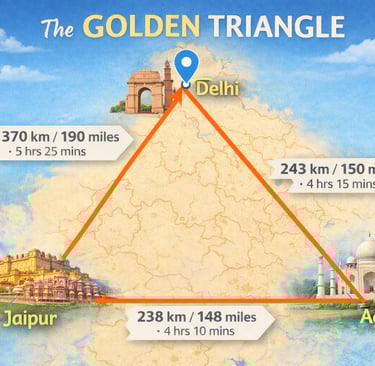


Is the Golden Triangle good for kids?
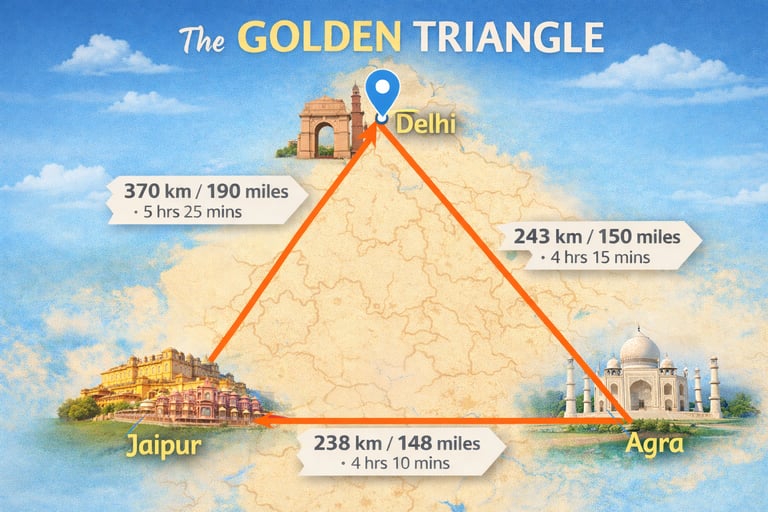
Yes — for most families, the Golden Triangle is one of the best ways to experience India with children. The distances between Delhi, Agra and Jaipur are manageable, the main sights are well organised, and there’s a strong range of family‑friendly hotels, which makes it a good introduction to travelling in India.
That said, how much you enjoy it comes down to how you plan the trip. It can feel overwhelming if rushed, but very manageable — and genuinely rewarding — if you slow the pace and build in downtime.
Done well, the Golden Triangle with kids isn’t just manageable — it’s one of the most memorable family trips you can take.
If you’re still deciding whether it’s the right fit for your family, Is the Golden Triangle Good for Kids? What Parents Should Know goes into more detail on what to expect and how to approach it.

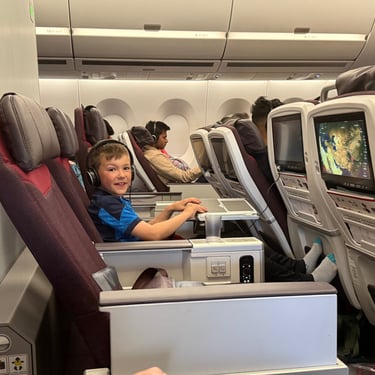

Delhi: Days 1 - 2
Delhi works best as an introduction to India, ideally explored with a private driver or half-day guided tour.
The city is large and traffic can be slow, so having transport organised allows families to move efficiently between sites and return to the hotel before everyone becomes overstimulated. Many of the most interesting attractions are also large open monuments, which work well with children because they allow space to explore rather than stand still listening to long explanations.
Day 1: Arrive & acclimatise
Day 2: Morning organised site seeing + afternoon by the pool
Key Sites That Work Well With Kids
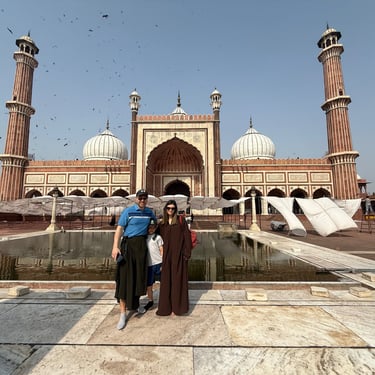
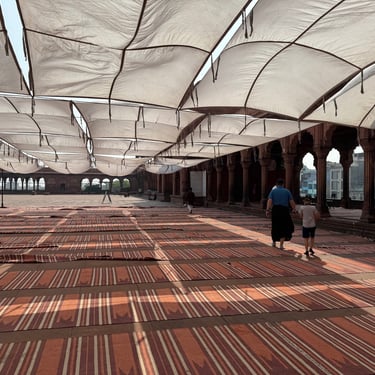
Jama Masjid – The largest mosque in India, built in the 17th century. Its enormous courtyard gives children space to move around while visiting one of Delhi’s most important historic sites.
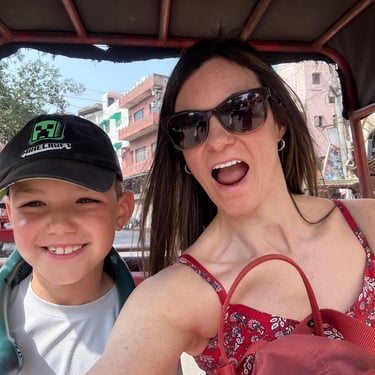
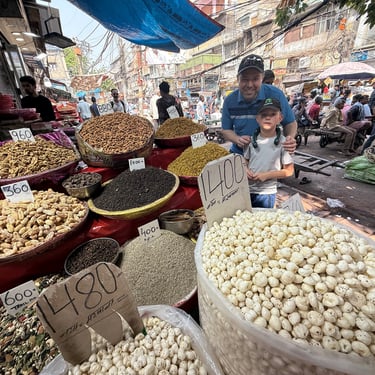
Old Delhi Rickshaw Ride (Chandni Chowk) – A short cycle rickshaw ride through busy market streets. Chaotic but exciting, and usually one of the most memorable parts of visiting Old Delhi.
India Gate – A large war memorial set within open parkland. The surrounding lawns give children space to run around between sightseeing stops.
Lotus Temple – A striking modern temple shaped like a lotus flower. It’s visually distinctive and works well as a short stop.
Humayun’s Tomb – A UNESCO-listed Mughal tomb set within large formal gardens, often described as the architectural inspiration for the Taj Mahal.
Qutub Minar – One of the tallest brick minarets in the world. The surrounding ruins and open space help keep children engaged.
Optional: Red Fort – A vast Mughal fort beside Old Delhi. It’s historically important but many families skip it because forts later in the trip, particularly in Agra and Jaipur, often feel more engaging.
Where We Stayed in Delhi
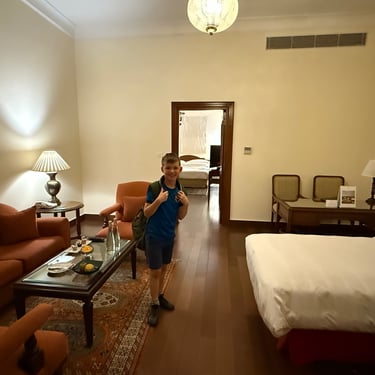
We stayed at Maidens Hotel, for its quiet setting, large gardens and swimming pool — all of which made a big difference after intense days in the city. It worked particularly well with a school‑aged child who needed space to unwind.
If comfort and calm matter to you in Delhi, this is a hotel worth shortlisting.
Hotel review: Where to Stay in Delhi: Modern Aerocity or Historic Charm? Family Hotel Review
How Children Experience Delhi
Children tend to engage most with movement and scale. Sites where they can walk through gardens, explore courtyards or watch the energy of city streets tend to hold their attention much longer than indoor museums.
For a full breakdown of activities and family-friendly sights see: Best Things to Do in Delhi with Kids During School Holidays
Agra: Days 3 - 5
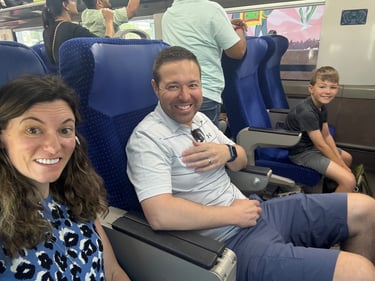
Taking the train from Delhi to Agra significantly reduces stress. The journey typically takes around 1 hour 40 minutes to 2 hours on faster services such as the Gatimaan Express, making it much quicker and more predictable than driving, which can take 4–5 hours depending on traffic.
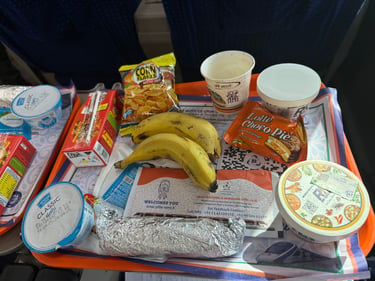
The trains are air-conditioned with reserved seating and food service, making them a comfortable option for families travelling with children.
If you're deciding how to travel between cities with children, see: Train vs Car for the Golden Triangle: What Works Best for Families?
Day 3: Train to Agra AM. Visit Itimad-ud-Daulah & Mehtab Bagh on arrival. Afternoon by the pool.
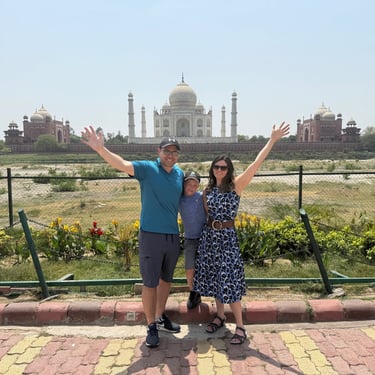
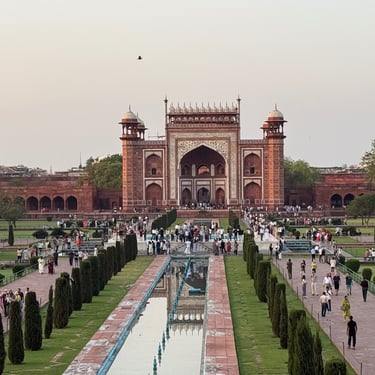
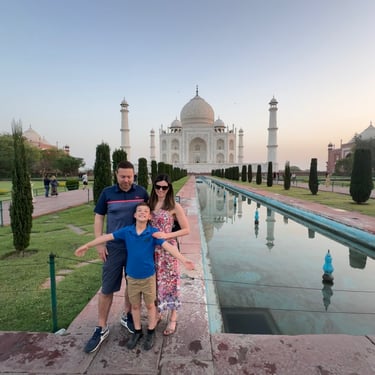
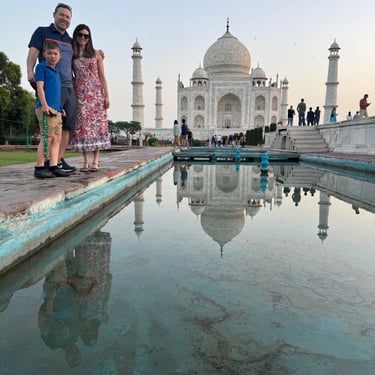
Day 4: Taj Mahal at sunrise + Agra Fort. Afternoon by the pool.
Day 5: Pool day
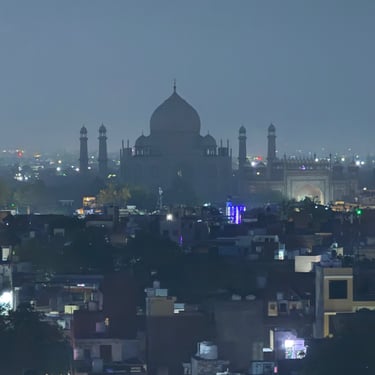
Visiting the Taj Mahal at sunrise is usually the most rewarding option for families. Temperatures are cooler, crowds are lighter and the experience feels calmer with children. For a detailed comparison of timing options see: Taj Mahal Morning vs Midday: What Works Best with Kids?
If you want practical guidance on tickets, entry procedures and how to structure the visit with children read: Visiting the Taj Mahal with Kids: Best Times, Tips & Nearby Activities
Key Sites to Visit in Agra
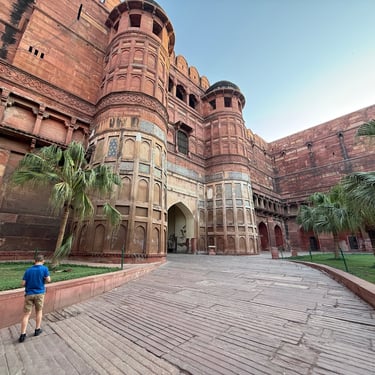
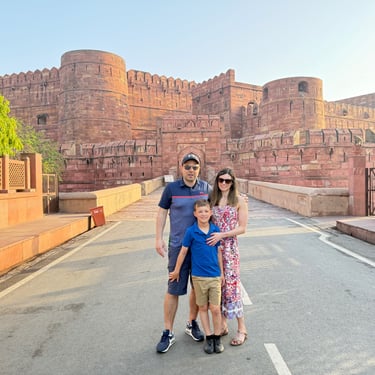
Agra Fort – A vast red sandstone Mughal fort with large courtyards and views toward the Taj Mahal.
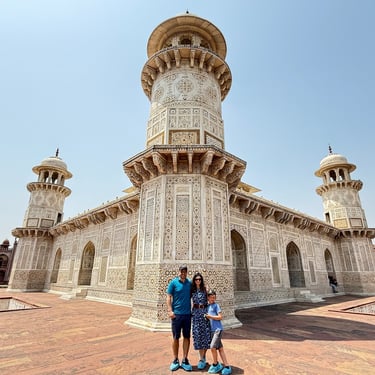
Itimad-ud-Daulah – Often called the “Baby Taj,” this smaller marble tomb is quieter and beautifully detailed.
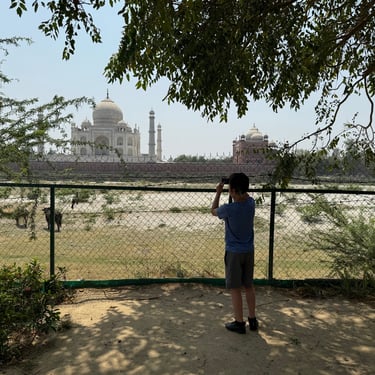
Mehtab Bagh – Riverside gardens offering one of the best sunset views of the Taj Mahal from across the Yamuna River.
Where We Stayed in Agra
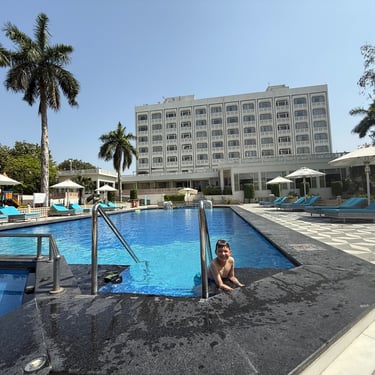
In Agra we stayed at Tajview Agra, and it worked exceptionally well with a child. After an early sunrise visit to the Taj Mahal, the pool and gardens gave Joshua time to rest and reset before heading back out later in the day. If you’re planning a long or early sightseeing schedule in Agra, staying somewhere with space to unwind makes a huge difference for families.
For our full review of the hotel and why it works well for families visiting the Taj Mahal, see: Hotel Review: Tajview, Agra — Family Friendly Stay with Taj Views & Relaxed Amenities
What Else to Do in Agra With Kids
While the Taj Mahal is the main highlight, there are several other sites that work well with children if you have time in the city. For a full breakdown of activities beyond the Taj Mahal, see: Best Things to Do in Agra with Kids Beyond the Taj Mahal
Day 6 - Travel to Jaipur
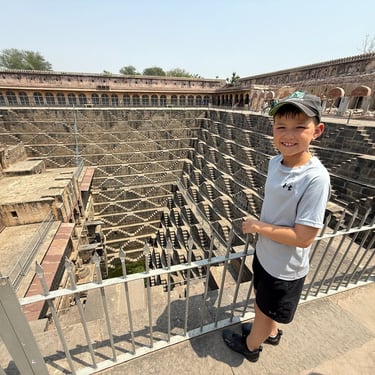
The journey from Agra to Jaipur takes around 4–5 hours by car (roughly 240 km) and is often turned into a sightseeing day with stops along the way, such as Fatehpur Sikri, Chand Baori stepwell and Galta Ji (Monkey Temple) . While trains also run between the cities, many families choose to drive this section so they can break up the journey with interesting stops.
For a comparison of these two travel options, see: Train vs Car for the Golden Triangle: What Works Best for Families?
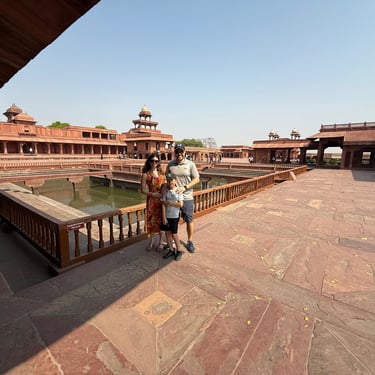
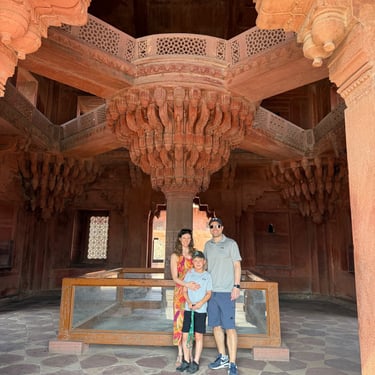
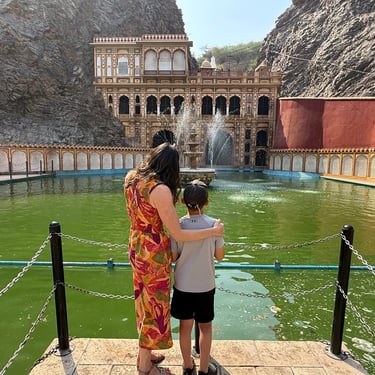
Jaipur: Day 6 - 8
For many families, Jaipur becomes the highlight of the Golden Triangle.
Day 6: Travel to Jaipur - site seeing along the way. Afternoon by the pool.
Day 7: Site seeing Jaipur.
Day 8: Pool day
Key Sites to Visit in Jaipur
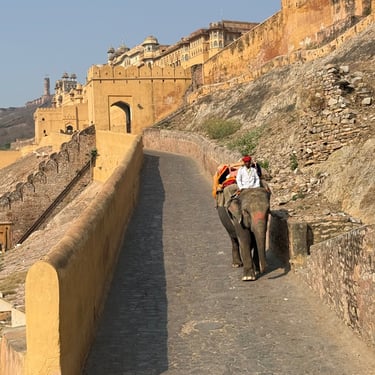
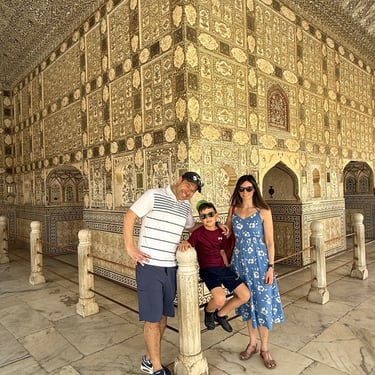
Amber Fort – A dramatic hilltop fort with layered courtyards, palace rooms and panoramic views across the surrounding hills.
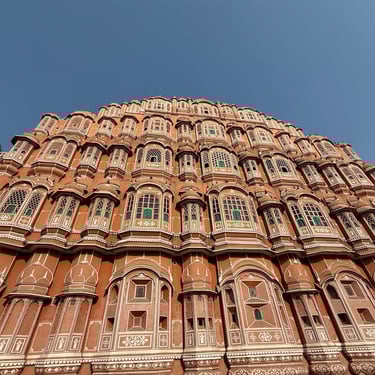
Hawa Mahal – Jaipur’s famous pink honeycomb façade, originally designed so royal women could observe street life unseen.
City Palace Jaipur – A royal palace complex containing museums, courtyards and colourful gateways that bring Jaipur’s royal history to life.
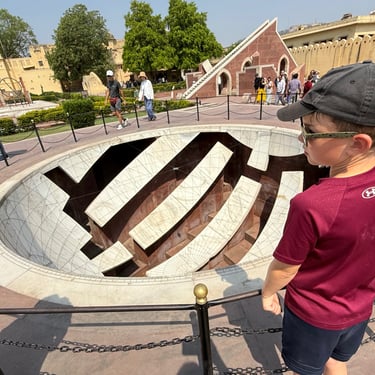
Jantar Mantar Jaipur – A UNESCO-listed observatory filled with giant astronomical instruments used to track time and stars centuries ago.
Where We Stayed in Jaipur
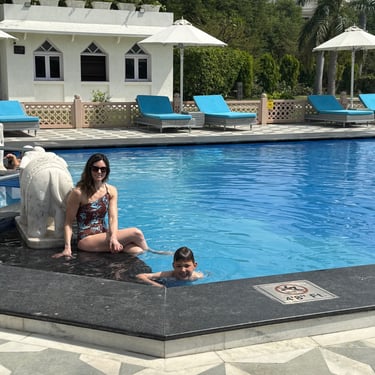
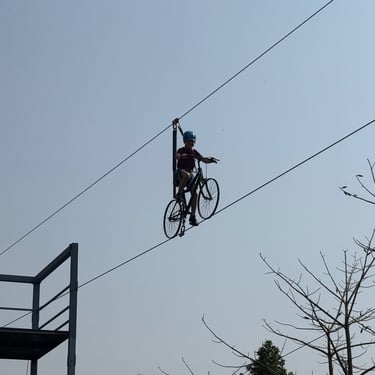
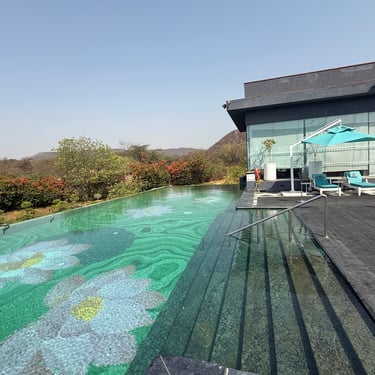
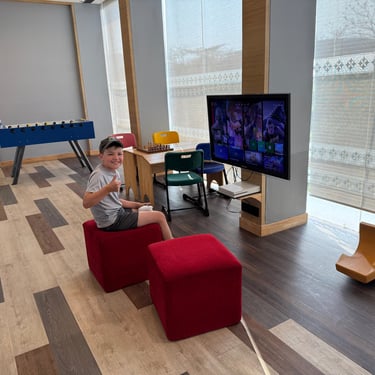
In Jaipur we stayed at Taj Devi Ratn Resort & Spa, and it was the perfect spot to relax in Jaipur. The pool, games room and spacious grounds made it feel much more like a resort, which helped the final days feel relaxing rather than exhausting after several busy sightseeing stops. Our stay was half board, and the food was excellent.
If you’re visiting Jaipur with kids, choosing somewhere that allows proper downtime — this hotel worked brilliantly for that.
For our full review of the hotel and why it works well for families, see: Family Stay at Taj Devi Ratn Resort & Spa Jaipur: Pool, Games, and Kid-Friendly Fun
What Else to Do in Jaipur With Kids
Jaipur has a wide mix of forts, palaces and cultural sites, so it’s worth planning a structured day rather than trying to see everything at once.
For a full breakdown of family-friendly activities and how to structure a sightseeing day, see: What to Do in Jaipur with Kids: Forts, Palaces & Fun Activities
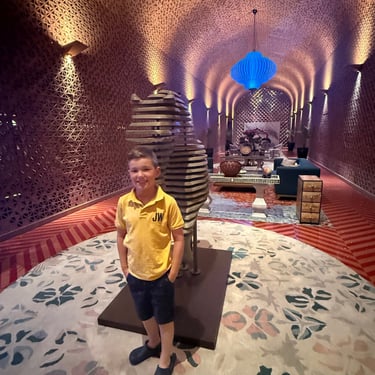
Delhi Aerocity : Days 9 - 10
Day 9: Travel by train to Delhi. Afternoon by the pool.
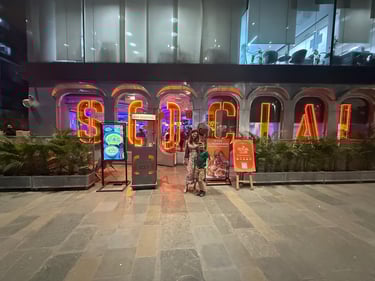
Day 10: Pool day + explore Aerocity mall
Returning to Delhi for the final night is usually more about logistics than sightseeing. After several days of forts, monuments and early starts, many families find it helpful to stay close to the airport before flying home. The Aerocity area offers modern hotels, reliable restaurants and a calmer environment than central Delhi.
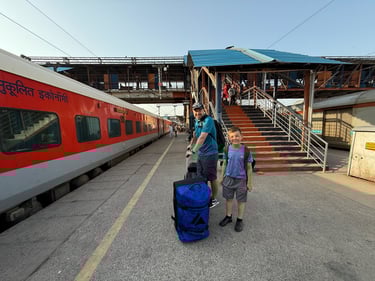
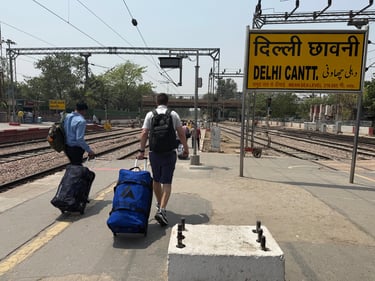
We travelled back from Jaipur by train, which took around 4–4.5 hours. Like the Delhi–Agra journey, the train was air-conditioned with reserved seating and food service, making it a comfortable option after a busy week of travel. For families, it’s often far less tiring than a 5–6 hour car journey that can be slowed by traffic.
Once back in Delhi we stayed at Aloft New Delhi Aerocity. The pool, gym and relaxed atmosphere made it a comfortable place to reset after the intensity of the Golden Triangle route.
Staying in Aerocity also meant we were only around 5–10 minutes from the airport, removing any early-morning traffic stress on departure day. For many families, this final stop acts as a soft landing before the journey home, giving everyone time to relax after a busy and memorable trip.


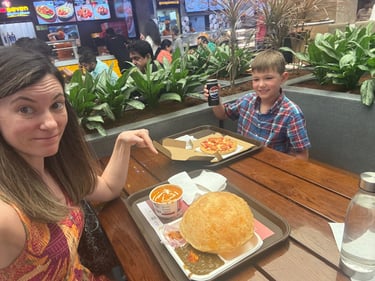
Comfort, Adventure and Fatigue: The Real Trade‑Off
The Golden Triangle offers an incredible cultural experience, but with kids it’s all about balancing comfort, adventure and fatigue.
Comfort comes from making simple choices that reduce friction — using trains instead of long car transfers, limiting each day to one main highlight, building in downtime (often around the hotel pool), and choosing well‑rated, family‑friendly hotels. If you’re deciding where it’s worth spending more, Budget vs Luxury Travel in India with Kids: Where Comfort Really Matters explains what actually makes a difference on a family trip.
Adventure is what makes the trip memorable — sunrise visits to the Taj Mahal, rickshaw rides through busy streets, and exploring historic forts in Jaipur.
But fatigue builds quickly if you try to do too much. Long transfers, packed sightseeing days and skipping downtime are what tip the balance the wrong way.
For families, the key is simple: manage the pace carefully.
How to Make the Golden Triangle Work with Kids
Preparation is what turns this from a challenging trip into a smooth one. A few key decisions make a big difference:
prioritise trains or easy transfers where possible
pre‑book key tours and transport
choose hotels with space to relax (pools make a huge difference)
If you want to see how this all fits together, How to Plan a Golden Triangle Family Trip: Flights, Visas, Trains, Hotels & Budget walks through the full process step by step.
Packing also plays a bigger role than most people expect. Having the right basics for heat, hygiene and long days makes everything easier — What to Pack for India with Kids: A Practical Family Checklist covers what actually helps versus what you can skip.
How you approach sightseeing matters too. Deciding whether to use guides or go solo can change how smooth (or stressful) the day feels, especially with kids. Self-Guided vs Private Tours in India: Which Works Better with Kids? explains when each approach works best.
And finally, understanding the cost upfront helps avoid surprises and lets you plan at the right level for your family. How Much a 10-Day Golden Triangle Family Trip Costs (With Real Numbers) breaks down exactly what to expect.

Final Decision: Is the Golden Triangle Worth It With Kids?
If your priority is ease and predictability above all else, there are simpler destinations.
But if your goal is cultural depth, architectural scale and giving your child firsthand experience of one of the world’s most historically significant regions, the Golden Triangle delivers exceptional value.
With realistic pacing and thoughtful planning, it becomes one of the most educational and memorable family trips you can take with a school-age child.
FAQ: India Family Itinerary
Is 10 days enough for the Golden Triangle with kids?
Yes — 10 days is enough for a Golden Triangle itinerary with kids if you keep a realistic pace and don’t try to see everything. A 10–14 day trip gives you time to balance sightseeing with downtime, which makes a big difference to how manageable the trip feels as a family.
What is the best Golden Triangle itinerary for families?
The best Golden Triangle itinerary for families spreads Delhi, Agra and Jaipur over 10–14 days with built‑in rest time. A slower pace, fewer sights per day, and good hotel choices make the experience far more enjoyable. If you’re still planning the trip structure, How to Plan a Golden Triangle Family Trip shows how to put this together step by step.
What is the best way to travel between Delhi, Agra and Jaipur with kids?
Most families use a mix of trains and private drivers. Trains are often quicker for long distances, while drivers work well for flexible routes like Agra to Jaipur with sightseeing stops. Train vs Car for the Golden Triangle: What Works Best for Families? explains when each option makes sense.
Is the Golden Triangle too intense for children?
It can be if rushed. Busy cities, early starts and long days can quickly become overwhelming. The key is pacing — limiting sightseeing, adding downtime and choosing comfortable hotels. Is the Golden Triangle Good for Kids? explains what to expect and how to plan it properly.
How much does a Golden Triangle family trip cost for 10–14 days?
Costs vary depending on comfort level, but most families will spend more than expected once flights, hotels and transport are included. How Much a 10-Day Golden Triangle Family Trip Costs breaks down real numbers so you can plan realistically.
plan your TRIP TO india with kids
If you’re planning your family trip to India, these guides will help you pull everything together:





About Plan Family Escapes
We’re a UK-based family sharing real, experience-led travel guides based on trips we’ve taken with our school-age son Joshua across destinations like Lapland, Turkey and India.
Everything we share is based on what we’ve personally experienced — with honest advice on what actually works when travelling with kids, focusing on making family travel easier, more comfortable and genuinely enjoyable.