Taj Mahal Morning vs Midday: What Works Best with Kids?
Taj Mahal Morning vs Midday: What Works Best with Kids? Compare crowds, heat and timing to decide the best visit strategy for your family.
INDIAASIARESOURCES
3/27/20268 min read

If you’re planning a visit and wondering Taj Mahal morning vs midday with kids — which is actually better, this is one decision that can make or break the experience.
Quick Answer: Morning or Midday at the Taj Mahal with Kids?
From our experience, early morning is usually best for families — cooler temperatures and fewer crowds make it easier.
However, midday can still work surprisingly well, especially if early starts don’t suit your child and you plan around the heat carefully.
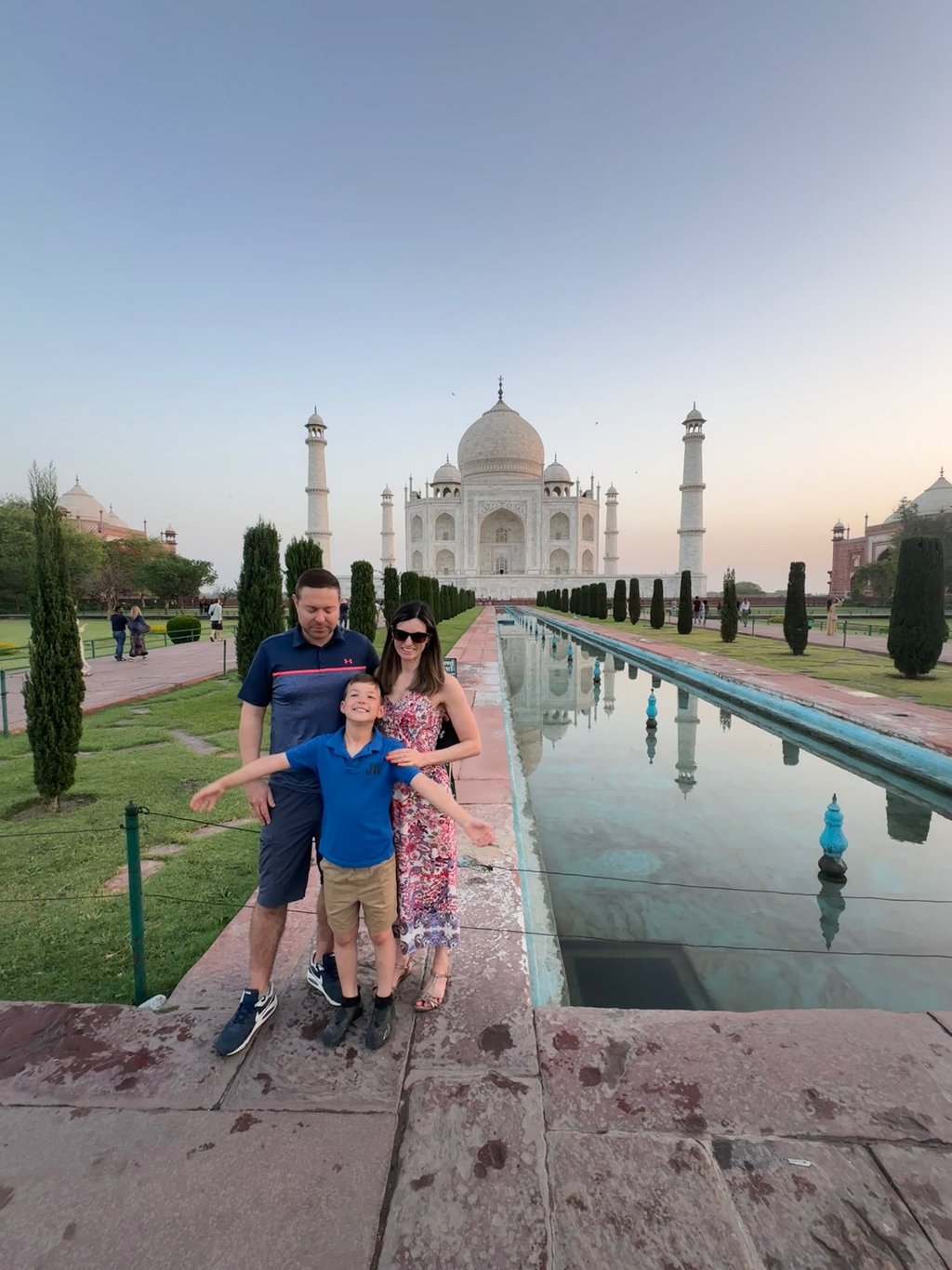
We’ve visited the Taj Mahal both as a couple and later with Joshua, and the difference was clear. What sounds ideal on paper doesn’t always work in real life with a child — especially when you factor in early wake-ups, queues and heat later in the day.
This guide is for families trying to work out:
when to go to the Taj Mahal with children to avoid crowds and heat
what actually feels easier with kids — early morning or later in the day
and how timing impacts energy, queues and overall experience
Some of the links in this guide are affiliate links, which means we may earn a small commission if you book through them — at no extra cost to you. We only recommend options that made planning and visiting easier for our family.


Taj Mahal Opening & Closing Times — What Families Should Know
Timing matters at the Taj Mahal more than most parents realise — not just for avoiding crowds, but also for planning your train, driver or hotel schedule around Agra.
Daily Visiting Hours
The Taj Mahal does not follow fixed clock hours (like “9 AM–5 PM”). Instead, visiting hours are tied to sunrise and sunset:
Gates open: ~30 minutes before local sunrise
Monument closes: ~30 minutes before local sunset
That means the exact times shift daily with the sun. For example, in summer months gates frequently open around 5:30 AM, whereas in winter they might open around 6:30 AM and close accordingly in the early evening.
Ticket counters at the western and eastern gates open about 1 hour before sunrise and close about 45 minutes before sunset, so arriving early ensures you get inside by opening.
Closed Days
The Taj Mahal is closed to general visitors every Friday. This isn’t an arbitrary maintenance day — it is closed because the mosque within the complex is used for jumma (Friday) prayers, and public sightseeing is not permitted during this time.
If your Golden Triangle itinerary places you in Agra on a Friday:
Plan visits to Agra Fort, Itimad-ud-Daulah or Mehtab Bagh that day
Return to the Taj earliest the next morning for the best experience
Why This Matters for Families
With school-age children, timing becomes a comfort strategy:
Visiting near opening gives you lower heat, fewer crowds and more space for movement
Arriving too late (especially after mid-morning) often means battling sun and congestion
Planning around the Friday closure prevents last-minute itinerary reshuffles
Keeping these timing rules in mind makes your Taj visit more predictable and less tiring — especially when paired with your hotel and rail schedules
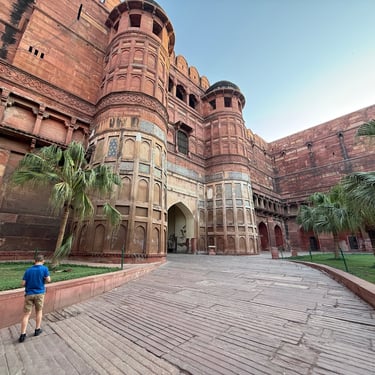
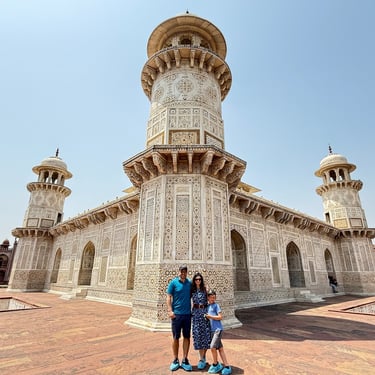
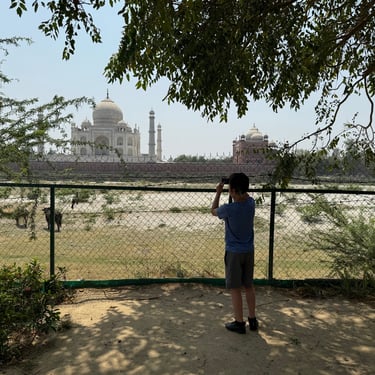

The Case for a Morning Visit (Why Most Families Choose It)
For school-age children, early morning is usually the stronger option.
1. Cooler Temperatures
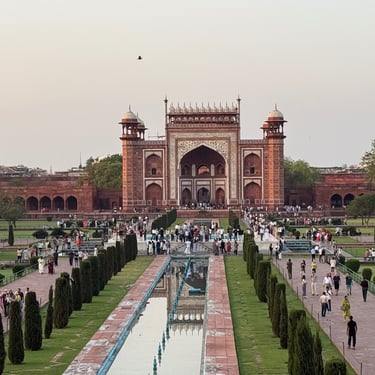
Agra heats up quickly, especially outside winter. By 9:30–10:00am, the marble reflects sunlight and the central pathway offers little shade.
At sunrise, the temperature is noticeably lower. Children tolerate walking longer and are less likely to become irritable.
2. Fewer Crowds
The Taj is one of the most visited landmarks in the world. Tour groups build rapidly as the morning progresses.
Earlier entry means:
More space to move
Less pressure during photos
A calmer environment inside the mausoleum
For children, physical space directly impacts mood.
3. Shorter Security Lines
Security is strict. Bags are screened and queues can become long. In the morning, lines move faster.
With children, waiting in direct sun is often the hardest part of the visit.
4. Better Overall Day Structure
A sunrise visit allows this rhythm:
Early Taj visit
Return to hotel for breakfast
Midday pool and rest
Optional late afternoon site
This pacing reduces cumulative fatigue across your Agra stay.
The Trade-Off
You’ll need an early wake-up. For jet-lagged children, that may not feel difficult. For others, it requires preparation the night before.
But most families find the early effort pays off in comfort later.
Be aware insects are more common in the mornings so be sure to put in insect repellent before you leave the hotel (I was caught out by this).
The Case for a Midday Visit (When It Works)
Midday is not automatically wrong. It depends on context.
When It May Make Sense
You’re visiting in winter (November–February)
Your child struggles significantly with early mornings
You’re only in Agra briefly and timing is fixed
You prefer a slower breakfast and start
What to Expect
Larger tour groups
Stronger sun exposure
Longer queues
Less freedom for uninterrupted photos
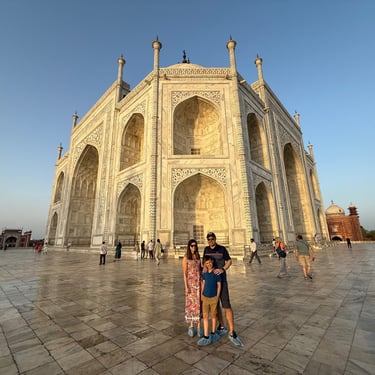
The marble platform becomes bright and hot underfoot later in the day. Shade is limited in central areas. If choosing midday, shorten the visit. Focus on the main structure and skip lingering inside if queues are long.

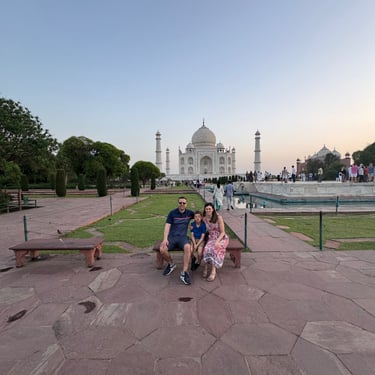
How Children Experience Each Option
Morning Visit
What tends to work well:
The dramatic first reveal in soft light
Cooler walking conditions
Lower stress from crowds
A sense of “we did it” early in the day
What can be challenging:
Early alarm
Light breakfast before entry
In practice, most children adjust quickly once onsite.
Midday Visit
What can work:
No early rush
More relaxed start to the day
What becomes harder:
Heat exposure
Standing in longer lines
Navigating denser crowds
Fatigue building before you even leave
With children, comfort drops faster in hot, crowded conditions.
Parent Insight: The Energy Equation
The Taj Mahal itself does not take long to see. Most families spend 90 minutes to two hours onsite. The real issue is not time. It’s environmental pressure.
Heat + crowd density + waiting = faster emotional fatigue. Morning reduces all three variables. That’s why it is usually the better option.
What About the Interior?
The inner chamber becomes congested at peak times regardless of when you visit.
With children, consider:
Managing expectations beforehand
Taking turns if needed
Skipping it entirely if the line feels overwhelming
The exterior is the highlight. The visit remains meaningful without entering the central chamber. You need to purchase an extra ticket to visit this area.
Pairing Your Taj Visit With Other Activities
If you go in the morning:
Pop back to your hotel for breakfast after your visit
Agra Fort after breakfast
Baby Taj
Mehtab Bagh – the back of the Taj
Afternoon pool time
If you go midday:
Keep the rest of the day light
Avoid stacking Agra Fort immediately afterwards
Prioritise downtime
Structure matters more than the exact hour.
For more on what else to do in Agra with kids, see: Best Things to Do in Agra with Kids Beyond the Taj Mahal
Do You Need a Tour Guide at the Taj Mahal?
In short, no — you don’t need one. The Taj Mahal is visually powerful enough to appreciate on your own, and the layout is straightforward to navigate.
That said, a private guide can be helpful for families and we personally did use a guide. You can move entirely at your own pace, keep explanations short and child-focused, and avoid unnecessary waiting or confusion at entry points.
A licensed private guide in advance or you can book via GetYourGuide or Viator, they range in cost based on transport and what you want to include but it is not expensive.
One unexpected bonus? Guides are usually excellent at taking family photos. They know the best spots and if you want everyone in the frame without juggling tripods or asking strangers, that alone can make it worthwhile.
The key remains keeping it brief. Ninety minutes is usually more than enough with children.
Where You Stay in Agra Matters More Than You Think
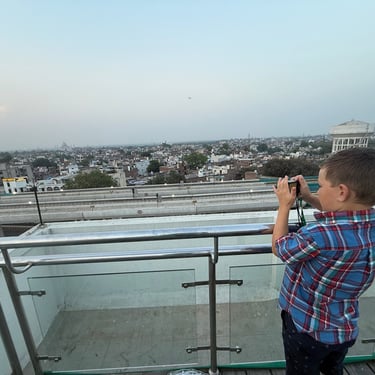
Staying at Tajview Agra made the schedule workable for us. The property has clear Taj views, and a roof top restaurant, which helps build excitement before your visit and reinforces the experience afterwards. But more importantly for families, it has a large pool, garden space and room configurations that allow everyone to decompress. That reset time is what makes a two-night Agra stay feel manageable rather than rushed.
For a full evaluation: Tajview Agra Review: Is It Worth It for Families?


So, What Works Best with Kids?
For most families, morning wins. It reduces heat exposure, lowers crowd pressure and allows for a calmer rhythm across the day. Midday can work in cooler months or with older, heat-tolerant children.
But it requires tighter pacing and realistic expectations. The Taj Mahal is one of the rare global landmarks that lives up to its reputation. Your goal is to experience it in conditions that preserve that impact — not test everyone’s endurance. With children, that usually means setting the alarm.
FAQs: Visiting the Taj Mahal with Kids
What is the best time to visit the Taj Mahal with kids?
For most families, early morning is the best time.
It’s cooler, less crowded, and easier for children to stay engaged. However, if early starts don’t work for your family, midday can still be manageable with the right planning.
Is the Taj Mahal too crowded for kids?
It can be — especially later in the day.
Crowds tend to build quickly after opening, which can make it:
harder to move around
more tiring for children
and slower getting through security
Early morning visits are usually much calmer.
Is it too hot to visit the Taj Mahal with children?
Heat is one of the biggest challenges, especially midday in warmer months.
If visiting later in the day:
bring water and hats
take breaks
keep expectations realistic
This is why timing matters so much for families.
Food and hydration also play a big role here — we found planning meals carefully helped a lot, which we explain in What Do Kids Eat in India? Managing Food Comfort and Safety.
Do you have to visit at sunrise with kids?
No — despite what many guides suggest.
Sunrise is ideal for photos and cooler weather, but with kids: very early wake-ups can make the rest of the day harder.
It’s about choosing what works best for your family, not following a “perfect” itinerary.
This comes up across a lot of decisions in India travel, from timing to transport and pacing, which we break down more broadly in Family Holiday Mistakes to Avoid: Credit Card Scams, Food Bugs, Hotel Charges & Cancelled Flights.
How long do you need at the Taj Mahal with children?
Most families spend around: 1.5 to 2 hours
That’s enough time to:
walk around
take photos
and experience the site
Longer visits can be tiring, especially in heat or crowds.
Are queues and security difficult with kids?
They can be, particularly later in the day.
Expect:
security checks
bag scanning
separate lines
Early arrival usually means shorter, quicker queues, which makes things easier with children.
Should you book tickets in advance?
Yes — it helps reduce waiting time and makes the visit smoother. It is not however essential.
Planning ahead is especially useful if you’re trying to:
avoid long queues
manage timings around children
Planning ahead is key across India, from entry tickets to transport and tours. If you’re deciding how much to organise in advance vs on the ground, Self-Guided vs Private Tours in India: Which Works Better with Kids? helps break that down.
Is a guide worth it at the Taj Mahal with kids?
For some families, yes.
A guide can:
keep the visit structured
bring the history to life
help maintain interest for children
take family photos (they often know the best spots)
But it’s not essential — a shorter, self-paced visit can work just as well.
What is the biggest mistake families make visiting the Taj Mahal?
Assuming the “perfect” time works for everyone.
From our experience:
sunrise isn’t always practical
midday isn’t always a bad choice
The key is planning around your child’s energy, not just the crowds
plan your TRIP TO india with kids
If you’re planning your family trip to India, these guides will help you pull everything together:






About Plan Family Escapes
We’re a UK-based family sharing real, experience-led travel guides based on trips we’ve taken with our school-age son Joshua across destinations like Lapland, Turkey and India.
Everything we share is based on what we’ve personally experienced — with honest advice on what actually works when travelling with kids, focusing on making family travel easier, more comfortable and genuinely enjoyable.