Self-Guided vs Private Tours in India: Which Works Better with Kids?
Self-Guided vs Private Tours in India? Discover whether DIY travel or private tours work best with kids, based on real experience travelling the Golden Triangle.
INDIAASIARESOURCES
4/9/202613 min read
When planning a family trip to India, one question comes up very early on: should you travel independently, or book private tours and drivers?
If you’re trying to work out whether self‑guided travel or private tours in India work better with kids, this is the decision that shapes how the entire trip feels.
We’ve travelled in India both before and after having a child, and the difference in approach was bigger than we expected. This guide shares what actually worked for us, where we changed our plans, and what we’d do again — so you can decide what suits your family best.
Quick Answer: Should You Go Self‑Guided or Use Private Tours?
Both options can work well — especially on the Delhi → Agra → Jaipur Golden Triangle route. From our experience, there’s no single “best” option — it depends on how you want your trip to feel.
An organised tour making things easier and more structured
Self‑guided 'DIY' travel gives you more flexibility and control but needs more planning
For most families, the decision comes down to:
how confident you feel navigating somewhere new
how structured you want your days to be
and how much flexibility your child needs during longer sightseeing days
If you’re still planning your overall route and timings, A Practical 10–14 Day Family Golden Triangle Itinerary shows how this decision fits into the wider trip.
Where relevant, we’ve included the tours, drivers and booking platforms we used or seriously considered. Some of these are affiliate links, which means we may earn a small commission if you book through them — at no extra cost to you. We only ever share options we’ve used ourselves or would confidently travel with again as a family.
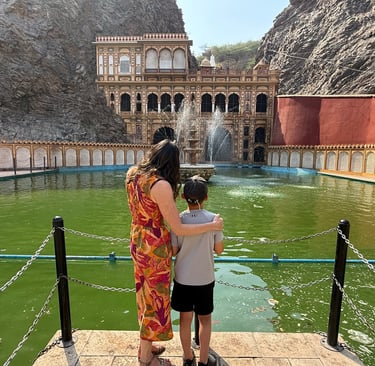
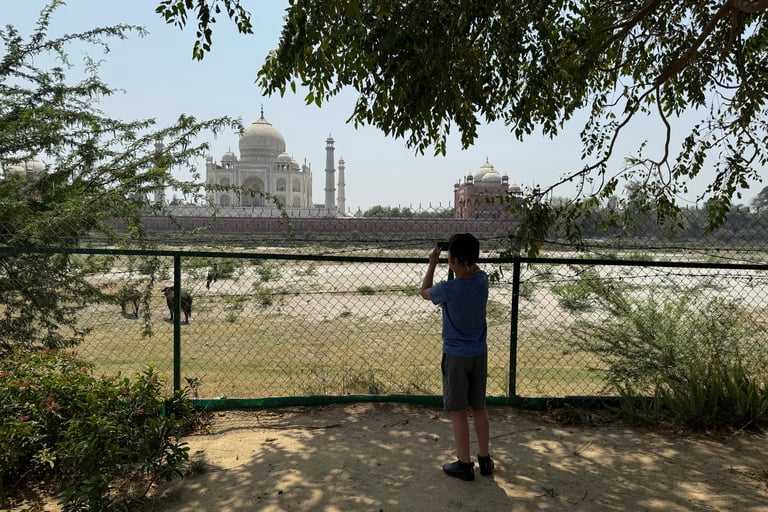
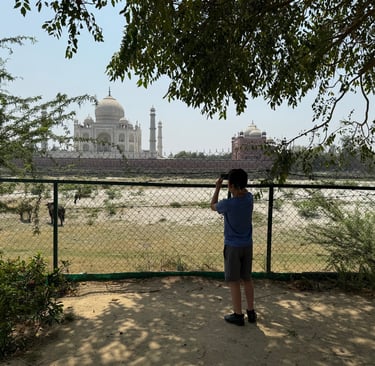
Option 1: Self‑Guided Travel in India with Kids (Flexible and Lower Cost)
Self guided travel works really well on the Golden Triangle — especially if you’re comfortable organising things yourselves and want some flexibility in your days.
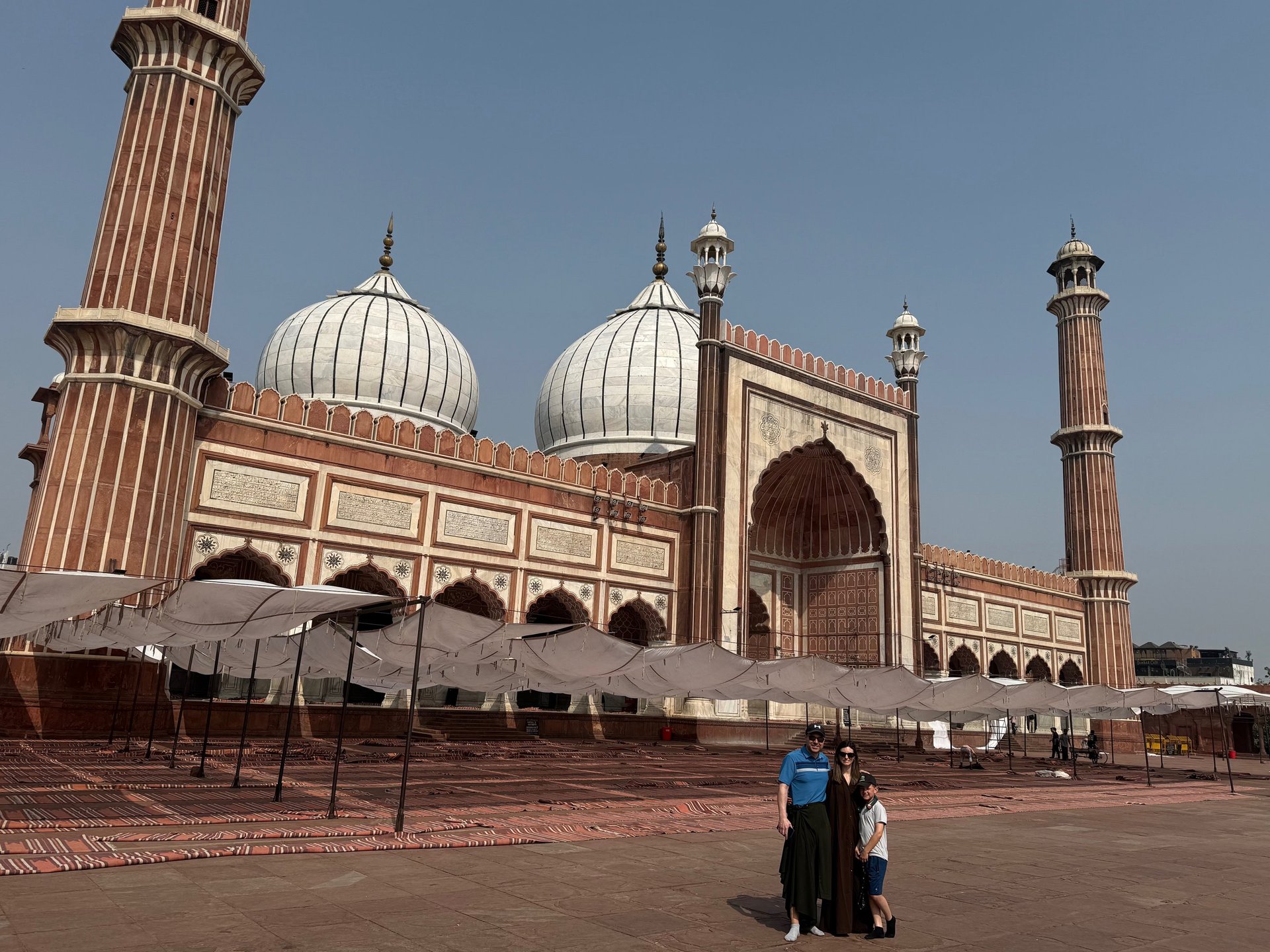
From our experience, most of the main sites (the Taj Mahal, Qutub Minar, Amber Fort) are easy to visit independently once you’re there. The challenge isn’t getting in — it’s how the day feels.
When DIY Travel Works Best
The biggest advantage of self‑guided travel is flexibility — and with kids, that matters more than anything.
If energy drops, the heat becomes too much, or something just isn’t holding attention, you can adjust your plans immediately without feeling tied to a set schedule. That worked particularly well for us in Agra. After an early Taj Mahal visit, having the option to slow down or head back to the hotel made the whole day feel much easier.
The other advantage is control. You set your own itinerary, choose your own hotels, and decide the pace of the trip. We stretched our visit out to 10 days, whereas many Golden Triangle tours are done in just 3 days, often feeling quite rushed.
For us, taking things more slowly made a huge difference. It gave us time to properly enjoy the places we’d chosen to stay — especially hotels that felt unique and part of the experience, rather than just somewhere to sleep.
Taj Mahal Morning vs Midday: What Works Best with Kids? is worth reading if you’re planning this day.
It also keeps costs down.
Most of your spending will be:
hotels
entry tickets
transport
the occasional guide
And overall, that’s still very affordable compared to most destinations. Most entry tickets cost around ₹200–₹1,100 (£2–£11), which helps keep daily spending manageable.
But the biggest insight for us was this: kids don’t need full guided experiences everywhere. Joshua enjoyed seeing the highlights, exploring a bit and then moving on. Trying to stretch every visit into a full “tour” often isn’t necessary.
Best Things to Do in Agra with Kids Beyond the Taj Mahal shows how to keep things simple.
Where It Can Feel Harder
This is usually most noticeable in Delhi. It’s busy, spread out, and can feel overwhelming — especially at the start of the trip when you’re still finding your feet. Getting between sights takes time, and even simple days can feel more tiring than expected.
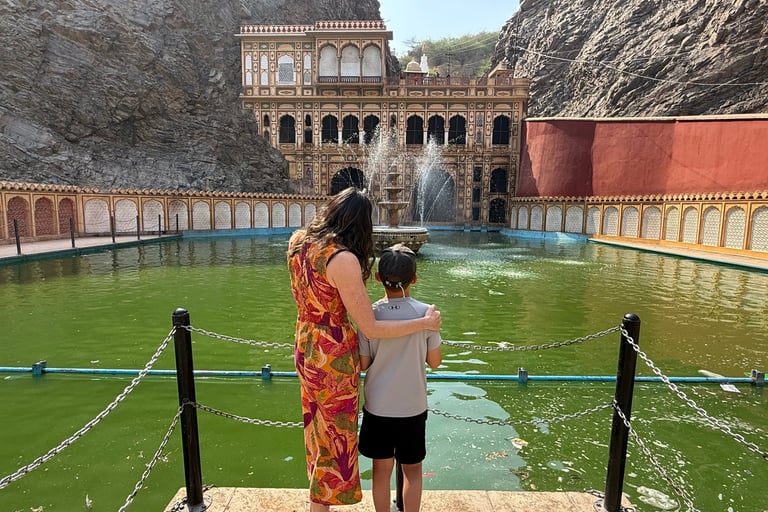
We also found that some places — particularly in Jaipur — became much more engaging with a bit of context. Without that, you can end up walking through incredible buildings without really understanding what you’re looking at.
The other challenge is the planning itself.
Organising everything yourself — hotels, trains, transfers — can feel like a lot at the start. It’s not necessarily difficult, but it is unfamiliar, and that’s often what makes it feel overwhelming.
What made the biggest difference for us was having the right tools in place to book everything properly before we travelled. Once those were sorted, the whole trip felt much more manageable.
Tools for DIY Travel in India
train booking platforms to secure seats in advance
trusted sites to compare and book family-friendly hotels
pre-arranged transfers for key travel days
flight comparison tools to find the best routes and timings
local guides that can operate at your pace
Having all of that organised ahead of time meant we weren’t trying to figure things out on the ground — and that made the day-to-day feel much easier than we expected.
For more detailed guidance on the hotels we booked and recommend, see: Family-Friendly Hotels Along India’s Golden Triangle: Unique Stays in Delhi, Agra & Jaipur
What Self‑Guided Travel Really Comes Down To
From our perspective, DIY works best if:
you’re happy organising transport as you go
you want flexibility over structure
your child prefers shorter, focused visits
If that sounds like your family, it’s absolutely doable — and a lot simpler than it might seem beforehand.
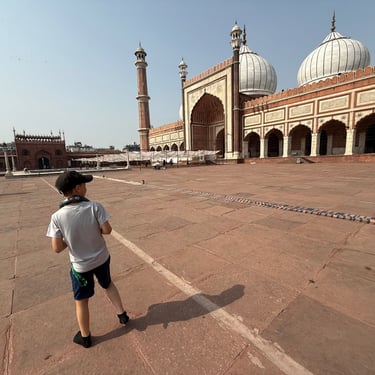
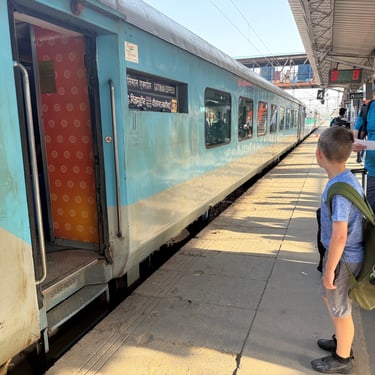

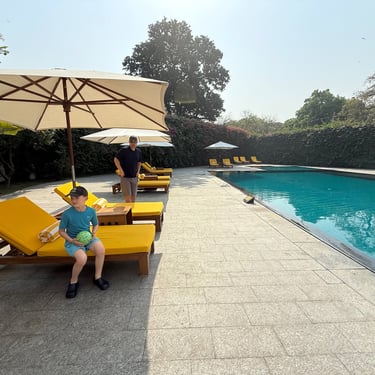
Option 2: Organised Private Tour (Easier Logistics and More Structure)
The main alternative is using an organised private tour, which is very common for families travelling the Golden Triangle. This is what we used on our first trip to India's Golden Triangle as a couple.
When Private Tours Work Best
The biggest advantage here is with a tour all the logistics are managed for you. That removes a lot of small decisions and organised — which, over a full day with kids, adds up. Most tours will include transport and guiding packages, which means really all you need to do is turn up.
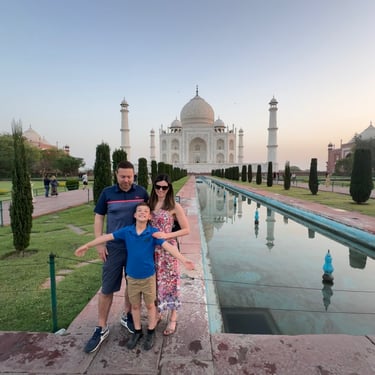
In Agra, for example, our guide sorted Taj Mahal tickets the evening before, took us straight to the entrance, showed us the best photo spots, and even took our family photos. It made what could have been a stressful morning… feel really smooth.
Visiting the Taj Mahal with Kids shows exactly how that day worked
From our experience, this approach works well if:
you want things to feel simpler and smoother
you value context and storytelling
you’d rather remove daily decision-making
Where It Can Feel Harder
One of the main downsides can be feeling like you have less control over the pace of your day.
That said, this doesn’t always have to be the case. Many private tours — especially with drivers — are flexible, and you can usually adapt the itinerary to suit your family, rather than following something rigid.
Cost is another factor. Private tours typically come at a higher price than travelling independently, although in India this can still be very reasonable depending on what you book. There’s a wide range of options, so it can work at almost any budget level.
If you’re thinking about how comfort and cost balance out on a family trip, Budget vs Luxury Travel in India with Kids explores this in more detail.
Where to Book Tours and Private Drivers in India
If you’re planning to include guided experiences or private drivers on your Golden Triangle trip, using the right platforms makes the whole process much easier — especially when travelling as a family.
From our experience, we’ve found it helpful to use:
GetYourGuide and Viator for day tours, guides and shorter experiences
TourRadar for longer, multi-day tours or if you want a more structured itinerary
GetYourGuide and Viator work well when you want flexibility — you can pick and choose specific experiences, compare reviews, and build your trip around your own pace.
TourRadar, on the other hand, is useful if you prefer something more organised, with multi-day itineraries that bundle transport, guides and accommodation together. It’s a good option if you want to see what a fully structured trip might look like before deciding whether to plan it yourself.
If you’re weighing up your options, it’s worth browsing a mix of these platforms — they give you a really good feel for what’s possible and help you decide how much structure you actually want in your trip.
Tours are best if…
you want smoother logistics and fewer decisions each day
guides across all locations
you’re travelling during busier periods
you prefer convenience over maximum flexibility
If budget and flexibility are higher priorities, DIY sightseeing often works well. Many families also choose a hybrid approach, combining self‑guided days with guided visits for more complex or time‑sensitive sights.
If you’re trying to get a feel for what’s available, it’s worth browsing platforms like GetYourGuide or Viator — you’ll find everything from Taj Mahal sunrise tours to full Jaipur sightseeing days, which helps you decide what’s actually worth including.
Our Approach: A Hybrid DIY Model
For our Golden Triangle trip, we used a hybrid approach, combining guided sightseeing with independent travel. This gave us structure where it mattered most, without filling every day with organised activities.
What We Booked Independently
We booked our own flights and hotels, setting our own itinerary and pace.
We booked local tours for site seeing, including:
a private guide for key sightseeing in Delhi
a Taj Mahal sunrise tour in Agra
a guided day in Jaipur covering forts and palaces
Alongside this, we pre booked our own trains, car transfers and hotels, extending our itinerary to include 'off' days to enjoy our hotel and explore locally.
How We Handled Logistics as a Family
Trains for Longer Distances
We booked our own trains between Delhi to Agra and Jaipur back to Delhi, which helped reduce overall travel time compared with driving the full route.
Air‑conditioned carriages and shorter journey times made travel days more manageable with a child. We planned these days carefully, pairing train travel with lighter sightseeing or hotel downtime.
If you’re planning to use trains, booking through platforms like 12Go Asia makes it much easier to secure seats in advance and keep everything organised before you travel.
Cars for Sightseeing & Stops En Route
For sightseeing days and harder‑to‑reach places, we used private drivers, either as part of guided days or booked separately. This worked particularly well for our route from Agra to Jaipur, which allowed for:
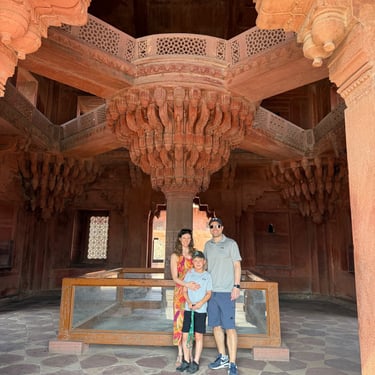
travel between cities with stops such as Fatehpur Sikri or Chand Baori
Adding on Monkey Temple
Using trains for the long stretches and cars locally gave us the best balance of speed and ease.
If you’re deciding between transport options, Train vs Car for the Golden Triangle: What Works Best for Families? breaks down what actually works in practice and how each option feels with kids.
Booking Our Own Hotels
Rather than booking a fully packaged tour, we chose to book our own hotels in each city, prioritising space, pools and quiet downtime between busy sightseeing days. This made a noticeable difference to how manageable the trip felt with a child.
These were the hotels that worked especially well for us:
Delhi: Maidens Hotel – the gardens and pool provided a calm escape from the city, and it felt very family‑friendly.
Check availability at Maidens Hotel, DelhiAgra: Tajview Agra – ideal for a Taj Mahal sunrise visit, with Taj views and a pool for relaxing afterwards.
See prices for Tajview AgraJaipur: Taj Devi Ratn Resort & Spa – the games room and pool were a real hit, and it gave us proper downtime after busy sightseeing days.
Check availability at Taj Devi Ratn Resort & SpaFinal night (Delhi): Aloft New Delhi Aerocity – a convenient, comfortable choice close to the airport for an easy departure day.
View rooms at Aloft New Delhi Aerocity
Why This Approach Worked Well
Structure where it added value: We used guides for busy, high‑impact sites where logistics, queues and context mattered most.
Flexibility when energy dropped: On DIY days, we could slow things down, head back to the hotel early or skip plans altogether without feeling tied to an itinerary.
Smarter use of budget: We spent more where it clearly improved the experience (guides, comfortable hotels), while saving by booking our own transport and accommodation.
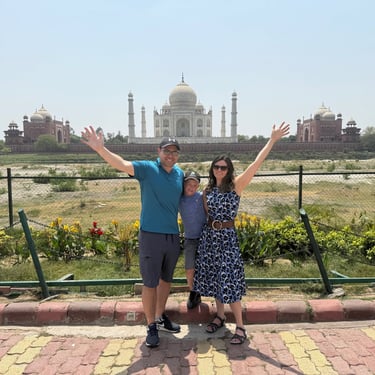
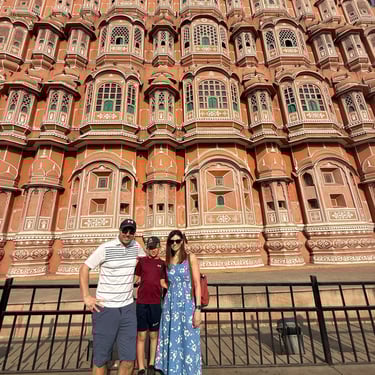
Final Thoughts: What Works Best for Families
If you’re trying to decide between self‑guided travel and tours in India, the biggest takeaway from our trip is that it doesn’t have to be one or the other.
From our experience, the question isn’t really “which is better?” — it’s “what will make each part of the trip feel easier for your family?”
We used guides where it made the day smoother or more meaningful, and kept things self‑guided when we wanted more control. That balance is what stopped the trip from feeling overwhelming and made it much more enjoyable with our son.
Looking back, the biggest difference wasn’t how we travelled — it was how the trip felt day to day. If you get that right, the Golden Triangle becomes a really accessible and rewarding first trip to India with kids — rather than something that feels intense or hard to navigate.
FAQs: Self‑Guided vs Tours in India with Family
Can you visit India independently with children?
Yes — from our experience, you can absolutely travel India independently with kids, especially on the Golden Triangle route.
The key is planning ahead:
booking trains or drivers in advance
choosing family-friendly hotels
and having a loose structure for each day
Once those are in place, the trip feels much more manageable on the ground.
If you want to see how this works in practice, A Practical 10–14 Day Family Golden Triangle Itinerary shows how we structured everything.
What is the best way to travel the Golden Triangle with kids?
For most families, there isn’t a single “best” way — both DIY travel and guided tours can work really well.
From our experience, it comes down to how you want your trip to feel and how much time you have.
If you have longer and don’t mind planning, a self‑guided trip gives you more flexibility. You can personalise your itinerary, choose your own hotels, and adjust the pace around your child — which made a big difference for us.
At the same time, we also really enjoyed using guides and organised days. They made certain parts of the trip easier, quicker, and sometimes more engaging — especially at key sites.
For us, the ideal approach was combining both:
using structure where it helped
and keeping flexibility where it mattered
That balance is what made the trip feel manageable and enjoyable as a family.
Is it easier to travel India with a private driver or by train?
From our experience, trains were the easier option for most of our journey. They were quicker, more comfortable, and surprisingly straightforward when travelling with a child.
A private driver can still work well — especially for shorter distances or when you want to stop along the way — but overall, we found trains to be the best balance of speed and convenience for families.
If we were planning again, we’d still use trains for the majority of longer journeys, and combine them with drivers where it added flexibility.
→ Train vs Car for the Golden Triangle helps you decide when this makes sense for your family
Are private tours in India worth it for families?
From our experience, yes — they can work really well.
Having everything organised removes a lot of the planning and day-to-day decision-making, which can make the trip feel much easier — especially in busier locations.
The trade-off is flexibility.
With tours, you can sometimes lose the ability to:
set your own pace
adjust plans as energy levels change
and choose exactly how you travel, including trains, hotels and experiences
That said, many private tours are customisable, so you can still shape the trip to suit your family.
For us, the real value of a tour was for our first time in India before we were more confident in booking independent travel. This is where tours really add the most of value.
Is India easy to travel as a family from the UK?
It’s easier than most people expect — but it’s not completely effortless.
The biggest adjustment is the environment:
it’s busier
more intense
and less predictable at first
Once you settle into the rhythm, it becomes much more manageable — especially if your itinerary is realistic and not rushed.
Is India Safe to Travel With Kids? gives a more honest view of what to expect
What’s the biggest advantage of travelling self‑guided in India?
Flexibility.
From our trip, this made the biggest difference. We were able to shape everything around how we wanted the experience to feel as a family.
That meant:
choosing more unique hotels that felt part of the trip, not just somewhere to stay
picking the best train times and stations based on where we were staying (something tours don’t always prioritise)
and adjusting our plans to include the things we thought our son would enjoy most — like adding a rickshaw ride in Delhi or stopping at the Monkey Temple on the way to Jaipur
It wasn’t just about saving money — it was about having the freedom to build a trip that really suited us.
What’s the biggest advantage of private tours or guides?
Simplicity.
You don’t have to think about:
how to get somewhere
where to go next
or how long things will take
That reduction in decision-making made a noticeable difference on busy days.
Visiting the Taj Mahal with Kids shows how much smoother that can feel
Do kids actually benefit from guided tours in India?
Sometimes — but not in the way people expect. From our experience, kids don’t need long explanations.
What worked best was:
short stories
interactive moments
and time to explore freely
That’s why guided tours worked well in some places, but not everywhere. From our experience, private guided tours are good value and allow you to set your own pace and focus on what you want to see.
Is DIY travel cheaper than tours in India?
Yes — generally.
Travelling independently means you mainly pay for:
transport
entry tickets
and accommodation
However, India is good value overall, so adding guided days doesn’t increase costs as much as people expect. It also really depends on what hotels you select. Low cost three star hotels are generally very quality but will unlikely have the little extras like a pool that really benefit families.
How Much a Golden Triangle Family Trip Costs breaks this down properly
What approach worked best for your family?
For us, a hybrid approach worked best.
We used:
guided experiences where it added value
and self-guided days where we wanted flexibility
That combination gave us:
structure when we needed it
and freedom when we didn’t
That balance is what made the trip feel enjoyable rather than overwhelming.g on the day and location.
plan your TRIP TO india with kids
If you’re planning your family trip to India, these guides will help you pull everything together:




About Plan Family Escapes
We’re a UK-based family sharing real, experience-led travel guides based on trips we’ve taken with our school-age son Joshua across destinations like Lapland, Turkey and India.
Everything we share is based on what we’ve personally experienced — with honest advice on what actually works when travelling with kids, focusing on making family travel easier, more comfortable and genuinely enjoyable.