What to Do in Jaipur with Kids – Forts, Palaces & What Actually Works for Families
What to do in Jaipur with kids. Discover the best forts, palaces and family‑friendly activities that actually work, with practical tips to make your visit easier and more enjoyable.
INDIAASIAWHAT TO DO
3/30/202611 min read
If you’re planning a Golden Triangle trip and wondering is Jaipur good for kids, and what should families actually do once they’re there, this guide is for parents trying to balance sightseeing with something that still feels enjoyable.
Jaipur is very different from Delhi and Agra. It’s still busy, but it’s easier to navigate, more visual, and gives you more flexibility to slow things down — which is why so many families find it the most manageable stop.
Quick Answer: What should you do in Jaipur with kids?
The mix that worked best for us was:
Amber Fort — big, visual and more engaging for kids than smaller sites
City Palace (short visit) — easy to do without it dragging
Hawa Mahal (quick stop/photo) — worth seeing, but not a long activity
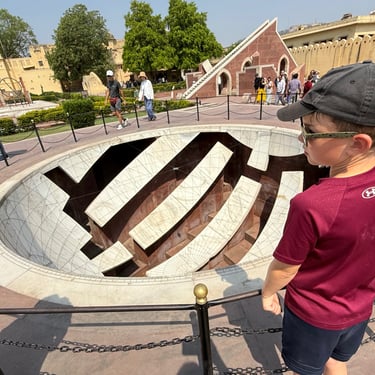
Jantar Mantar — surprisingly good with kids, especially if you keep it interactive
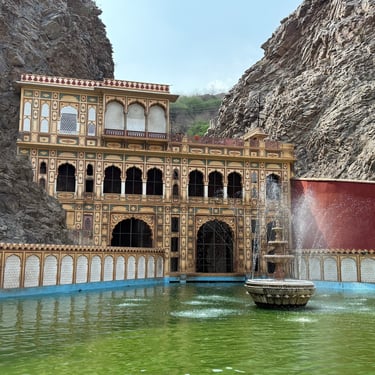
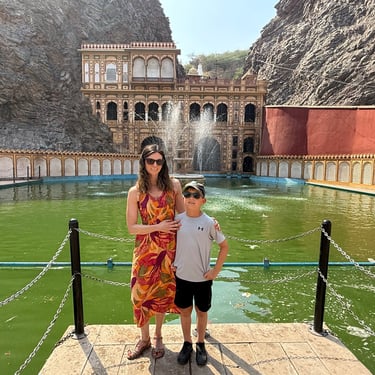
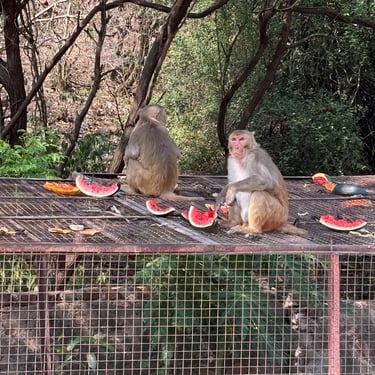
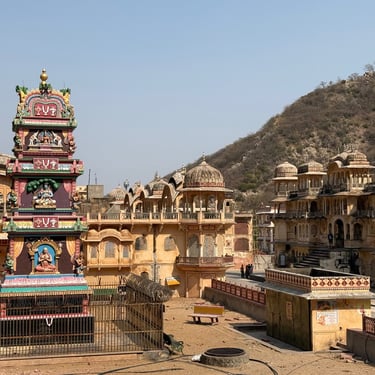
Monkey Temple (Galta Ji) — something completely different and memorable, with monkeys, views and a more relaxed feel outside the main city
hotel downtime (pool / space to reset) — this is what makes the rest of the day work
Done this way, it becomes one of the easiest and most enjoyable places to explore with kids in India. We visited Jaipur as part of our own family trip with Joshua our 8 year old son, and it was the point where the pace finally started to feel more relaxed.
In this guide, I’ll break down:
what to do in Jaipur with kids (and what’s actually worth it)
which forts and palaces work best for families
how to structure your days so it doesn’t feel overwhelming
and what to expect in terms of energy, travel and pacing
If you are still in the planning phase of your trip, see: How to Plan a Golden Triangle Family Trip: Flights, Visas, Trains, Hotels & Budget
Some of the links in this guide are affiliate links, including hotels, tours and booking tools — which means we may earn a small commission if you book through them, at no extra cost to you. We only recommend options we’ve used ourselves and would genuinely choose again for a family trip.

Is Jaipur Worth Visiting with Kids?
Yes — and for many families, Jaipur is actually the easiest and most enjoyable stop on the Golden Triangle with kids.
Compared to Delhi, it feels less overwhelming. Compared to Agra, there’s more to do beyond a single landmark.
What makes Jaipur work particularly well with school‑aged children is the scale and style of the sights. Instead of museums or enclosed spaces, you’re exploring:
large forts
open courtyards
wide viewpoints
That makes a big difference to how engaged kids stay. From our experience, this is the point in the trip where everything starts to feel more relaxed and enjoyable.
Amber Fort (The Standout Experience)
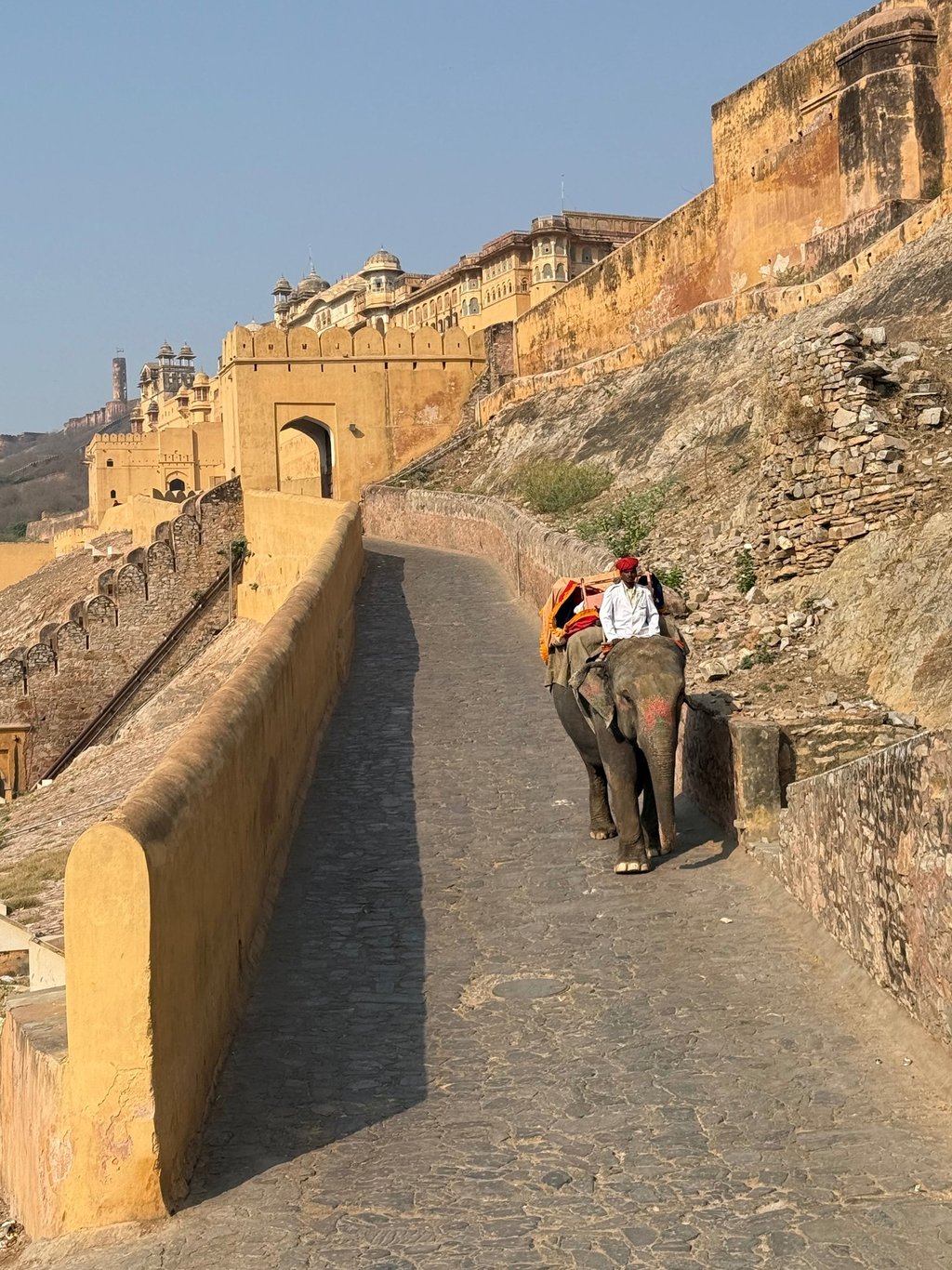
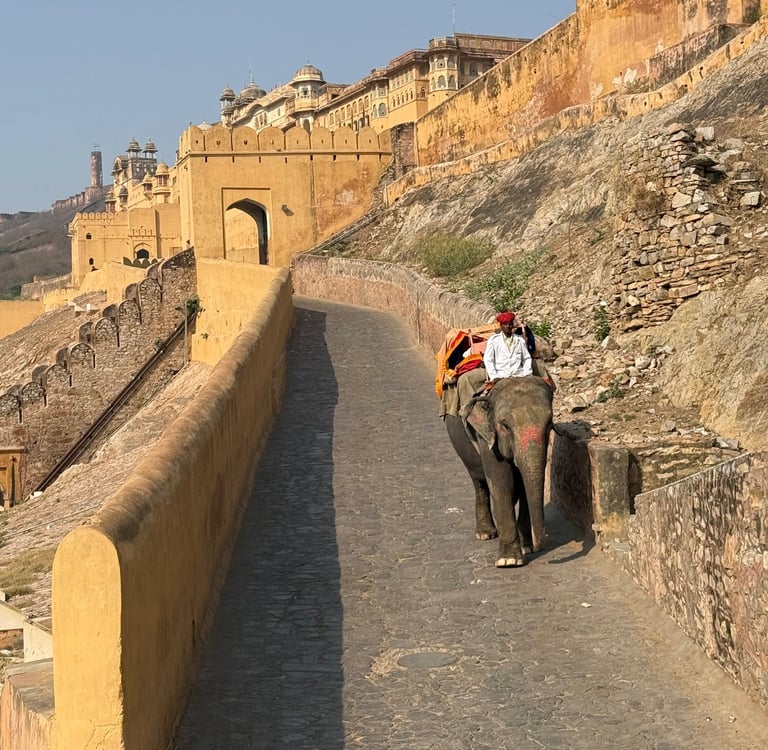
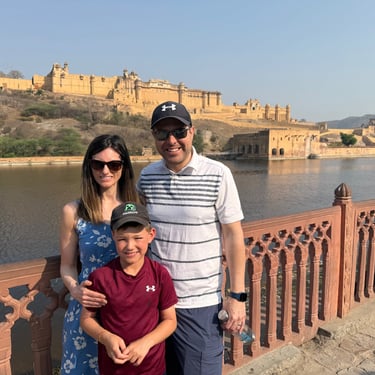
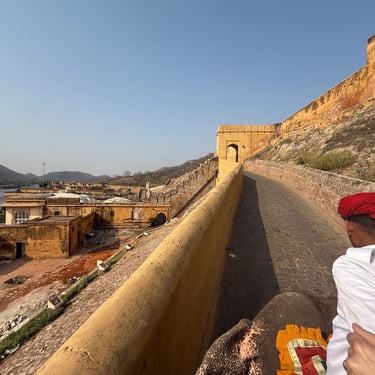
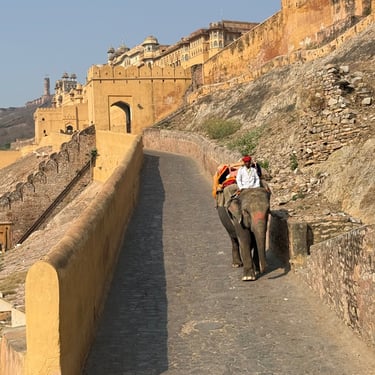
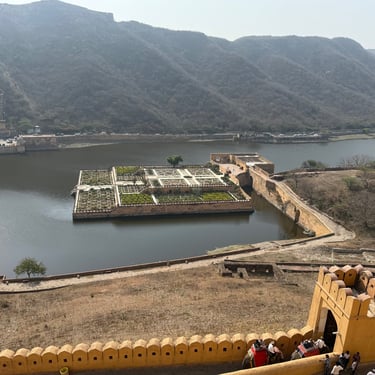
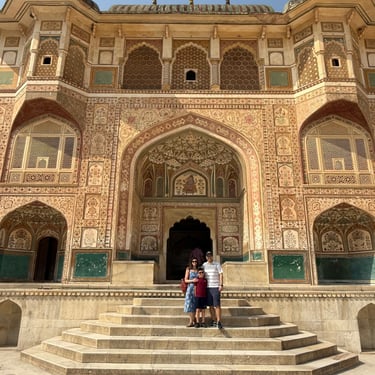
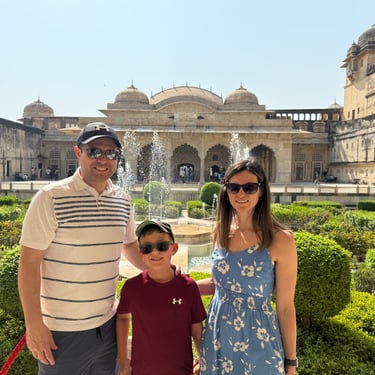
If you do one major site in Jaipur with children, make it Amber Fort. This is not a small palace you walk through in 45 minutes. It’s a layered complex of courtyards, gates, ramparts and viewpoints. Children can move, explore and look outward over the hills rather than standing in confined rooms.
What Children Tend to Enjoy
Walking up the fort pathways
Exploring open courtyards
Climbing ramparts
Spotting defensive features like watchtowers and gates
Opportunity to ride an elephant
It feels cinematic. That helps enormously with engagement.
What Parents Should Know
Amber works best when it’s the primary activity of the morning, followed by downtime in the afternoon.
Go early to avoid heat and crowds.
Wear proper shoes. Surfaces are uneven.
Plan for 2 hours maximum before fatigue sets in.
Watch out for the photographers, if you smile for them they will hound you to buy their photos
City Palace (Short, Structured Visit)
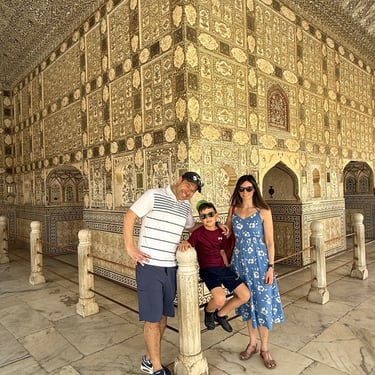
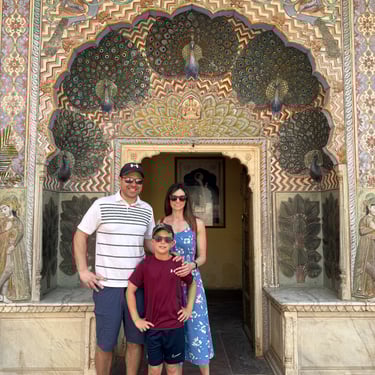
The City Palace sits in central Jaipur and offers a different experience. It’s more curated and museum-like, but still visually strong. The colourful doorways and royal courtyards hold attention well, especially for children who enjoy visual detail and photography.
What Works for Families
For most children, 60–90 minutes is sufficient.
Keep the visit focused rather than exhaustive.
Skip sections that feel repetitive.
Frame it as “how royal families lived” rather than a history lesson.
Jantar Mantar (Surprisingly Engaging)
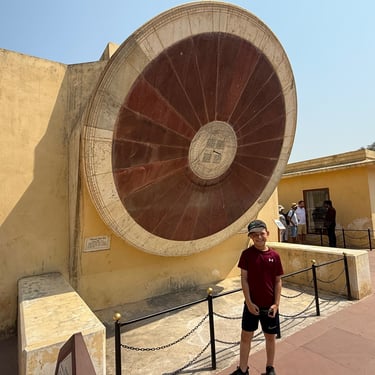
This UNESCO-listed astronomical observatory often surprises parents. Instead of static exhibits, you’re walking among giant instruments designed to measure time and track the stars. For children who enjoy science or maths, this can be unexpectedly engaging.
Why It Works
It’s outdoors.
The structures are large and unusual.
It feels interactive even though it isn’t hands-on.
Pairing Jantar Mantar with City Palace makes logistical sense since they’re close together.
Hawa Mahal (Quick Stop, Not a Long Visit)
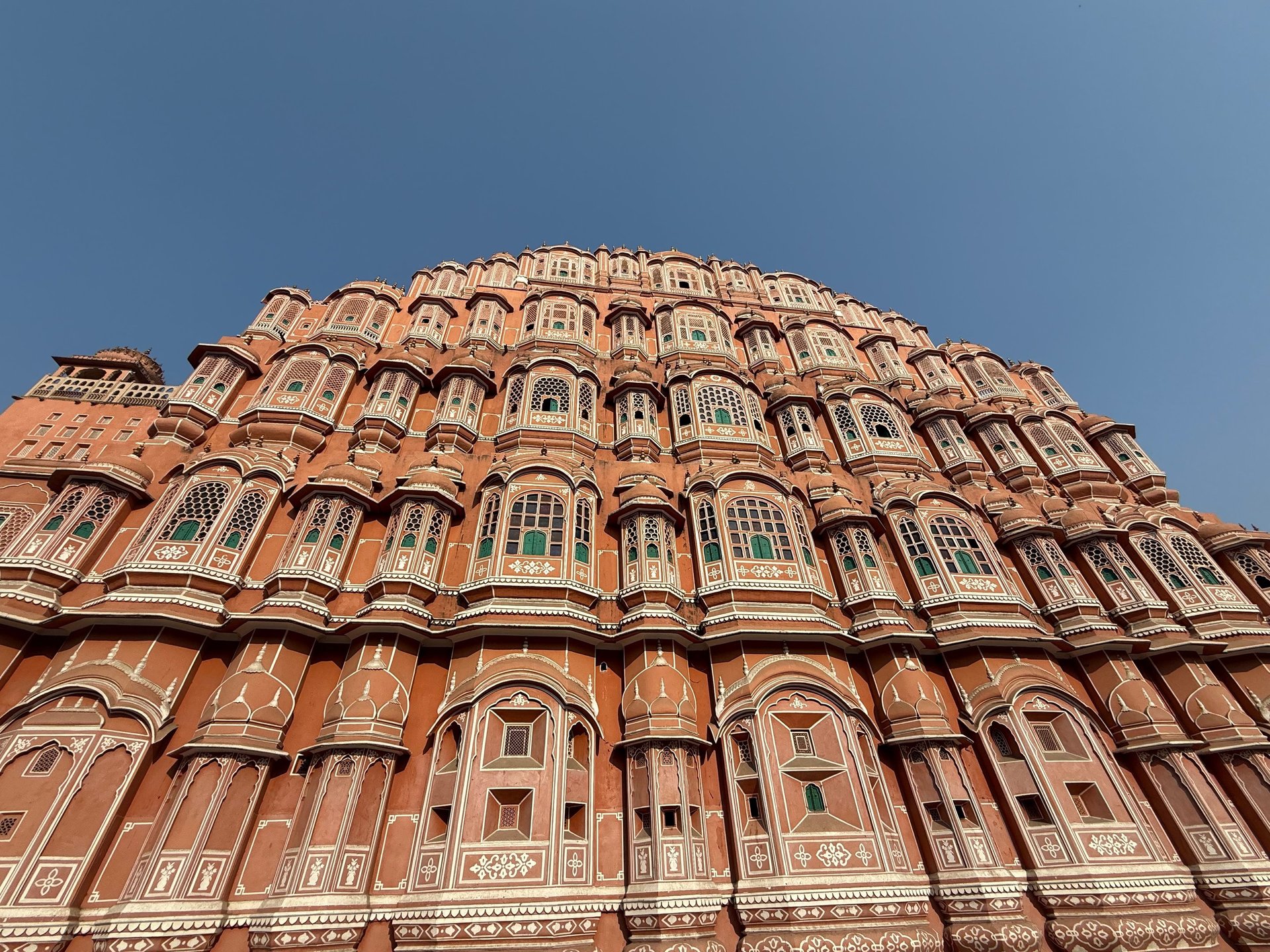
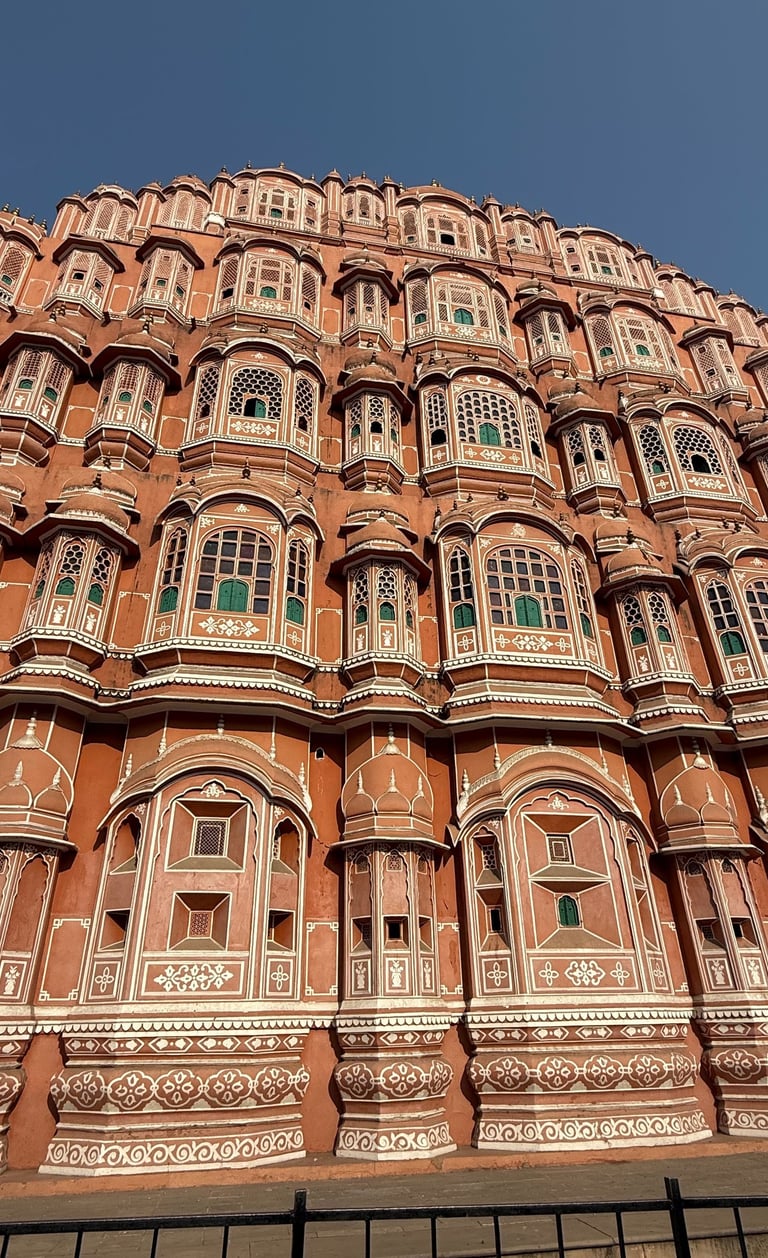
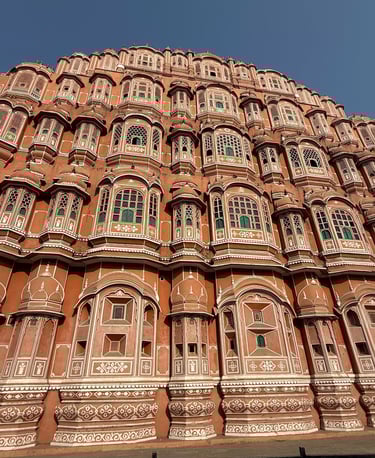
Hawa Mahal — often called the “Palace of Winds” — is one of Jaipur’s most recognisable landmarks. Built in 1799, the five-storey pink sandstone façade is covered with hundreds of small lattice windows. These allowed royal women to observe daily life and processions in the street below without being seen, while still allowing cool air to circulate through the structure.
From a family perspective, the main highlight is the distinctive honeycomb-shaped exterior, which is instantly recognisable and visually interesting for children.
Parent Insight
Hawa Mahal is best treated as a quick stop rather than a major sightseeing block.
Most families simply:
Stop for photos of the famous façade
Walk briefly around the surrounding area
Use it as a way to explain how royal life worked in historic Jaipur
Children usually find the story interesting but don’t need long here. In practice, 10–20 minutes is enough before moving on to your next stop.
Day Trip Options on Arrival or Departure
If you travel from Agra by private car rather than train, you can break up the journey with stops at:
Fatehpur Sikri: A former Mughal capital built by Emperor Akbar in the 16th century. Today it’s a large complex of red sandstone palaces, courtyards and mosques that feels like walking through an abandoned royal city.
Chand Baori: One of India’s most famous stepwells, built over 1,000 years ago to store water. It’s known for its striking geometric design with thousands of perfectly symmetrical steps.
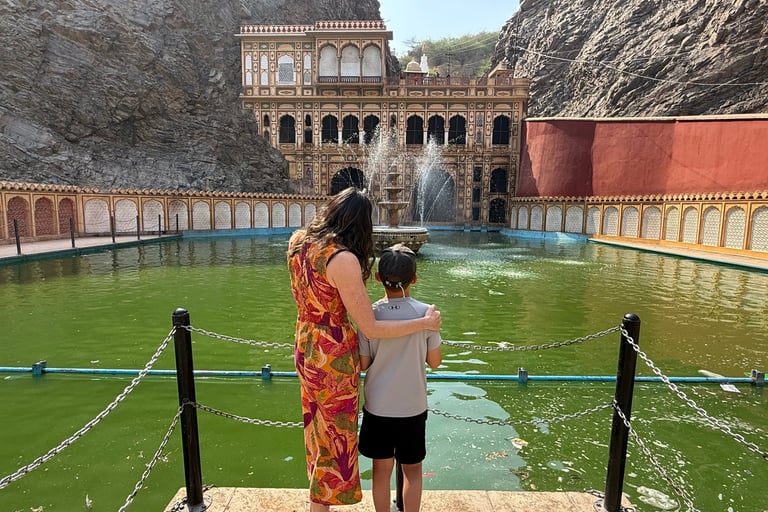
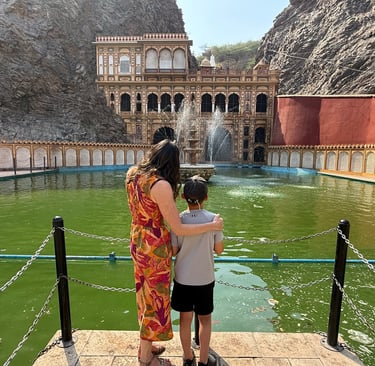
Galta Ji (Monkey Temple): A historic Hindu temple complex set in the hills outside Jaipur, famous for its sacred water pools and the large number of monkeys that live around the temples.
These add variety but also increase travel time if you are not already travelling by car. We split our Golden Triangle tour between trains and car. We travelled by car between Agra and Jaipur, allowing us to break up the journey with these sites alongside the way.
If you are still wondering whether to travel by train or car in India with kids, see: Train vs Car for the Golden Triangle: What Works Best for Families?
How Many Days Do You Need in Jaipur with Kids?
If you’re planning Jaipur with kids as part of a Golden Triangle itinerary, this is where a lot of families underestimate the time needed.
2 nights → doable, but rushed
3 nights → much better balance (what we’d recommend)
Three nights gives you:
an arrival day
one main sightseeing day
one lighter / downtime day
That extra space makes Jaipur feel like part of the holiday — not just another stop.
If you’re planning this as part of a full route, it helps to understand how Jaipur fits into the wider trip: A Practical 10–14 Day Golden Triangle Family Itinerary (Delhi → Agra → Jaipur)
Where to Stay in Jaipur with Kids
Where you stay in Jaipur isn’t just a nice extra — it directly affects how easy this part of your trip feels with kids.
After busy mornings exploring forts and palaces, having somewhere calm to return to is what stops Jaipur from feeling like another intense stop. It’s the difference between a day that works and one that ends in tired kids and low energy.
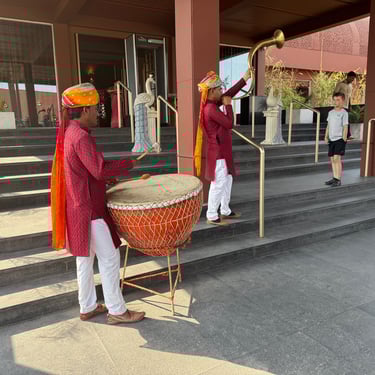
We stayed at Taj Devi Ratn Resort & Spa, and from a family point of view, it worked exceptionally well.
Why Taj Devi Ratn Jaipur Works So Well for Families
What stood out wasn’t just the standard “nice hotel” features — it was how well it supported downtime:
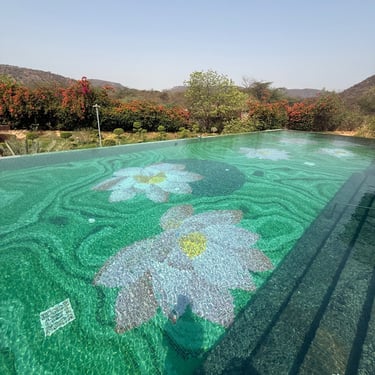
a large, shaded pool that was genuinely usable after sightseeing
spacious rooms, which matter more than you expect with kids
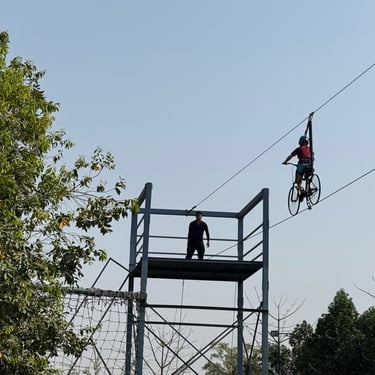
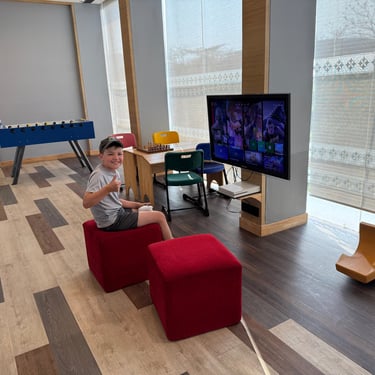
games areas and entertainment, keeping evenings easy
half-board dining, removing the need to find restaurants after a long day
a quieter location outside central Jaipur, which made it feel far more relaxed
After mornings at places like Amber Fort, we found coming back to a calm, well-designed space completely reset the day.
Joshua could go straight into the pool, we could slow things down, and suddenly the second half of the day felt manageable again. Without that, Jaipur would have felt much more intense. That reset time — even just a couple of hours — is what makes Jaipur work so well with kids.
Should You Stay at Taj Devi Ratn Jaipur?
If you’re looking for a family-friendly hotel in Jaipur with a pool, space, and a more relaxed atmosphere, this is one of the easiest options to recommend.
It’s worth checking current prices and availability here: View Taj Devi Ratn Jaipur availability
If you want the full breakdown of rooms, food, and what it’s really like with kids, see: Taj Devi Ratn Jaipur Review: A Resort-Style Stay for Families
Monument Entry Costs in Jaipur (What Families Should Expect)
Entry fees are something that often catches families out in Jaipur — especially if you’re visiting multiple sites in one day.
Most major monuments charge separate entry fees for international visitors, and these are not usually included in tours or private guides, so it’s worth factoring them into your daily budget.
Typical entry prices are roughly:
Amber Fort: ₹500–₹600 per adult
City Palace: ₹700–₹1,000 (depending on ticket type)
Jantar Mantar: ₹200–₹300
Hawa Mahal: around ₹200
Children are often discounted or free depending on age.
What This Means in Practice
If you plan to visit two or three sites in a day, budgeting around ₹1,000–₹1,500 per adult (roughly £10–£15) is usually enough to cover entry fees.
For families, this adds up — but it’s manageable as long as you plan for it in advance.
What Parents Should Know
Children under 15 are often free at government-run monuments like Amber Fort and Jantar Mantar
privately run attractions (like parts of City Palace) may still charge a reduced child ticket
cash in Indian rupees is still the easiest option, especially at smaller ticket counters where card machines can be slow or unreliable
We found this wasn’t about the cost — it was about how quickly small fees stack up when you’re moving between sites. Having a rough plan (and cash ready) made the day feel much smoother, rather than constantly stopping to figure things out.
If you’re planning your overall budget for India, this ties into the bigger picture here: How Much a 10-Day Golden Triangle Family Trip Costs (With Real Numbers)
Do You Need a Tour in Jaipur with Kids?
You don’t need a guide in Jaipur. The main sights — Amber Fort, City Palace and Jantar Mantar — are all easy enough to navigate independently, and many families simply hire a driver for the day and explore at their own pace.
That said, from our experience, having a private guide alongside a driver made the whole day much easier.
It wasn’t about needing someone to explain everything in detail — it was more about removing friction. Jaipur has a lot of history and large, layered sites, and a good guide helps you:
move through locations efficiently
pick out the more interesting details (without overloading kids)
avoid wandering aimlessly or spending too long in one place
The biggest benefit for families is flexibility. With a private tour, you can adjust the day in real time — shorten a visit if energy drops, skip something entirely, or head back to the hotel early if the heat builds.
That flexibility makes a big difference with kids, especially in Jaipur where days can quickly become tiring if overplanned.
You can organise this easily in advance through platforms like GetYourGuide or Viator, or arrange it through your hotel once you arrive.
If you want the day to feel simple and well-paced, a private driver and guide is one of the easiest ways to take the stress out of Jaipur with kids.
Is Jaipur Worth It with Kids?
Yes — Jaipur is absolutely worth visiting with kids, but it’s not the easiest stop by default.
It’s still warm, busy and full of cultural detail, so like the rest of the Golden Triangle, it needs a bit of planning. The difference is that Jaipur gives you more room to balance things properly.
From our experience, this is where the trip shifts. Delhi and Agra can feel intense. Jaipur, when structured well, is where things start to feel more like a holiday.
The combination of large, engaging sights (like Amber Fort), easier pacing, and the ability to build in real downtime makes it much more manageable with children.
The key isn’t how much you see — it’s choosing:
the right forts and palaces
a manageable daily pace
and a hotel that gives you space to reset
That’s what turns Jaipur from another busy stop into one of the most enjoyable parts of the trip.
FAQs: Visiting Jaipur with Kids
Is Jaipur good for kids?
Yes — Jaipur is one of the most family‑friendly cities in the Golden Triangle.
The large forts, open spaces, and visual landmarks make it much easier for kids to engage compared to more museum-style sightseeing. The key is pacing and choosing the right mix of activities.
If you want more insight in to how the Golden Triangle works with kids, see : Is the Golden Triangle Good for Kids? What Parents Should Know Before Visiting India
How many days do you need in Jaipur with kids?
For most families, 3 nights (2–3 full days) works best.
That gives you:
one major sightseeing day
one lighter day
and time to include proper downtime
To understand how this fits into our wider itinerary, see: A Practical 10–14 Day Golden Triangle Family Itinerary (Delhi → Agra → Jaipur)
What should you prioritise in Jaipur with kids?
From our experience, less is more.
Focus on:
Amber Fort as your main experience
one or two shorter stops (City Palace, Jantar Mantar, Hawa Mahal)
and something different like Monkey Temple or markets
This balance is what keeps kids engaged without the day becoming overwhelming.
Do you need a tour guide in Jaipur?
No — but it makes things easier.
A private driver and guide removes a lot of friction and helps you move between sites more efficiently. It also gives you flexibility to adapt the day around your child’s energy levels.
If you want to keep things simple and avoid unnecessary stress, it’s worth looking at private Jaipur tours with a driver and guide — they take care of the logistics so you can focus on the experience.
What’s the best fort to visit in Jaipur with kids?
Amber Fort is the standout choice.
It’s large, open and interactive, which makes it far more engaging than smaller palace visits. From our experience, this was the highlight for kids.
Is Jaipur less intense than Delhi with kids?
Yes — but it still requires planning.
Jaipur feels:
more open
easier to navigate
and more visually engaging
But it can still feel tiring if you try to do too much in one day.
How does Jaipur fit into a Golden Triangle trip with kids?
Jaipur works best as the final stop, where you slow things down.
It balances out:
the intensity of Delhi
the focused experience of Agra
plan your TRIP TO india with kids
If you’re planning your family trip to India, these guides will help you pull everything together:

About Plan Family Escapes
We’re a UK-based family sharing real, experience-led travel guides based on trips we’ve taken with our school-age son Joshua across destinations like Lapland, Turkey and India.
Everything we share is based on what we’ve personally experienced — with honest advice on what actually works when travelling with kids, focusing on making family travel easier, more comfortable and genuinely enjoyable.